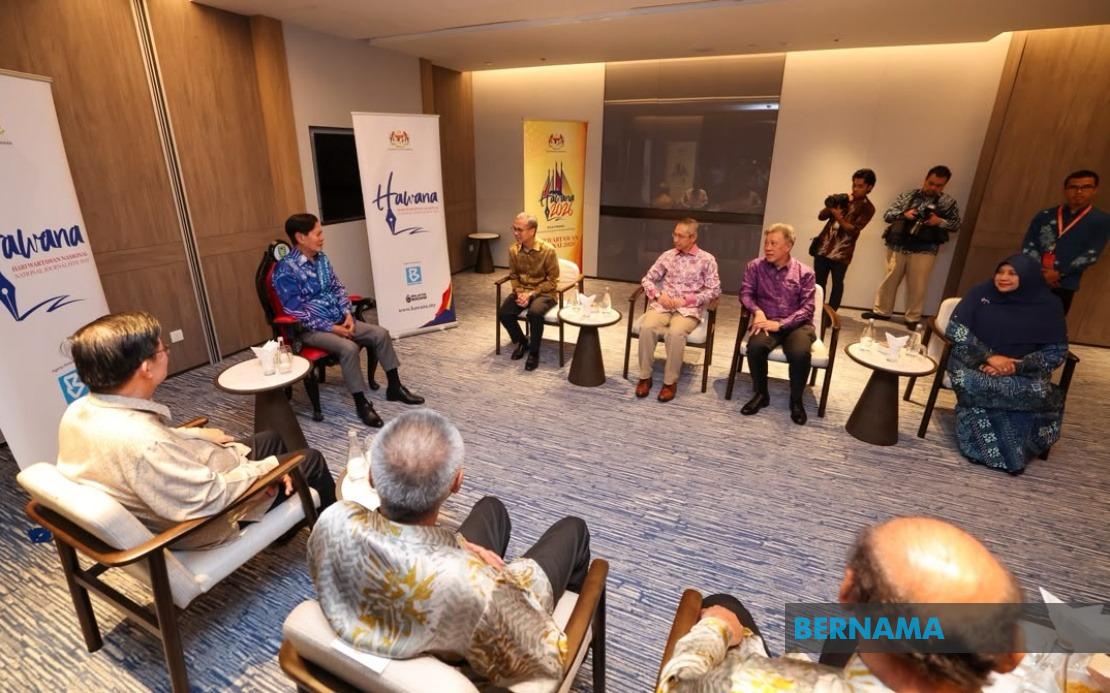
Malaysia's Communications Minister Datuk Fahmi Fadzil has pressed for intensified cooperation among ASEAN media organisations to tackle the growing menace of misinformation and ensure news reporting meets the highest standards of accuracy and integrity. Speaking in Butterworth during celebrations marking National Journalists' Day (HAWANA) 2026, Fahmi outlined a vision for the regional media landscape in which newsrooms actively collaborate across borders, pooling resources and expertise to strengthen journalism's capacity to serve the public interest.
The appeal comes at a critical juncture for Southeast Asia, where rapid digitalisation and the proliferation of online platforms have created unprecedented challenges for traditional news organisations and fact-checkers alike. Fahmi emphasised that in an environment where information circulates at unprecedented velocity and competing narratives perpetually jostle for public attention, journalism grounded in verifiable facts, editorial integrity and professional accountability remains as essential as ever. The minister framed media collaboration not merely as a sectoral concern but as fundamental to the region's broader trajectory toward peace, stability and sustainable economic development.
In his address, Fahmi articulated media's foundational role within democratic and developmental frameworks. He characterised journalism as the vital conduit linking citizens to unfolding events and realities, serving simultaneously as a critical interface between government policymakers and those tasked with implementing decisions on the ground. This bridging function, he suggested, becomes increasingly fragile when misinformation erodes public trust in news sources or distorts understanding of policy implications. The minister's remarks reflect growing concern among regional governments about the downstream effects of falsehoods on social cohesion and political confidence.
The HAWANA 2026 celebration, which Penang is hosting, functions as more than a ceremonial recognition of journalism's contributions. Rather, organisers have positioned the event as a platform to reinforce and advance professional standards within the news industry during a period of acute difficulty. Misinformation campaigns, driven by both state and non-state actors, have become increasingly sophisticated across Southeast Asia, targeting everything from electoral processes to public health initiatives. By convening media leaders and government officials under one roof, the event aims to foster dialogue on practical countermeasures and to signal to the broader public that combating false narratives remains a shared priority.
Penang's willingness to serve as venue for HAWANA 2026 underscores the state's recognition of media's societal weight. Fahmi took the opportunity to commend the Penang State Government, led by Chief Minister Chow Kon Yeow, for demonstrating sustained commitment to supporting journalism. This endorsement carries symbolic weight, suggesting that media autonomy and professional standards are matters of state importance rather than peripheral concerns. The attendance of senior figures, including Penang Governor Tun Ramli Ngah Talib and various state and federal officials, reinforced this positioning.
Cross-border media cooperation in ASEAN remains underdeveloped relative to other sectoral collaborations, presenting both challenge and opportunity. Many ASEAN newsrooms operate with limited resources and face competitive pressures that discourage sharing information or analytical insights with counterparts in neighbouring countries. Language differences, varying regulatory environments and distinct media ownership structures have historically fragmented the regional journalism landscape. Yet common threats—particularly sophisticated misinformation campaigns and the decline of traditional revenue models—create natural incentive for pooled resources and shared fact-checking initiatives.
The presence of representatives from ASEAN Communications Ministers at the Butterworth event signals diplomatic interest in advancing this agenda at the inter-governmental level. Media cooperation frameworks, if properly designed, could facilitate rapid debunking of false claims circulating across multiple national jurisdictions simultaneously, as well as enable smaller newsrooms to access investigative capacity typically available only to well-resourced organisations. Such arrangements might also help establish regional standards for digital literacy and media criticism, equipping citizens throughout Southeast Asia with tools to evaluate source credibility.
Fahmi's emphasis on knowledge exchange and best-practice sharing points toward practical mechanisms through which the regional journalism community could strengthen collective capacity. News organisations across ASEAN might establish shared databases for fact-checking, create protocols for rapid verification of claims with transnational resonance, or develop training programmes in digital forensics and source authentication. Several ASEAN journalists' associations have begun exploratory work in these areas, though sustained funding and political support remain inconsistent.
The Malaysian context itself illustrates both the promise and the pitfalls of combating misinformation. Local news organisations have faced criticism regarding coverage standards and perceived editorial independence, yet Malaysia also possesses relatively sophisticated fact-checking infrastructure compared to some regional peers. By positioning itself as an advocate for stronger ASEAN-wide collaboration, Malaysia may simultaneously advance regional media resilience and strengthen its own standing as a journalism advocate within Southeast Asia.
The challenges facing regional media extend beyond misinformation narrowly conceived. Declining advertising revenue, the migration of audiences toward social media platforms, and constraints on investigative reporting capacity have created structural vulnerabilities that malicious actors exploit. Regional cooperation on sustainable business models for quality journalism—whether through philanthropic funding, public broadcasting frameworks or digital subscription strategies—warrants equivalent attention alongside anti-misinformation initiatives.
Looking forward, translating ministerial rhetoric into substantive institutional change will require dedicated effort. ASEAN's decision-making processes move slowly, and media organisations remain fiercely competitive entities despite shared challenges. Yet the articulation of this agenda at ministerial level, amplified through events like HAWANA 2026, establishes political space for journalists and media leaders to pursue concrete collaboration frameworks. The success of such initiatives will ultimately determine whether Southeast Asian citizens benefit from strengthened regional journalism or whether fragmentary national approaches continue to leave populations vulnerable to coordinated disinformation campaigns.

