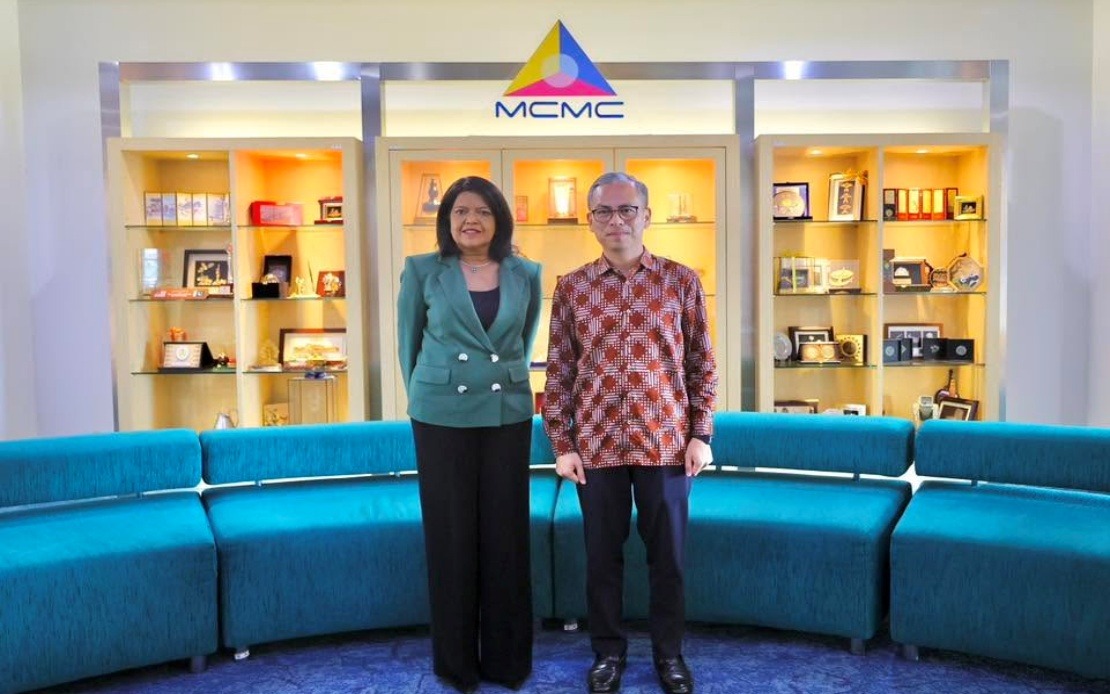
Communications Minister Datuk Fahmi Fadzil has welcomed the appointment of Tan Sri Nallini Pathmanathan as chairman of the Malaysian Media Council, expressing confidence that her judicial background will strengthen the regulatory framework for Malaysia's media landscape. The former Federal Court judge's elevation to the helm of the MMC represents a significant transition in the council's leadership and signals the government's commitment to ensuring robust oversight of the country's fourth estate.
Fahmi's public endorsement through a Facebook post highlighted the importance of the MMC's role in advancing responsible media practices. The Communications Minister specifically emphasised the need for the council to maintain editorial independence whilst simultaneously fostering higher standards of journalistic accountability. His remarks underscore growing recognition among policymakers that self-regulation mechanisms must balance press freedom with ethical considerations that protect public interest.
Nallini's appointment came following a unanimous decision by the MMC's board members during a meeting held on May 26. This consensus among industry stakeholders suggests broad acceptance of her candidacy and reflects confidence in her ability to navigate the complex terrain of media governance. The swiftness of the unanimous endorsement indicates that her qualifications and vision for the council's direction resonated strongly with fellow board members representing various segments of Malaysia's media ecosystem.
The Malaysian Media Council operates as the media industry's primary self-regulatory apparatus, functioning under the authority of the Malaysian Media Council Act 2025. This statutory foundation distinguishes the MMC from informal industry associations, granting it formal recognition and operational legitimacy. For Malaysian readers and media professionals, this regulatory structure represents the institutional framework through which complaints, disputes, and ethical violations within the newsroom are addressed without direct government intervention.
Nallini's judicial pedigree brings substantive advantages to an organisation tasked with interpreting complex media ethics codes and adjudicating disputes between publishers, journalists, and the public. Her experience on the Federal Court, where she would have engaged with constitutional principles including Articles 10 and 13 of the Malaysian Constitution that protect freedom of expression, positions her uniquely to understand the legal nuances surrounding press freedom in the Malaysian context. This background is particularly relevant given ongoing tensions between regulatory obligations and editorial autonomy.
The appointment carries implications for Southeast Asia's evolving media regulatory environment. As regional democracies grapple with questions about platform accountability, misinformation, and journalistic standards, Malaysia's decision to place a respected jurist atop its self-regulatory body may influence neighbouring countries' approaches to media governance. The MMC model, relying on industry self-regulation rather than state control, represents a middle path that other ASEAN nations scrutinise as they develop their own frameworks.
Fahmi's emphasis on sustaining a trusted and economically viable media industry reflects acknowledgment that journalism in Malaysia faces mounting commercial pressures alongside regulatory challenges. Traditional news organisations contend with digital disruption, advertising revenue migration, and audience fragmentation. By promoting ethical standards and journalistic excellence through the MMC, policymakers hope to bolster public confidence in news institutions and create conditions where quality journalism remains economically sustainable. This connects the MMC's regulatory mission to broader concerns about media viability and democratic health.
The council's designation as independent and public-interest-driven carries particular weight in Malaysia's political context, where questions about media impartiality periodically surface during electoral cycles and policy controversies. An MMC chaired by someone with judicial credentials and demonstrated commitment to institutional independence can theoretically provide credible assurance to sceptical audiences that complaints are adjudicated fairly rather than through partisan filters. Nallini's appointment therefore extends beyond personnel matters into questions of institutional legitimacy and public trust.
As Nallini assumes her responsibilities, she inherits an organisation operating in a transformed media landscape. The establishment of the MMC under the 2025 Act itself represents recent institutional evolution, reflecting Malaysian policymakers' determination to upgrade self-regulatory structures. The timing of her appointment thus positions her to help shape how the freshly legislated framework operates in practice, establishing precedents in complaint handling, ethics interpretation, and industry engagement that will influence media practices for years ahead.
The convergence of Fahmi's ministerial portfolio and Nallini's new position creates an opportunity for aligned governance of media issues, though the MMC's independence means the organisation functions separately from government policy implementation. This separation is crucial for credibility—industry participants and public observers must perceive the MMC as genuinely independent rather than as an extension of Communications Ministry priorities. How Nallini balances responsiveness to government stakeholders with protection of editorial autonomy will significantly shape perceptions of the council's legitimacy.
Looking forward, Nallini's tenure will be scrutinised across multiple dimensions: whether the MMC successfully mediates between publisher interests and public expectations, how effectively she champions journalistic ethical standards without encroaching on editorial discretion, and whether the council gains sufficient industry cooperation and public recognition to influence media behaviour meaningfully. Her success in these areas will ultimately determine whether Malaysia's self-regulatory model strengthens press freedom whilst maintaining professional standards, or whether it devolves into an ineffective body lacking real influence over media conduct.

