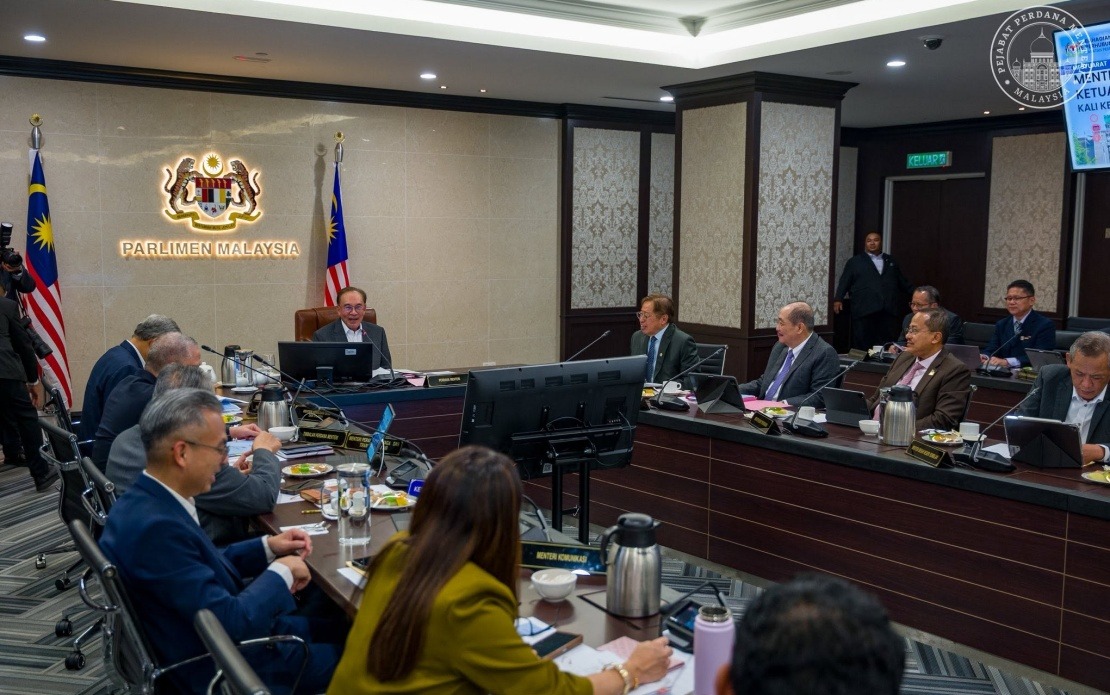
Prime Minister Datuk Seri Anwar Ibrahim convened the 149th Meeting of Menteris Besar and Chief Ministers at the Parliament Building in Kuala Lumpur on June 23, bringing together Malaysia's top state and federal leaders for wide-ranging discussions centred on revitalising the national economy against a backdrop of mounting global uncertainties. The gathering represented a critical juncture for coordinating policy responses to interconnected challenges confronting the nation, from geopolitical volatility to environmental threats.
Economic resilience emerged as the dominant theme of proceedings, with discussions focusing on how Malaysia can maintain growth momentum despite headwinds generated by conflicts in West Asia that have rippled through international markets. The Prime Minister emphasised the necessity of decisive action to strengthen competitive advantages and position the country as an attractive destination for foreign direct investment. This emphasis reflects growing anxiety within government circles about Malaysia's ability to retain investor confidence as regional competitors intensify efforts to capture capital flows.
Beyond immediate economic concerns, the meeting grappled with longer-term environmental pressures that pose existential risks to agricultural production and water security across the peninsula and East Malaysia. El Niño phenomena, which meteorologists predict could intensify across Southeast Asia in coming months, threaten to exacerbate water shortages particularly during dry seasons, disrupt crop cycles in rural areas dependent on monsoon patterns, and heighten public health risks from prolonged heat exposure and transboundary haze from regional forest fires. For Malaysia's agricultural sector, already struggling with labour shortages and rising input costs, additional climate-related disruptions could prove devastating to rural livelihoods and food self-sufficiency objectives.
Anwar stressed that all government initiatives must undergo fundamental restructuring to enhance effectiveness and responsiveness to citizen needs. The emphasis on integrated, efficient, and people-centric implementation signals recognition among policymakers that previous policy silos have undermined both delivery capacity and public confidence in government programmes. This integrated approach requires unprecedented coordination between federal and state administrations, which historically have operated with significant autonomy and occasionally competing priorities.
The collaboration between Federal Government and state authorities assumes particular importance given Malaysia's federal structure, where states retain considerable legislative authority over land, agriculture, water, and local development. Ensuring that economic revival strategies and climate adaptation measures cascade effectively from national policy frameworks into state-level implementation depends fundamentally on building consensus among diverse state governments with varying economic structures, political affiliations, and local circumstances. Menteri Besar and Chief Ministers from resource-rich Peninsular states like Selangor and Johor face different imperatives than their counterparts in less industrialised Sabah and Sarawak.
The focus on attracting quality investments reflects sophisticated understanding that Malaysia must compete not merely on cost but on offering stable governance, skilled workforces, technological infrastructure, and regulatory clarity. In an era when multinational corporations can establish operations anywhere within the region, Malaysia must differentiate itself through policy predictability and genuine partnership between government and business. This particularly applies to high-value sectors including semiconductor manufacturing, renewable energy, and digital services, where global competition for market share intensifies continuously.
Climate resilience planning took on heightened urgency given El Niño's anticipated severity. Water supply departments across both peninsular and Borneo states must prepare contingency protocols, infrastructure investments, and public communication strategies to manage potential rationing periods. The agricultural sector requires coordinated support encompassing irrigation infrastructure upgrades, crop diversification incentives, and financial assistance mechanisms for farmers facing reduced yields during extended dry periods. Food security considerations extend beyond domestic production to strategic stockpiling and supply chain diversification to reduce import dependence for essential commodities.
The emphasis on maintaining togetherness and consensus building between federal and state authorities carries practical significance for implementation capacity. A meeting that concludes with apparent harmony but fails to translate into coordinated state-level action would represent merely symbolic achievement. The real test emerges in subsequent months as individual state governments interpret federal guidance within their local contexts and constraints. Political considerations, budgetary limitations, and competing development priorities may generate divergences between national objectives and state execution.
For Malaysian businesses and citizens, the outcomes of such high-level coordination meetings translate eventually into either improved infrastructure quality, more responsive government services, and stable economic conditions, or continued fragmentation and inefficiency. Investors monitor these federal-state coordination mechanisms closely as barometers of governance effectiveness. Similarly, rural communities dependent on agriculture and water resources keenly observe whether climate adaptation plans move beyond policy documents into actual water security improvements and agricultural support programmes.
The gathering reflects broader regional dynamics as Southeast Asian governments confront interconnected challenges requiring coordinated responses across traditional jurisdictional boundaries. Malaysia's experience navigating federal-state cooperation on economic and environmental issues offers lessons for other federal systems in the region wrestling with similar tensions between centralised policy direction and decentralised implementation capacity.

