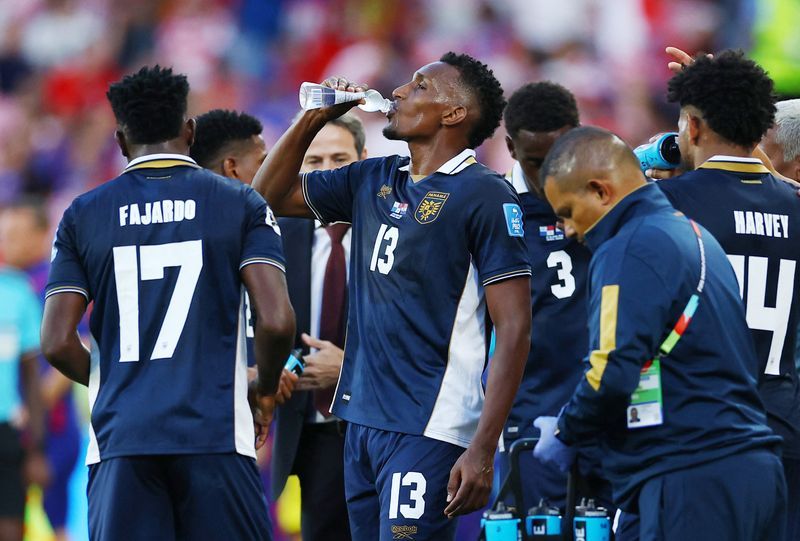
FIFA president Gianni Infantino has moved to quell mounting criticism of the mandatory hydration breaks now featured at the World Cup, declaring that the governing body's decision to implement them stems entirely from player welfare concerns rather than any desire to capitalise on additional advertising opportunities. The three-minute stoppages, mandated at the 22nd and 67th minutes of every match, have sparked considerable backlash from players, coaches, and supporters since matches began, with many questioning whether the measure genuinely serves the sport's best interests or merely opens commercial windows for broadcasters.
While the breaks were ostensibly introduced to help players manage the physical demands imposed by elevated temperatures across North America, the timing of these stoppages has created additional television windows available to broadcasters for advertising. This coincidence has fuelled speculation that commercial considerations may have influenced the decision, despite FIFA's insistence that all broadcasting agreements were finalised before the breaks were conceived. The controversy underscores the ongoing tension between protecting athlete welfare and managing the commercial realities of modern sport, a balance that has become increasingly delicate in recent years.
Infantino addressed the controversy directly, stating that FIFA derives no additional financial benefit from the breaks since all media contracts were negotiated and signed well before the measure was introduced. This assertion is crucial context for understanding FIFA's position, particularly for Malaysian fans and Southeast Asian observers accustomed to scrutinising how international sporting bodies justify their decisions. The statement attempts to separate the sporting rationale from the commercial side effects that inevitably accompany global tournaments broadcast across multiple time zones and regions.
Yet the introduction of these breaks has fundamentally altered how matches unfold on the pitch. Coaching staff now possess designated moments to provide tactical instructions to players, a development that several high-profile managers view as transformative and problematic. England's manager Thomas Tuchel characterised the breaks as interrupting and changing the essential nature of football itself, highlighting concerns that the sport's traditional flow and momentum are being compromised. Uruguay's Marcelo Bielsa went further, arguing that dividing matches into shorter, segmented blocks undermines what he considers the game's core identity.
Not all coaches have responded with equal scepticism. Spain's Luis de la Fuente and Netherlands captain Virgil van Dijk have acknowledged the legitimate intention behind permitting hydration breaks in oppressively hot conditions. However, they have raised a practical objection: the blanket application of the rule regardless of actual temperature conditions or venue design appears excessive. In cooler climates or indoor stadiums with climate control, the necessity for mandatory breaks becomes questionable, yet the rules apply universally. This inconsistency has prompted debate about whether the measure has been refined appropriately for diverse geographical and environmental contexts.
Infantino addressed this nuance by emphasising the unique demands of the World Cup as a gruelling competition stretched across 39 days, during which participating teams potentially contest eight matches. Within this compressed schedule, he contends, the opportunity for players to rest and recover becomes critically important for maintaining performance standards and safeguarding player health. The argument pivots from immediate hydration needs in extreme heat to the broader stamina requirements of tournament football, a perspective that may resonate with Malaysian audiences familiar with Southeast Asian football competitions played in tropical climates.
A secondary argument Infantino advanced concerns competitive fairness. He suggested that without standardised breaks, teams might gain tactical advantages simply because weather conditions in their matches differed from those faced by other competitors. This concern about equity reflects FIFA's commitment, in principle, to ensuring all teams operate under level conditions. Yet critics counter that this logic could justify countless other standardisations that fundamentally alter the sport, raising questions about where such reasoning should logically conclude.
Infantino maintained that the breaks have not diminished match intensity, suggesting players retain their capacity to perform at high levels throughout entire games. This claim warrants scrutiny, as match analysts and fans have observed varied impacts depending on which teams implement the breaks more effectively tactically. The assertion that intensity remains unchanged may overlook the psychological and strategic shifts that occur when momentum is deliberately interrupted.
For Malaysian readers and Southeast Asian football enthusiasts, these developments carry particular relevance. Tropical heat is a routine feature of football in the region, yet local competitions typically proceed without formal hydration breaks, raising questions about whether FIFA's approach reflects genuine necessity or represents another instance of international standards being imposed without thorough consideration of context. The debate also illustrates how commercial interests can become entangled with sporting decisions in ways that blur lines between legitimate welfare measures and profit-driven innovations. As FIFA continues refining World Cup regulations, the organisation faces pressure to demonstrate that player welfare genuinely drives policy, not opportunistic commercialisation.

