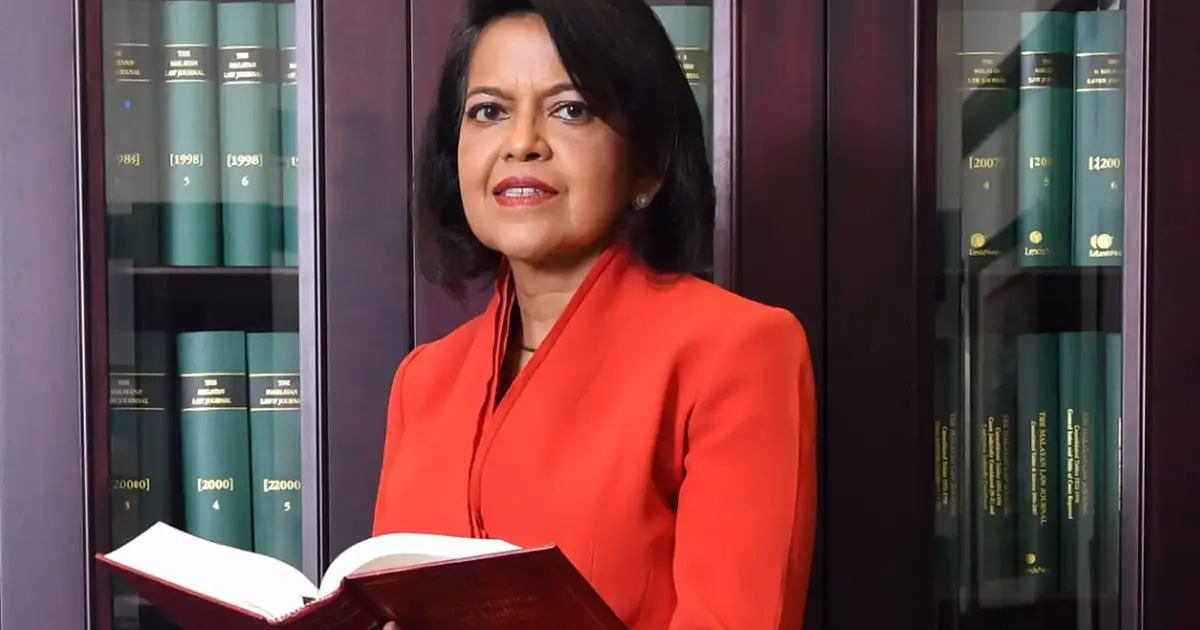
Nallini Pathmanathan, a retired judge from Malaysia's highest court, has been appointed chairman of the Malaysian Media Council, underscoring the institution's determination to secure seasoned governance during a period of considerable turbulence within the country's journalism landscape. The council characterised the appointment as a strategic response to the multifaceted pressures currently bearing down on the media industry, signalling that experienced judicial perspective may prove valuable in navigating complex regulatory and ethical terrain.
The appointment carries particular significance given Pathmanathan's background on the Federal Court bench, where constitutional matters and questions of public interest regularly intersected with her judicial reasoning. This transition from the judiciary to media council leadership reflects a broader pattern whereby Malaysian institutions increasingly seek cross-sector expertise when addressing sector-wide challenges. The choice suggests confidence that judicial temperament and constitutional knowledge will serve the council well as it mediates between competing interests within the media ecosystem.
Malaysia's media industry has weathered considerable strain in recent years, encompassing questions about editorial independence, the proliferation of digital platforms operating outside traditional regulatory frameworks, and heightened competition from unregulated online sources. The emergence of artificial intelligence tools capable of generating synthetic content has added fresh urgency to discussions about verification standards and audience protection. Against this backdrop, the council's selection of someone accustomed to weighing constitutional principles and competing rights suggests an intention to ground its governance in established legal precedent.
Pathmanathan's judicial experience encompasses constitutional law matters fundamental to press freedom discourse. Her elevation to the media council chairmanship therefore carries implicit messaging about how the institution conceptualises media regulation—not primarily as a control mechanism, but as a framework protecting both journalistic integrity and public interest. This distinction matters considerably in Malaysia's political environment, where media regulation remains contentious and where industry representatives maintain varying perspectives on appropriate oversight boundaries.
The council itself occupies a distinctive position within Malaysia's governance structure, functioning as an industry body rather than a direct government regulator. This positioning requires delicate navigation between self-regulation aspirations and pressures for greater state involvement. Pathmanathan's appointment implies the council intends to strengthen its credibility as an institution capable of rigorous self-governance, thereby potentially forestalling more aggressive regulatory intervention from government quarters.
Regional media analysts will likely view this development as reflective of larger Southeast Asian trends whereby established institutions attempt to assert authority within digital-era journalism. Countries across the region have grappled with similar questions about regulatory adequacy and institutional legitimacy as media landscapes fragment and international platforms challenge traditional gatekeeping roles. Malaysia's appointment of a respected judicial figure to lead its media council represents one institutional response to these common challenges.
The timing of Pathmanathan's appointment corresponds with intensifying global discourse about media regulation in the artificial intelligence age. International journalism bodies have increasingly advocated for regulatory frameworks that protect factual accuracy while preserving editorial discretion, a balance Malaysia's council will need to strike. Her judicial background positions her to understand how such frameworks might survive constitutional scrutiny, a prerequisite for sustainable policy development in Malaysia's rights-conscious legal environment.
Industry observers will watch closely how Pathmanathan approaches fundamental questions about the council's enforcement mechanisms and advisory versus regulatory role. Her judicial career suggests comfort with precedent-based reasoning and procedural fairness—qualities essential when the council must respond to complaints or ethical concerns while maintaining perceived impartiality. The gap between the council's stated aspirations and its actual capacity to influence industry behaviour will test her leadership.
For Malaysian journalists and media organisations, Pathmanathan's appointment signals that the council intends to engage seriously with contemporary challenges while respecting constitutional safeguards. Her presence may credibly assure industry participants that governance will rest on principled legal reasoning rather than political convenience. However, structural limitations will likely constrain her ability to enforce standards across increasingly fragmented media landscapes where traditional outlets compete with digital natives operating outside council membership.
The broader implications extend to Malaysia's relationship with press freedom more generally. An independent-minded judicial figure heading the media council potentially strengthens arguments for media self-regulation against those advocating more direct government intervention. Whether Pathmanathan can translate judicial authority into practical industry influence remains an open question, particularly given the council's limited formal power compared to regulatory bodies in some comparable democracies.
Pathmanathan's transition from the Federal Court to media council leadership reflects institutional recognition that Malaysia's journalism sector requires experienced, credible stewardship as it adapts to technological disruption and shifting audience habits. Her appointment signals determination to address industry challenges through principled frameworks rather than reactive measures. Success will depend partly on her capacity to build consensus among competing media interests while maintaining independence from both commercial pressures and political expectations.