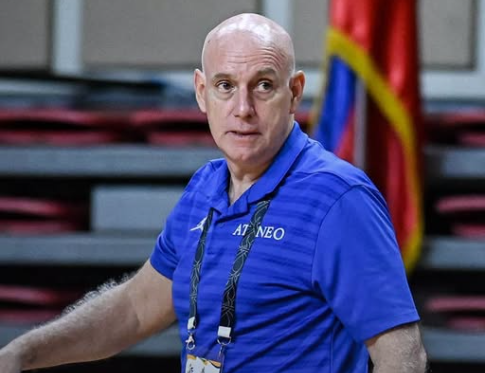
The Philippine National Police Criminal Investigation and Detection Group has recommended filing charges against former Ateneo de Manila University men's basketball head coach Thomas Anthony Baldwin and 10 team members for violating the Anti-Hazing Act, in connection with a drowning incident that claimed the lives of players Rene Baterbonia and Divine Adili during a training exercise in Dipaculao, Aurora on June 8. The police recommendation marks a significant step in a case that has drawn scrutiny toward practices in collegiate sports and the interpretation of what constitutes prohibited hazing under Philippine law.
Beyond Baldwin, the individuals facing potential charges include strength and conditioning coaches Grant Dearns and Ceasar Vicent Javellana Elumba, assistant coaches Dean Caesar B. Castaño, Sandro Nicholas Romero Soriano, and Reynaldo Jacinto, as well as student managers Paolo Manuel Maceda Adevoso and Andrew Lorenzo Salud. The recommendation also extends to physical therapist John Eric Quiambao Rueca and utility personnel Aris Ramos Pronce and Joel Palmiano Rapa. Significantly, authorities stress that all 11 individuals were present during the entire activity on the Aurora beach, with no one taking action to halt or question the proceedings despite the mounting dangers posed to the athletes.
The case has proven instructive in expanding the definition of hazing beyond traditional notions of student initiations. Republic Act No. 11053, the Anti-Hazing Act, encompasses not merely ceremonial practices but also "forced calisthenics and exposure to the weather" that subject individuals to physical or psychological harm as part of membership or selection criteria. The prosecution's evidence reveals the training session did not operate as a conventional team-building exercise but rather functioned as a screening mechanism to determine which of the 20 athletes present would make the final 17-member roster for submission to the University Athletics Association of the Philippines, transforming what might otherwise appear as legitimate athletic conditioning into something legally categorized as initiation-based activity.
The sequence of events on the day in question demonstrates the cumulative stress placed on the athletes. The players were roused at four in the morning and required to complete a four-kilometre run before participation in intense physical games that included competitive challenges with consequences for losing participants. The itinerary culminated in the seawater training activity scheduled for approximately 2 to 2:30 in the afternoon, a timing that coincided precisely with the expected peak of high tide at 2:27 pm. This coordination of activities appears to have created a scenario where exhausted athletes were subjected to exposure in particularly hazardous ocean conditions characterized by rip currents, unpredictable wave action, and inconsistent seabed depths—environmental factors that substantially elevated the risk profile for anyone attempting water-based exercises in such circumstances.
The medical examiner's findings offer additional context to the tragic outcome. When the bodies of Baterbonia and Adili were recovered, neither athlete was found wearing weights, ruling out at least one speculation regarding potential deliberate means of increasing difficulty or punishment during the exercise. This detail, previously disclosed by Aurora Provincial Police Office director Col. Percival Pineda, helps establish that the deaths resulted directly from exposure to dangerous conditions rather than from intentional mechanisms designed to create additional hazards, though this distinction offers limited comfort given the preventable nature of the tragedy.
Baldwin, who previously published a nearly nine-minute video apology through Ateneo's social media channels acknowledging responsibility for the deaths of Baterbonia and Adili, faces scrutiny not only as the head coach bearing ultimate responsibility for team activities but also for creating an institutional culture wherein such dangerous practices could be authorized and conducted without intervention by subordinate staff members. The presence of multiple assistant coaches, conditioning specialists, and support personnel at the event yet none stepping forward to voice safety concerns suggests either a hierarchical structure discouraging dissent or a shared misunderstanding of what constitutes appropriate athletic practice versus prohibited hazing.
For Malaysian sports administrators and university athletic departments, this Philippine case provides crucial instructional value regarding the potential legal exposure inherent in certain team selection and conditioning practices. Many Southeast Asian universities operate under similar legal frameworks criminalizing hazing, yet may operate with comparable ambiguity regarding where legitimate athletic training concludes and prohibited initiation begins. The decision to characterize the Aurora activity as hazing—despite its superficial appearance as sports conditioning—reflects recognition that competitive screening processes cannot ethically or legally utilize deliberately hazardous conditions regardless of how they are branded or justified within sports culture.
The investigation also illuminates the necessity of formal safety protocols and predetermined environmental conditions for water-based athletic training. Scheduling ocean exercises during peak tidal conditions when currents are strongest and waves most unpredictable represents a failure of basic risk management that transcends cultural attitudes toward sports conditioning. International standards for water safety in athletic contexts emphasize consultation with maritime experts, monitoring of environmental conditions, and clear protocols for cancellation or modification when conditions exceed acceptable thresholds. The Philippines' case demonstrates the legal consequences when such precautions are bypassed in pursuit of team-building objectives.
The Anti-Hazing Act, codified as Republic Act No. 11053, represents evolving legal sophistication regarding the protection of student-athletes. Rather than limiting its scope to ceremonial rituals, the legislation encompasses a broader range of practices that inflict suffering as part of membership determination or continuation. The philosophical underpinning reflects recognition that initiation systems operate through vulnerability and vulnerability deliberately created during selection processes can rapidly become life-threatening when coupled with environmental hazards. The recommendation against the Ateneo personnel thus signifies authorities interpreting the law not as prohibiting mere ceremonial traditions but as protecting individuals from cumulative trauma and exposure, whether physical or psychological.
The path forward involves the Department of Justice evaluating the police recommendations and determining whether to proceed with formal charges. Should prosecution commence, the proceedings will likely establish precedent regarding the permissible limits of athletic training practices in Philippine universities and potentially influence institutional policies across the region. Ateneo de Manila itself faces institutional accountability separate from individual prosecutions, as questions surrounding organizational cultures that permit such activities to proceed without intervention extend beyond the coaches and support staff to encompass broader systems of oversight and accountability within university athletics programs.
For Malaysian institutions, the proceedings in the Philippines underscore the critical importance of establishing transparent, documented protocols for all team activities—particularly those involving selection mechanisms or high-risk environments. The tragedy of Baterbonia and Adili reflects not merely individual failures but systemic deficiencies in safety culture and accountability structures. Southeast Asian universities increasingly recognize that protective legislation exists not to constrain legitimate athletic development but to establish baseline safety standards that all programs must respect, regardless of the cultural prestige attached to particular training methodologies or the competitive advantages supposedly derived from intensive conditioning practices.

