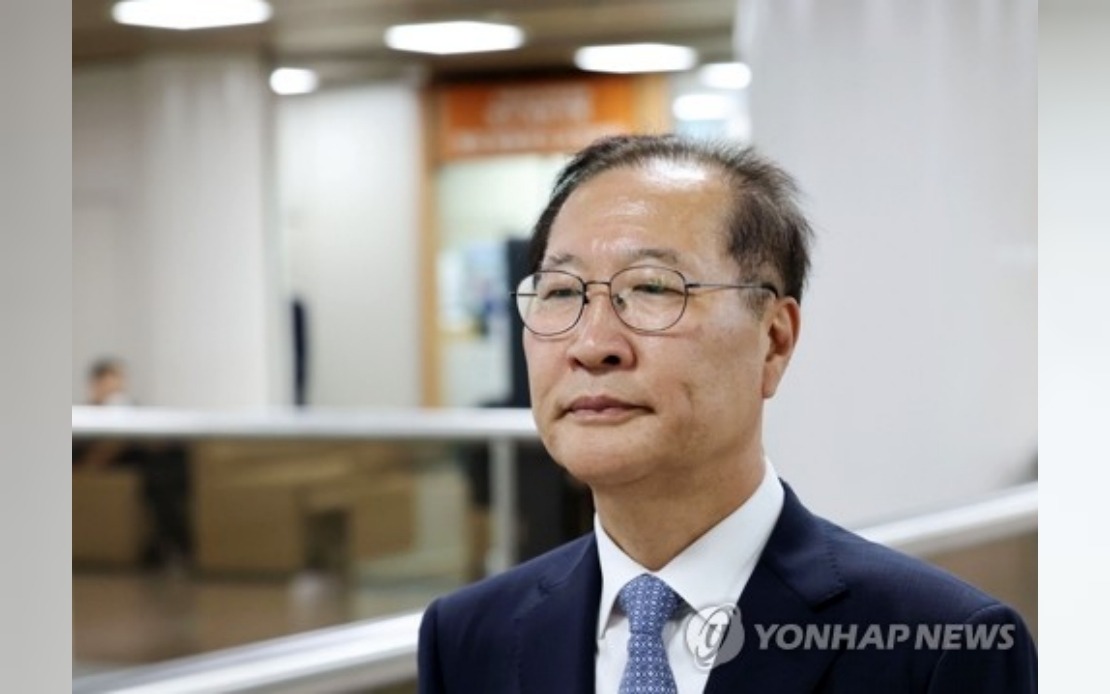
South Korea's ex-Justice Minister Park Sung-jae has been sentenced to 25 years imprisonment after a Seoul court determined he was instrumental in an attempted insurrection linked to former President Yoon Suk Yeol's ill-fated martial law decree. The Seoul Central District Court imposed the penalty on Monday, surpassing the 20-year term recommended by special counsel Cho Eun-suk's prosecution team. Park was taken into custody immediately, with the bench citing flight risk and concerns about potential destruction of evidence as justification for the detention order.
The charges against the former justice minister stemmed from his conduct following Yoon's declaration of martial law on December 3, 2024. Cho's team had accused Park of orchestrating a high-level ministry meeting specifically to coordinate administrative machinery in support of the martial law initiative. According to the prosecution's case, Park convened senior officials to review contingencies for deploying prosecutors to martial law enforcement bodies and to assess whether correctional facilities possessed sufficient capacity to detain politicians and prominent figures anticipated to be arrested under the decree.
Park's actions extended to ordering ministry staff responsible for imposing travel restrictions to report for duty, effectively mobilizing the justice apparatus in service of the constitutional crisis. The court's findings accepted the special counsel's argument that these coordinated administrative steps represented far more than routine ministerial functions—they constituted deliberate participation in an unlawful attempt to overturn constitutional governance. The judgment emphasized that Park had abandoned his constitutional obligation to preserve democratic order, instead choosing to actively support what the state characterized as an insurrectionist enterprise.
The conviction carries significant implications within the broader South Korean political landscape, where the December 2024 martial law episode has triggered cascading prosecutions of senior government figures. Park now joins former Prime Minister Han Duck-soo and former Defence Minister Kim Yong-hyun among cabinet-level officials convicted of playing instrumental roles in the insurrection. This pattern of high-profile convictions underscores how deeply the martial law attempt penetrated the upper echelons of Yoon's administration, affecting multiple security and governance portfolios.
President Yoon himself faces a life sentence handed down in February for leading the insurrection through his initial imposition of martial law. That verdict remains under appeal, ensuring the legal reckoning for the December crisis continues through the appellate system. The cascading convictions of subordinate officials raise questions about command responsibility and whether sufficient evidence exists to demonstrate direct instruction from the presidential office for each administrator's specific actions.
The court rejected additional corruption charges Park faced under anti-graft legislation, determining that such allegations fell outside the special counsel's formal investigative purview. Those charges had originated from allegations that Park, acting on a request from Yoon's wife Kim Keon Hee, had improperly instructed subordinates to examine details of a prosecution investigation into corruption allegations affecting the first lady. The dismissal suggests the court maintained clear jurisdictional boundaries between the special counsel's mandate to investigate the martial law insurrection and broader anti-corruption matters.
Park's legal team has signalled an immediate appeal, characterizing the sentence as fundamentally misaligned with factual evidence and established legal principles. The defense argues that the 25-year term—exceeding the prosecution's own recommendation—represents judicial overreach and inadequate regard for evidentiary standards. This appellate challenge will likely focus on the degree to which Park's administrative actions constituted conscious participation in an insurrectionist conspiracy versus routine ministerial coordination that acquired problematic connotations only through the broader political context.
The special counsel team indicated it does not intend to pursue an appeal, appearing satisfied that the judgment adequately articulated the constitutional duty incumbent upon a justice minister to actively resist unlawful martial law declarations. The prosecution's position suggests the ruling successfully established jurisprudence regarding ministerial obligations during constitutional crises—specifically, that justice officials possess not merely a passive duty to refrain from participation but an affirmative obligation to defend constitutional order through active resistance.
For regional observers, the South Korean case demonstrates how martial law invocations rapidly collapse institutional hierarchies and ensnare senior administrators in conspiracy charges. The breadth of prosecutions—reaching prime ministerial level and the defence establishment—illustrates the comprehensive scope of Yoon's attempted consolidation of extraordinary power. The judicial system's willingness to convict and incarcerate cabinet members suggests institutional independence and checks on executive authority functioned during the crisis, though only after the threat had already materialized and substantial political damage had occurred.
The sentencing also raises comparative questions about how other democracies in the region might manage similar constitutional challenges. Southeast Asian nations with histories of military intervention or emergency governance have long grappled with balancing security needs against civil liberties. South Korea's prosecutorial response—aggressively pursuing constitutional violations rather than granting amnesties—establishes a precedent that democratic accountability supersedes political pragmatism, even when senior officials are implicated.
The ongoing appellate phase means South Korea's highest courts will continue refining the legal and constitutional implications of the martial law episode. As multiple convictions proceed through appeal mechanisms, jurisprudence surrounding insurrection, command responsibility, and ministerial duties will crystallize, potentially influencing how other democracies approach similar institutional crises. Park's defense will require appellate judges to examine whether administrative coordination alone suffices to establish insurrection guilt or whether direct ideological commitment to overthrowing constitutional order must be independently demonstrated.
Meanwhile, the accumulation of prison sentences for senior officials presents practical governance challenges. South Korea must navigate the simultaneous incarceration or prosecution of former prime ministers, defence ministers, and justice ministers—unprecedented in the nation's recent democratic history. This concentration of high-level convictions may prompt broader societal conversations about political reconciliation, institutional reform, and whether prosecutorial accountability adequately addresses the systemic vulnerabilities that permitted a presidential martial law declaration to proceed so far.

