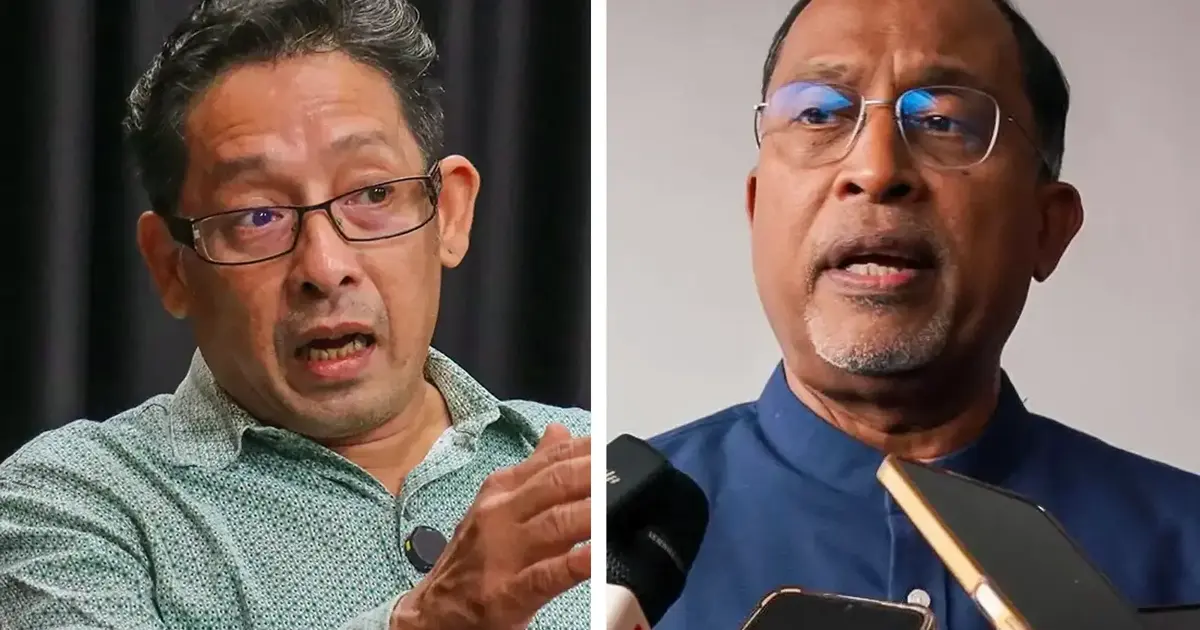
Eddin Khoo, who previously headed the government's task force examining the Unified Examination Certificate, has committed to delivering a comprehensive report to Perak Menteri Besar Zambry Abd Kadir next month, escalating tensions surrounding a review process that has become a touchstone for competing visions on Malaysia's education policy. The move follows mounting pressure and renewed scrutiny over what has become an increasingly opaque initiative that has dragged on for months without public clarity on its trajectory or findings.
In a direct challenge to government transparency, Khoo levelled serious allegations against senior figures within the education establishment, contending that ministers serving both the current and previous administrations have deliberately misrepresented facts concerning the task force's operational status and the existence of the report itself. These accusations strike at the credibility of official statements and raise uncomfortable questions about the consistency of narratives presented to the public and to Parliament regarding the progress of this education review.
The UEC task force has become a focal point of intense debate in Malaysian politics, representing broader ideological divides over how the nation should approach Chinese-medium education and educational pluralism. The task force's mandate, composition, and ultimate recommendations carry implications extending far beyond administrative procedure, touching on sensitive questions of educational diversity, communal harmony, and government priorities in the education sector.
Khoo's decision to escalate submission of the report directly to Zambry, rather than through regular education ministry channels, suggests a deliberate circumvention of conventional bureaucratic pathways. This manoeuvre may reflect deeper frustrations with how information has been managed within the ministry, or it could signal an attempt to ensure the findings reach a sympathetic audience among state-level leadership. The choice of Zambry as recipient is particularly significant given Perak's historical position in Malaysian education politics and the Menteri Besar's own documented views on education policy matters.
The timing of Khoo's move coincides with broader questions about government accountability and information control. The repeated accusations of dishonesty from successive education ministers suggest a pattern where official communications regarding the task force have lacked consistency or clarity. For Malaysian citizens and observers following this issue, the conflicting narratives underscore how politicised education policy has become, with competing factions within government apparently unwilling to present a unified front on fundamental matters.
The delay in submitting findings raises substantive questions about what the report ultimately contains and why its completion and release have proven so contentious. If recommendations were straightforward or uncontroversial, the process would likely have concluded smoothly. The protracted timeline and allegations of misrepresentation suggest the task force may have reached conclusions that prove inconvenient for one or more political actors, making stakeholders reluctant to acknowledge or advance the findings.
For Malaysian education stakeholders, including parents, educators, and students, the uncertainty surrounding this report represents a form of governance failure. Educational policy should rest on transparent deliberation and clear communication of findings. When task forces produce reports that remain hidden from public view or subject to contradictory official statements, it undermines confidence in the decision-making process and prevents informed public discourse on matters that directly affect schooling and opportunities.
The involvement of Zambry introduces a layer of complexity that reflects Malaysia's multi-tiered political structure. State-level government figures increasingly assert themselves in areas traditionally dominated by federal authorities, and this may represent an attempt to inject fresh perspective or to create political distance between state and federal administrations on this sensitive issue. Alternatively, it could indicate that Khoo views the Menteri Besar as more likely to act on the findings than federal officials have demonstrated.
The coming submission represents a potential turning point for this protracted process, though what happens next remains uncertain. Will Zambry make the report public? Will he endorse its findings, or will he commission further review? How the Menteri Besar receives and handles the document could determine whether this task force ultimately influences education policy or becomes merely another example of Malaysian government work that consumes resources and time without producing visible outcomes.
For policymakers and political observers across Southeast Asia watching Malaysian governance, this episode illustrates how education remains deeply entwined with political calculation and how institutional processes designed to inform policy can become vehicles for bureaucratic delay and obfuscation. The question of whether Khoo's report will finally shed light on the UEC question and break through months of conflicting statements will indicate whether Malaysian democracy's accountability mechanisms can ultimately prevail over internal political resistance.
The accusations against education ministers also merit serious consideration in terms of what they suggest about institutional integrity within the Ministry of Education. If senior officials have indeed provided false information about a government task force, the implications extend beyond this single initiative to questions about the reliability of official statements on other educational matters. This context makes the submission next month potentially significant not just for what it contains about the UEC, but for what it reveals about governmental functioning.

