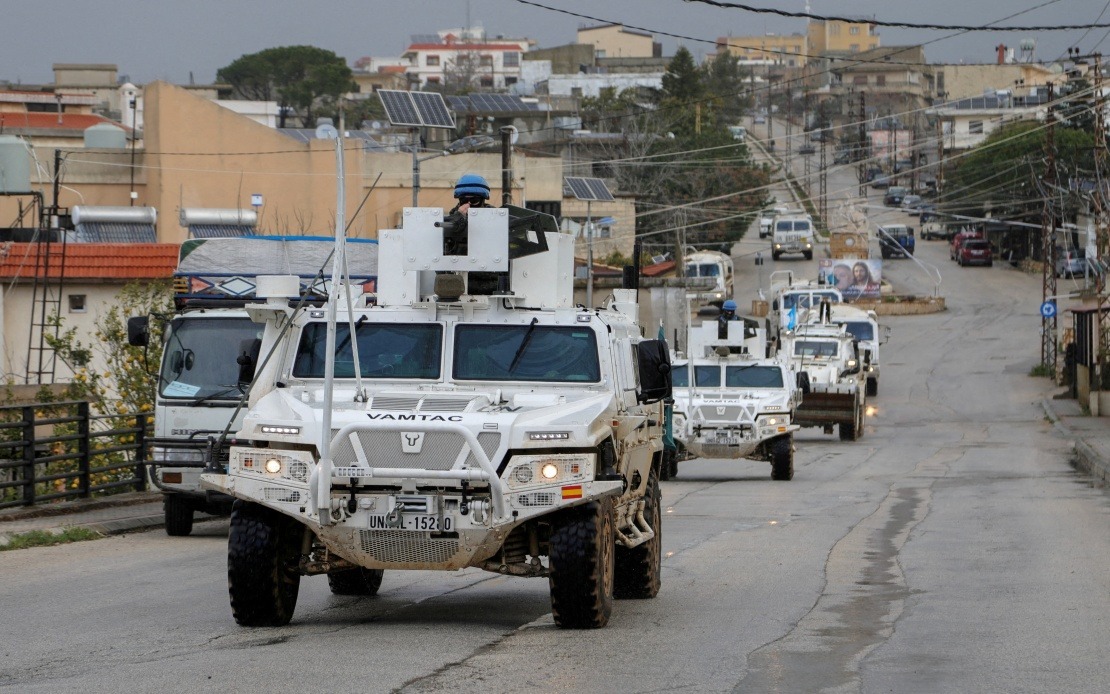
France and Italy have committed to forming a multinational coalition designed to maintain stability in Lebanon once the United Nations Interim Force in Lebanon concludes its operations at year's end. French President Emmanuel Macron announced the initiative during a joint press conference with Italian Prime Minister Giorgia Meloni in Antibes on Thursday, underscoring the two nations' determination to prevent a power vacuum that could destabilise the broader Middle East region.
The partnership between Paris and Rome reflects growing European concern about what happens in Lebanon once UNIFIL's mandate formally expires on December 31. The UN peacekeeping force, which has monitored the Israel-Lebanon border region since 1978, operates under Security Council Resolution 2790, which mandates a complete personnel withdrawal within twelve months of the mission's cessation. This timeline creates a critical juncture for international engagement in a country already grappling with economic collapse, political fragmentation, and the persistent threat of cross-border conflict.
Macron framed the coalition as a mechanism to reinforce Lebanese state capacity and territorial integrity rather than impose external control. His emphasis on strengthening Lebanon's sovereignty and armed forces suggests the initiative aims at buttressing local institutions rather than establishing a foreign occupation force. This distinction carries importance in a nation where external military intervention has historically fuelled resentment and complicated recovery efforts. The French leader positioned the coalition as a preventive measure, explicitly stating that the goal involves preventing Lebanese territory from becoming a flashpoint for wider regional escalation that could draw in multiple international actors.
Meloni's support adds weight to the European commitment. The Italian Prime Minister characterised the security vacuum as "extremely dangerous," a stark warning that reflects anxieties about potential power struggles among Lebanese factions, possible intervention by non-state actors, and the risk that Israel might deepen military operations in the country's southern regions. Italy's participation is particularly significant given its role in UNIFIL itself, where Italian troops have constituted a substantial contingent. Rome's involvement in a successor arrangement ensures continuity of European expertise and institutional knowledge about conditions on the ground.
The proposal to coordinate with both the European Union and the United Nations suggests a formal, multilateral approach rather than an ad-hoc arrangement. EU involvement would provide diplomatic cover and potentially additional military and financial resources, while UN backing would lend legitimacy and align the coalition with international law. However, the specifics remain undetermined. Questions persist about how many nations would join, what military capabilities the coalition would deploy, what geographic areas it would cover, and how long it would maintain a presence. The proposal also raises questions about whether other permanent Security Council members, particularly Russia and China, would acquiesce to such an arrangement.
The timing of this announcement is significant. Lebanon's political situation has deteriorated sharply over recent years, with the country unable to elect a president between 2014 and 2022, banks restricting access to deposits, and the Lebanese pound losing over 95 per cent of its value. Simultaneously, tensions between Israel and Hezbollah have escalated dramatically, with cross-border incidents becoming increasingly frequent and destructive. The prospect of UNIFIL's withdrawal without a credible international presence could invite miscalculation from multiple quarters.
For Malaysia and other Southeast Asian nations, this European initiative carries broader implications. The proposal demonstrates how major powers address the breakdown of state institutions and the threat of regional proxy conflicts. It also highlights the extent to which Middle Eastern crises increasingly require multinational responses that transcend traditional alliances. As a country deeply invested in rules-based multilateralism and UN-centred conflict resolution, Malaysia may view the Franco-Italian coalition as either a positive example of responsible burden-sharing or a concerning pattern of Western powers unilaterally determining the fate of non-aligned nations, depending on the implementation details.
The coalition's success will depend substantially on whether Lebanese political factions view it as genuinely supportive rather than intrusive. The Lebanese government, already weakened by decades of civil conflict and foreign interference, must agree to the arrangement. Without Lebanese buy-in, any multinational force risks becoming a target rather than a stabilising presence. This requirement explains why both Macron and Meloni emphasised coordination with the UN and EU, as these multilateral frameworks carry greater legitimacy in the eyes of Arab publics and governments wary of Western military intervention.
The broader context involves Hezbollah's role and calculations. The armed group, which maintains parallel state-like institutions in parts of Lebanon and holds parliamentary representation, may perceive a multinational coalition as an attempt to constrain its freedom of manoeuvre. Similarly, Hezbollah's allies and supporters in Tehran and Damascus might view the arrangement as hostile. Whether the coalition can function effectively given these competing interests remains uncertain. Historical precedent from other UN peacekeeping operations suggests that coalitions succeeds when all major parties have incentives to cooperate, a condition that appears tenuous in Lebanon's fractionalised political environment.
The proposal also reflects European recognition that simply withdrawing international presence from volatile regions rarely produces stability. Instead, it assumes that maintaining engagement, albeit in a reconfigured form, provides the best prospect for preventing state collapse and regional war. This philosophy differs markedly from approaches favoring minimal intervention and local ownership of security arrangements. Whether the post-UNIFIL coalition ultimately proves effective in preventing escalation or instead becomes a focal point for resistance will significantly shape international approaches to similar crises elsewhere in the Middle East and beyond.

