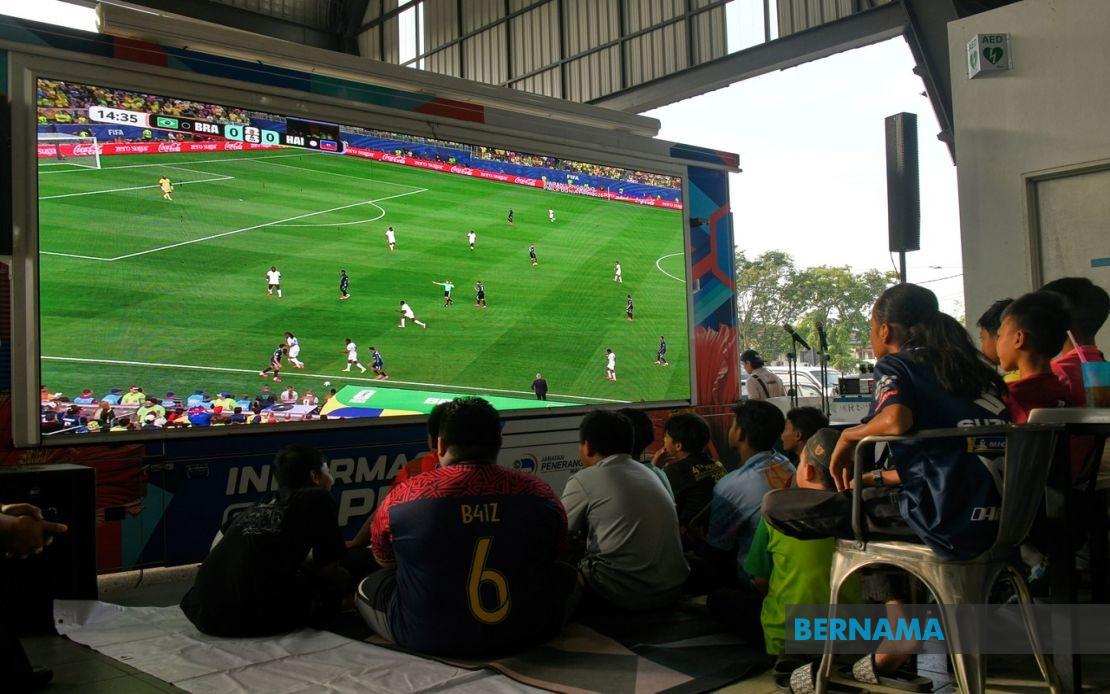
Communications Minister Datuk Fahmi Fadzil has highlighted the positive reception of the government's initiative to provide complimentary coverage of the 2026 FIFA World Cup through Radio Televisyen Malaysia and Unifi TV, noting that the move is delivering tangible financial relief to food and beverage operators and ordinary Malaysians. Speaking in Butterworth on June 20, Fahmi underscored how this broadcasting arrangement addresses a long-standing challenge for hospitality businesses that traditionally bear substantial licensing fees to screen international sporting events for their customers.
The Malaysian Muslim Restaurant Owners Association has endorsed the initiative enthusiastically, recognising the considerable savings it generates for their members. Many restaurant operators have worked under the burden of expensive broadcast rights for decades, a reality that directly affects their operational margins and ultimately influences the prices they must charge diners. By removing this financial obstacle, the government has created conditions where business owners can more readily afford to display matches during peak trading periods, transforming major tournaments from a cost centre into a straightforward customer attraction.
One trader confided to Fahmi that this marked the first occasion in more than twenty years that he could legally show World Cup matches without incurring substantial fees—a striking testament to how prohibitively expensive such rights have traditionally been for small and medium enterprises. The availability of free streaming through RTMKlik and the Unifi TV platform complements the traditional RTM broadcast, providing multiple pathways for both business operators and households to access the tournament without subscription barriers.
Fahmi's visit to the Seberang Jaya Public Market food court allowed him to observe directly how the initiative functions in practice. He watched the opening period of Brazil's match against Haiti alongside market visitors and food traders, a hands-on approach that moves beyond ministerial rhetoric to gather authentic ground-level perspectives on implementation and impact. This engagement strategy reflects a broader priority to understand the real challenges facing ordinary Malaysians and small business proprietors, particularly those operating within the food service sector who face mounting pressures from external economic forces.
The minister engaged extensively with individual traders during his market visit, seeking insights into current business conditions and the specific obstacles they encounter. The feedback obtained through these conversations has been documented for presentation to Prime Minister Datuk Seri Anwar Ibrahim and Penang Chief Minister Chow Kon Yeow, ensuring that frontline business concerns reach the highest levels of government. Such direct intelligence gathering provides policymakers with unfiltered information about how economic headwinds translate into concrete difficulties for traders managing thin profit margins.
Fahmi emphasised that rising costs stemming from regional geopolitical tensions, particularly instability in West Asia, continue to squeeze retailers and service providers. The ripple effects of these international developments manifest through elevated prices for imported goods and materials, creating a sustained pressure on business operators who cannot easily pass all additional costs to price-sensitive customers. The World Cup broadcasting initiative, while not directly addressing these structural economic challenges, at least removes one discretionary expense that had become a regular burden during major tournament seasons.
The minister expressed a broader aspiration that his peers across the parliamentary and state assembly benches would invest similar effort in ground-level engagement. By visiting markets, shops, and community spaces where ordinary traders and residents conduct their daily lives, elected representatives develop a more nuanced appreciation for the economic pressures facing their constituents. Such visibility also signals to the business community that government remains attentive to their circumstances and responsive to their input, fostering a sense of partnership rather than distance between policymakers and the entrepreneurial class.
The decision to broadcast the World Cup freely through state-owned and semi-public platforms represents a departure from the typical pattern where international sports rights holders have jealously guarded distribution channels and extracted premium fees from commercial venues. Malaysia's approach acknowledges that sporting events can serve broader social functions beyond generating licensing revenue—they create gathering opportunities, strengthen community bonds, and support local economic activity when their distribution is not artificially restricted by cost barriers.
For restaurant operators and market food vendors, the financial relief arrives at a particularly opportune moment. The sector has weathered pandemic-related disruptions, labour cost inflation, and commodity price volatility in recent years. An initiative that reduces operating expenses while simultaneously creating conditions to attract customers during major sporting events offers meaningful practical support without requiring direct government subsidy or intervention. The broadcasting arrangement thus functions as a form of implicit economic stimulus, amplifying consumer spending at food establishments by removing friction that previously discouraged public viewership.
Looking toward the 2026 tournament, the institutional framework established through RTM and Unifi TV access should facilitate sustained engagement among Malaysian audiences. Unlike limited-duration subscription promotions or expensive pay-per-view arrangements that discourage casual viewership, permanent free access encourages households of all income levels to participate in the global football conversation. For traders, this democratic access translates into more consistent customer traffic throughout the tournament, improving predictability for scheduling and inventory management.
The initiative also carries subtle diplomatic and cultural significance. By ensuring that Malaysians of all backgrounds can participate equally in following the World Cup, the government reinforces inclusive engagement with global sporting culture. Food court environments like the Seberang Jaya venue embody multiethnic Malaysian society, and facilitating shared enjoyment of major sporting events in these spaces strengthens social cohesion. Fahmi's presence at such a venue, rather than simply issuing a press release, underscores this inclusive dimension.
As Malaysia's political and business leadership contemplates the broader economic landscape, initiatives like the World Cup broadcasting arrangement demonstrate how targeted policy choices can generate meaningful but non-inflationary benefits for ordinary Malaysians. The government's willingness to leverage state broadcasting infrastructure for public benefit, rather than commercialising every possible revenue stream, reflects a fundamentally different approach to media and sports policy than the privatisation trajectory followed by many jurisdictions. Whether this model extends to other sporting events or cultural occasions remains an open question that observers will follow closely.

