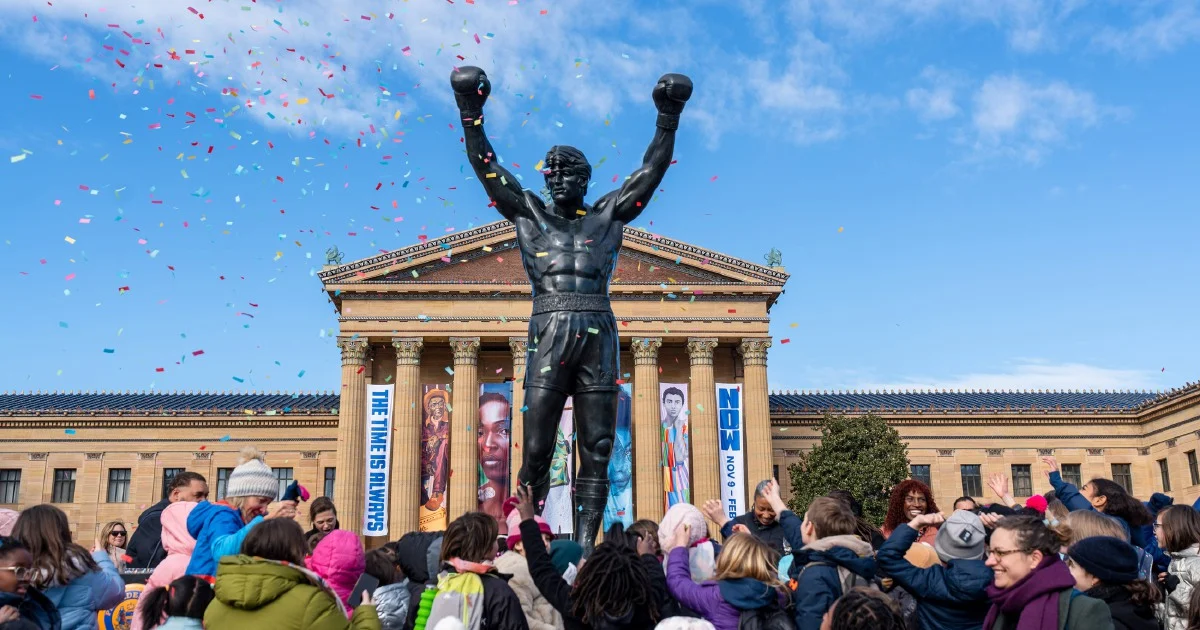
French supporters traveling to the World Cup have received a pointed warning from authorities in Philadelphia: do not dress or tamper with the city's most beloved statue. The iconic Rocky Balboa monument, which stands as a monument to triumph and perseverance in the heart of Philadelphia, appears to carry an unexpected burden—one that could jeopardize France's World Cup aspirations if past patterns hold true.
The statue, immortalizing the fictional boxer from Sylvester Stallone's legendary film series, has become the unlikely victim of a curious sporting phenomenon. Over the years, football fans and supporters of other sports teams have attempted to claim the statue for their colours, dressing it in scarves, jerseys, and other regalia bearing their national emblems. What makes this tradition particularly ominous is the seemingly consistent pattern of sporting disappointment that has followed such displays.
Multiple teams whose supporters have adorned the statue with their national colours have subsequently experienced significant setbacks in their major tournaments. This pattern has become so pronounced that local observers and superstitious fans have begun attributing the poor performances to what they now call the "Rocky curse." The phenomenon transcends the realm of pure coincidence for many believers, who point to documented instances of teams suffering elimination or disappointing results shortly after their fans engaged in such statue-dressing activities.
The warning issued to French supporters carries real weight given France's status as a World Cup contender. As one of the tournament's strongest teams, France cannot afford the kind of collapse that might be blamed on overconfidence—or worse, on disrespecting a Philadelphia institution. The French Football Federation and World Cup organizers have coordinated to ensure that their supporters understand the stakes of ignoring local customs and superstitions.
Philadelphia's relationship with the Rocky statue reflects deeper aspects of American sporting culture and civic pride. The statue serves as more than a tourist attraction; it represents the city's sporting heritage and the values of perseverance that characterize its fan base. For many Philadelphians, watching visiting team supporters dress the statue in foreign colours feels like an invasion of sorts, a cheeky act that local authorities have increasingly moved to prevent through official warnings and increased monitoring.
The curse narrative reveals how international sports tournaments create unexpected cultural collisions between visiting fans and host communities. What seems like harmless fun to supporters of a visiting team can be perceived as disrespectful or bad luck by locals who have developed their own folkloric understanding of the statue's significance. These competing interpretations of what is permissible or appropriate at a shared cultural landmark highlight the tensions that arise when millions of international visitors descend on a host city for a major sporting event.
For Malaysian fans following the World Cup, the Rocky statue saga offers an amusing insight into American sporting superstitions and the lengths to which communities will go to protect their symbolic landmarks. It also illustrates how sporting events can magnify local customs and create new traditions around iconic monuments. In Southeast Asia, where many stadiums and monuments hold deep cultural significance, similar conflicts occasionally emerge when rival fan groups compete to leave their mark on shared spaces.
The enforcement of these warnings falls to Philadelphia's local authorities, who have coordinated with World Cup security personnel to monitor the statue closely during the tournament. Additional patrols and surveillance ensure that well-meaning French supporters—or fans of any other nation—understand that this particular symbol of American cinema and Philadelphia pride remains off-limits for decoration and appropriation.
Whether the curse is genuine or merely a self-fulfilling prophecy remains unknowable, but the psychological dimension cannot be dismissed. If France's supporters believe they are curse-free by respecting the statue's integrity, that collective belief could translate into positive momentum and confidence. Conversely, any underperformance by France during the tournament will inevitably be attributed by some observers to those who ignored the warnings, whether such connections hold any logical validity.
The incident also underscores how modern major sporting events are not merely athletic competitions but complex social and cultural phenomena that intersect with local history, folklore, and community identity. Philadelphia's Rocky statue, made famous by cinema rather than history, has become woven into the city's sporting mythology in ways that transcend its origins as a fictional character. For World Cup visitors, respecting such local customs—and perhaps embracing the superstitions that attach to them—may be as important as respecting the rules of the competition itself.

