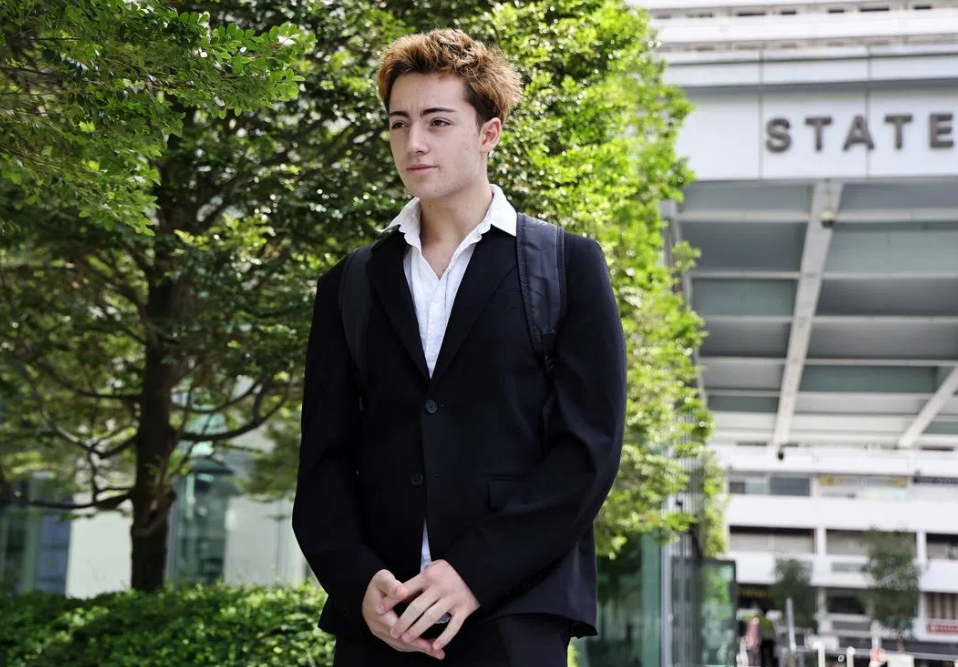
A French teenager facing charges in Singapore for allegedly contaminating a vending machine straw dispenser is expected to enter a guilty plea on July 13, bringing closure to an incident that drew widespread public concern and sparked conversations about hygiene in shared public spaces. Didier Gaspard Owen Maximilien, 19, was formally charged in April with committing mischief and being a public nuisance following the March incident at Goldhill Centre on Thomson Road.
The alleged incident occurred around March 12 when Maximilien reportedly removed a straw from an iJooz vending machine—the beverage company specialises in freshly squeezed orange juice dispensers—and licked it before returning it to the dispenser. The action might have gone unnoticed were it not for a decisive detail: the teenager purportedly recorded himself performing the act and subsequently distributed the video across social media platforms, where it rapidly accumulated views and triggered alarm among online users.
The viral nature of the footage transformed what could have been an isolated act of poor judgment into a significant public health concern. iJooz, the vending machine operator, took the incident seriously enough to implement comprehensive remedial action. Court documents reveal that the company was forced to replace the entire inventory of 500 straws housed within the affected dispenser to ensure customer safety and restore public confidence in the machine's hygiene standards.
The decision to replace such a large quantity of straws underscores the seriousness with which businesses in Singapore regard contamination of consumable products, even when the contamination is limited to a single item. This response reflects broader concerns about food and beverage safety in public spaces, particularly in densely populated urban centres like Singapore where self-service vending machines are ubiquitous and utilised by thousands of people daily.
The charges against Maximilien carry significant legal consequences that extend beyond a simple fine. For the mischief charge, Singapore law permits sentences of up to two years imprisonment, monetary penalties, or a combination of both. The public nuisance charge carries a maximum jail term of three months, a fine reaching $2,000, or both penalties imposed concurrently. The graduated nature of these potential sentences reflects the jurisdiction's approach to distinguishing between the two offences, with mischief carrying the more severe sanction.
This case illuminates how social media amplification transforms minor acts of poor judgment into matters of public concern and legal significance. The decision to film and share the incident fundamentally altered its character from a private transgression into an act with public ramifications. Many similar incidents across Southeast Asia have demonstrated that the act of recording and uploading such content often escalates consequences significantly, as it broadcasts the behaviour to an audience far beyond the immediate vicinity and creates permanent digital evidence.
For Malaysia and other Southeast Asian jurisdictions, the case offers instructive lessons about evolving public conduct standards in an age of ubiquitous recording and instant sharing. Increasingly, authorities across the region have grappled with similar incidents involving contamination of food or shared consumer goods. The viral component adds a layer of reputational damage to businesses and communities that extends well beyond the immediate incident.
The incident also highlights vulnerabilities in the shared vending machine ecosystem. While such machines offer convenience and efficiency for beverage distribution, they inherently depend on basic honesty and hygiene standards from users. The Maximilien case demonstrates that even casual disregard for these norms can trigger substantial operational and financial consequences for business owners, who must balance customer safety protocols with operational costs.
Singapore's approach to prosecuting such cases reflects the city-state's broader commitment to maintaining public cleanliness and order. The charges of public nuisance specifically target behaviour that affects community wellbeing beyond the immediate victim, acknowledging that irresponsible conduct in shared spaces carries consequences for broader social functioning. The mischief charge addresses the intentional damage or destruction aspect, which in this case extended to rendering the straw dispenser unsafe for use.
As the case approaches its conclusion with the anticipated guilty plea, it serves as a cautionary reminder to young people, particularly expatriates navigating different legal systems, that seemingly harmless pranks filmed for social media can carry serious legal ramifications. Courts in Singapore and throughout the region have demonstrated increasing willingness to prosecute such cases to maintain public standards, particularly when premeditation and intentional distribution of incriminating evidence are involved.
The resolution of this matter will likely influence how similar incidents are handled in future, both in Singapore and potentially across Southeast Asia as legal precedents circulate among regional jurisdictions. Businesses operating vending machines may also implement additional security measures, including surveillance cameras or design modifications intended to prevent tampering. For consumers, the case reinforces concerns about the safety of items dispensed through machines that lack direct human oversight.

