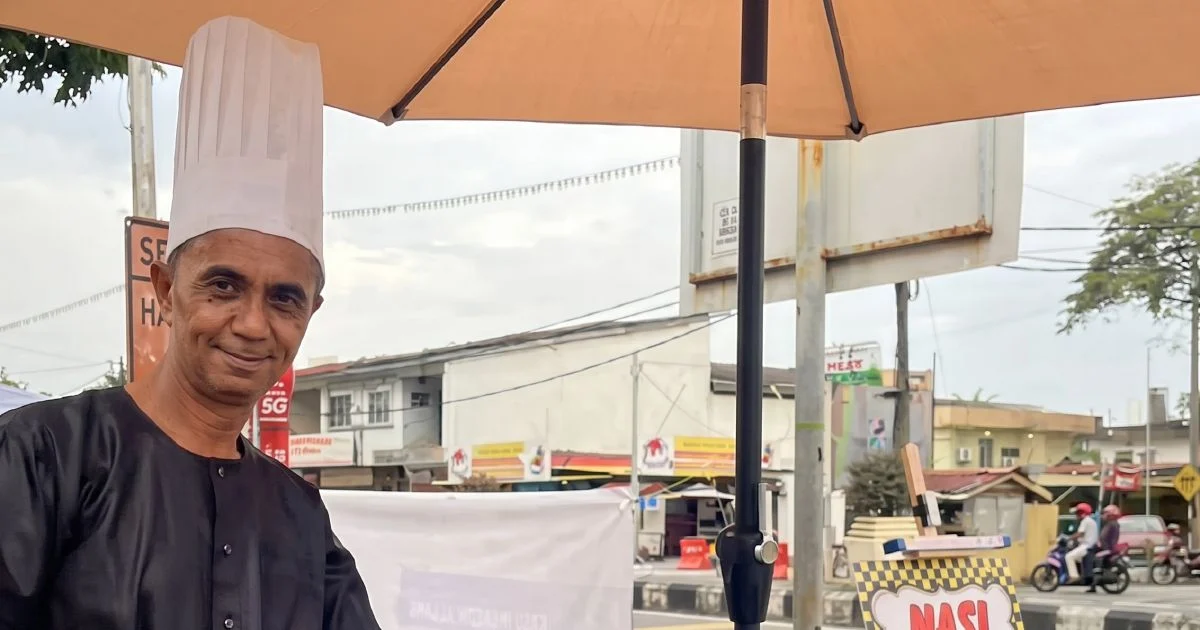
A vendor in Kota Baru has become an unlikely symbol of community spirit and entrepreneurial determination, having transformed a personal catastrophe into an opportunity to serve his neighbourhood. In 2021, the businessman's residence on Jalan Atas Paloh fell victim to a destructive fire that claimed his home and threatened to derail his future. Rather than succumbing to despair, he seized the moment to reinvent himself, channelling his energies into establishing a humble yet thriving nasi lemak business that has since earned him considerable local recognition.
The decision to enter the food trade was not merely a survival mechanism but a calculated move to serve an underserved segment of Kota Baru's population. By pricing his nasi lemak packets at just RM1, the entrepreneur has positioned himself as a provider of quality sustenance for workers, students, and others dependent on affordable meals. This pricing strategy, which many would consider unsustainably low in today's inflationary climate, reflects a genuine commitment to community welfare that transcends profit maximisation. His willingness to operate at such margins underscores the values that drive many grassroots hawkers across Malaysia—a blend of pragmatism and social responsibility.
The nasi lemak itself has become a beacon of consistency and value in the Kota Baru food landscape. Each packet contains the traditional components: fragrant coconut rice, a protein element, sambal, and accompanying vegetables, all prepared with the care characteristic of established hawkers. The affordability of the offering has made it particularly popular among daily commuters and office workers seeking quick, satisfying meals without breaking their budgets. In an era where street food prices have climbed steadily, his RM1 packets represent a rare anomaly—a defiant gesture against the cost-of-living squeeze affecting ordinary Malaysians.
What distinguishes this vendor's trajectory is the psychological and emotional dimension underlying his business success. The 2021 fire represented not only material loss but a profound disruption to his sense of stability and security. Many individuals facing similar circumstances might have relocated, sought alternative employment, or entered a prolonged period of recovery. Instead, this entrepreneur demonstrated the kind of adaptive resilience that characterises successful small business owners across Southeast Asia. His ability to view the fire as a potential turning point rather than a terminal setback speaks to a mindset oriented toward solution-finding and forward momentum.
The local community's embrace of his venture has reinforced his commitment to the enterprise. Word-of-mouth recommendations, a cornerstone of hawker business success in Malaysia, have gradually expanded his customer base beyond initial circles. Regular patrons appreciate not only the affordability but also the story behind the business—the narrative of personal recovery and community contribution resonates deeply in Malaysian culture, where resilience is frequently celebrated. Social media attention, captured through videos and posts documenting his operation, has amplified his visibility beyond the immediate Kota Baru vicinity.
From an economic perspective, this vendor's experience illuminates broader patterns in Malaysian informal economy dynamics. Hawker trade remains a critical employment avenue for individuals facing displacement or economic shock, offering relatively low barriers to entry and leveraging existing culinary skills. The flexibility inherent in street food vending allows entrepreneurs to adjust operations based on market response, inventory availability, and personal circumstances—an adaptability that formal employment rarely permits. His RM1 pricing, while seemingly irrational on financial spreadsheets, likely reflects deep familiarity with demand elasticity and community purchasing power in Kota Baru.
The sustainability of such a venture, however, raises important questions about operational economics and long-term viability. Food costs have escalated significantly since 2021, particularly for rice, coconut, and seafood-derived ingredients. A vendor maintaining RM1 prices must either absorb cost increases through reduced profit margins, source ingredients creatively through wholesale networks, or increase operational efficiency dramatically. Understanding how this entrepreneur navigates these pressures offers valuable insight into hawker resilience strategies employed throughout Malaysia's informal food sector.
Moreover, his story carries implicit significance for Malaysian policymakers and community leaders considering support mechanisms for disaster-affected individuals. Rather than waiting for government assistance programmes or relying exclusively on charity, this vendor demonstrated entrepreneurial initiative that required minimal capital injection yet generated sustainable income and community value. This model suggests that post-disaster recovery strategies might emphasise skill activation and market opportunity identification alongside conventional financial support.
The broader cultural resonance of his achievement extends into discussions about dignity, self-reliance, and community interdependence in Malaysian society. His choice to rebuild through direct service to neighbours rather than pursuing higher-status employment reflects values deeply embedded in local culture. The appreciation expressed by customers who purchase his nasi lemak reinforces reciprocal relationships characteristic of traditional community structures, even within modern urban and semi-urban settings.
Looking forward, the sustainability and potential expansion of his business warrants continued attention. Should his operation continue expanding, questions arise about whether he might transition to larger premises, employ additional staff, or maintain the intimate scale characteristic of current operations. Each trajectory carries different implications for his quality of life, community impact, and the example he sets for others facing adversity. His journey from fire victim to established food vendor represents, in microcosm, the entrepreneurial possibilities available to Malaysians willing to transform crisis into opportunity—a testament to the resilience that characterises Southeast Asian communities navigating economic uncertainty.

