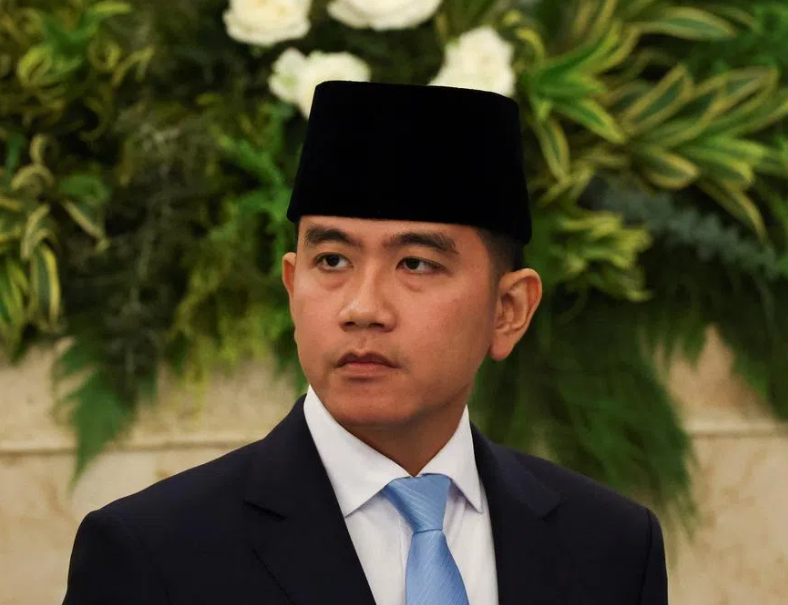
Vice-President Gibran Rakabuming Raka has orchestrated a series of high-profile meetings with student demonstrators who had been publicly criticizing two of the Indonesian government's flagship initiatives—the free meals programme and the Red and White Cooperative scheme. Following a closed-door session with university representatives on June 15, Gibran personally invited five student leaders onto a state-sponsored working trip to eastern Indonesia on June 18, a move that has crystallized questions about his evolving political role within the administration and his apparent preparation for the 2029 presidential election cycle.
The timing and nature of Gibran's engagement merit scrutiny within the broader context of Indonesia's political landscape. The Vice-President accepted invitations from student activists who had taken to Jakarta's streets to challenge government policy on these two ambitious but contentious programmes. The Red and White Cooperative initiative aims to establish thousands of village-level enterprises nationwide, while the free meals programme represents a significant social welfare commitment. By positioning himself as receptive to student concerns, Gibran demonstrated calculated responsiveness to grassroots criticism at a moment when public sentiment has grown increasingly sceptical toward government delivery and programme management.
According to Muhammad Abdi Maludin, a student leader from Bung Karno University who attended the palace meeting, the Vice-President pledged to audit the students' research findings and transmit them to President Prabowo Subianto. This framing is telling: Gibran presented himself as an intermediary rather than a decision-maker, channelling student concerns upward rather than committing to concrete policy adjustments. The statement suggested willingness to engage, yet contained subtle acknowledgement of his position within the hierarchy—he would gather information and pass it along to the chief executive, not enact changes independently.
Public reaction to Gibran's outreach has proven decidedly mixed, revealing deep scepticism among Indonesian social media users about the authenticity of his engagement. Critics questioned whether the students selected represented genuine grassroots leadership or were instead chosen for their relative obscurity and presumed malleability. One commenter noted that involving representatives from Indonesia's largest and most prestigious campuses would have lent greater credibility to the exercise. Others characterised the entire episode as performative theatre—a carefully staged media opportunity rather than substantive dialogue with legitimate protest movements.
These doubts intensified dramatically when reporting emerged in late June that student participants had received monetary payments following their meetings with Gibran. Local news outlets Kompas and Tribunnews documented payments ranging from 2 million to 20 million rupiah distributed to attending students, though the source and explicit purpose of these transfers remained officially unexplained. The Presidential Palace announced an investigation, but the incident substantially undermined the Vice-President's credibility as a leader earnestly engaging with independent-minded critics. Whether intentionally or not, the financial element transformed what had been framed as genuine policy consultation into something resembling clientelism.
Scholars at Indonesia's Center for Strategic and International Studies have offered competing interpretations of Gibran's recent activities. Nicky Fahrizal characterises the Vice-President's visible eagerness to interact with students and ordinary citizens as deliberate personal branding ahead of the 2029 election window. By cultivating an image of accessibility and receptiveness during this early phase of the electoral cycle, Gibran may be building political capital and name recognition among younger demographics. Fahrizal's analysis suggests the outreach serves not immediate policy objectives but rather long-term political positioning, creating the public persona of a leader who listens and responds to citizen concerns.
Yet other analysts interpret Gibran's moves more cynically as evidence of limited institutional authority within the current administration. Since taking office alongside President Prabowo in October 2024, the Vice-President has occupied an unusually constrained position. Unlike many predecessors who wielded significant policy portfolios or chaired crucial cabinet committees, Gibran has remained substantially removed from major decision-making processes. While nominally linked to prominent assignments such as Papua development and the new capital Nusantara, he has exercised limited tangible influence over these initiatives. The free meals programme falls under the National Nutrition Agency (BGN), which reports directly to the President, while the Red and White Cooperative scheme operates as a presidential priority coordinated across multiple ministries and agencies beyond Gibran's direct purview.
This structural weakness shapes interpretation of Gibran's student engagement. Padjadjaran University researcher Irman Lanti contends that the Vice-President's heightened visibility around contested programmes does not necessarily reflect substantive involvement in their formation or management. Rather, Gibran appears to be attempting to demonstrate relevance by inserting himself into public debates surrounding the initiatives, thereby proving his utility to the administration and establishing grounds for future political candidacy. According to this reading, Gibran is strategically riding waves of student-led criticism to enhance his profile without possessing the institutional leverage to fundamentally reshape either programme's direction or implementation.
The free meals programme has become particularly fraught following corruption allegations within the BGN. In June 2024, agency chief Dadan Hindayana was removed from his position and subsequently arrested alongside two former deputies in connection with alleged procurement irregularities. The scandal generated intense public scrutiny of programme governance and accountability mechanisms. When Gibran visited a primary school in East Nusa Tenggara on June 18, he publicly acknowledged shortcomings in the programme and called for enhanced governance standards. He instructed officials to accelerate implementation in areas where infrastructure was already complete and promised follow-up engagement on local concerns.
yet these commitments reflect what analysts characterise as "deliberate strategy" designed to appease public anger without necessarily delivering substantive policy reform. Edbert Gani Suryahudaya of CSIS notes that Gibran's approach relies on relatively low-cost visibility and apparent responsiveness rather than comprehensive restructuring. The Vice-President can afford to acknowledge programme shortcomings and promise improvements because he does not directly oversee implementation. Should improvements materialise, he claims credit; should they falter, the responsibility rests with the relevant ministries and agencies. This positioning allows maximum political benefit with minimal institutional risk.
For Malaysian observers and Southeast Asian policymakers, Gibran's trajectory illuminates broader patterns within Indonesian governance and regional politics more generally. The gap between formal vice-presidential rank and actual policy authority reflects Indonesia's specific constitutional and administrative arrangements, but the underlying pattern—elected officials seeking public visibility to compensate for constrained institutional power—resonates across the region. Gibran's engagement with student protesters demonstrates how young Southeast Asian political figures navigate the tension between democratic expectations of responsiveness and the realities of hierarchical power distribution within government.
The payments to attending students also raise uncomfortable questions about the nature of political engagement in contemporary Indonesia. Transactional relationships between politicians and citizens, even when framed as support for genuine policy concerns, risk corrupting the authenticity of democratic participation. If students view meetings with high officials as opportunities for financial gain rather than platforms for substantive advocacy, the quality of public-government dialogue deteriorates. This dynamic extends beyond Indonesia, reflecting regional challenges regarding campaign finance, patronage networks, and the vulnerability of grassroots movements to co-optation by state actors.
Looking forward, Gibran's positioning appears designed to maintain relevance within current administration while preparing for potential presidential ambitions in 2029. Whether his student engagement produces meaningful policy adjustments remains uncertain, but the Vice-President has clearly established himself as a figure willing to engage with critics and acknowledge programme limitations. This reputation for responsiveness, combined with his family's political pedigree, positions him as a plausible future presidential candidate should the political landscape shift. For now, however, Gibran remains a Vice-President operating from the margins of executive authority, leveraging public engagement and media visibility to construct a political identity independent of the specific portfolios and programmes formally assigned to his office.

