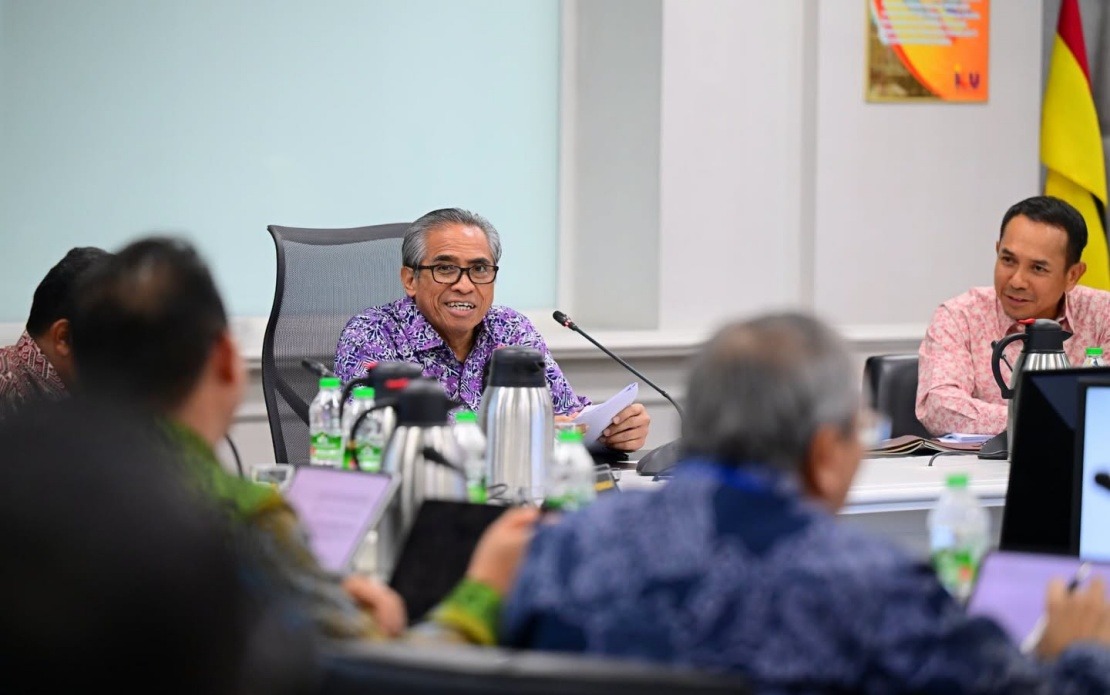
Chief Secretary to the Government Tan Sri Shamsul Azri Abu Bakar has issued a sweeping directive to accelerate delivery of more than 40,000 identified small-scale development projects across the country, signalling a strategic pivot toward quick-win initiatives that directly touch citizens' lives. The instruction, communicated through the National Development Action Committee meeting, represents a concentrated effort to translate government priorities into tangible improvements in communities nationwide, moving beyond large infrastructure schemes to focus on immediate, visible impact.
The mandate extends to all ministry secretaries-general (KSUs), who have been tasked not merely with ensuring projects proceed on paper, but with engaging in active field oversight. Shamsul Azri emphasised that KSUs must conduct regular site visits, maintain close monitoring of implementation progress, and resolve obstacles encountered on the ground—an approach designed to cut through administrative delays that commonly plague development initiatives in the Malaysian bureaucracy. This hands-on directive suggests frustration with previous implementation gaps and signals stronger accountability expectations at the leadership level.
The portfolio of projects encompasses infrastructure and facilities most Malaysians encounter regularly in their daily lives. Road repairs address deteriorating transportation networks that affect commuters and commerce, while drain maintenance targets flooding vulnerabilities that plague urban and rural areas alike during monsoon seasons. The inclusion of government quarters refurbishment speaks to improving civil servant working conditions, whereas classroom repairs directly enhance educational environments. Healthcare facility upgrades, market improvements, and public stall enhancements round out a package explicitly designed to demonstrate government responsiveness to tangible, community-felt needs rather than abstract economic indicators.
What distinguishes this initiative is its temporal ambition: most projects are projected to reach completion within three to six months. This compressed timeline contrasts sharply with typical Malaysian development projects, which frequently suffer delays measured in years. The focus on quick implementation reflects strategic political calculations—delivering visible improvements during a defined window maximises public perception of government effectiveness and responsiveness. For residents long accustomed to infrastructure complaints languishing in bureaucratic queues, a six-month delivery promise represents a notable departure from conventional practice.
The characterisation of these projects as "low-hanging fruit" reveals underlying strategic thinking. This phrase suggests not haphazard selection but deliberate identification of initiatives that deliver maximum community benefit relative to implementation complexity and resource requirements. By avoiding megaprojects that demand lengthy approval processes, environmental assessments, and inter-agency coordination, the government positions itself to demonstrate competence and follow-through on commitments. This approach particularly resonates in Malaysian politics, where citizens frequently express cynicism about unfulfilled promises and delayed developments.
From a regional perspective, Malaysia's emphasis on decentralised, small-scale project delivery aligns with evolving development philosophy across Southeast Asia. Nations throughout the region increasingly recognise that community satisfaction stems less from singular grand developments than from consistent delivery of everyday infrastructure maintenance and incremental improvements. Indonesia, Thailand, and the Philippines have experimented with similar approaches, discovering that targeted investments in local infrastructure generate broader political dividends than concentration on prestige projects. Malaysia's systematic approach to 40,000 identified initiatives suggests learning from regional experience.
The directive carries significant implications for Malaysia's civil service efficiency. Mobilising all KSUs around a unified objective tests institutional capacity and creates performance benchmarks against which progress becomes measurable. Success in executing 40,000 projects nationwide demonstrates government competence at scale; failure or substantial delays become equally conspicuous. This mechanism potentially reshapes how Malaysian bureaucracy evaluates and incentivises performance, shifting focus from process compliance to outcome delivery. The emphasis on site visits and ground-level problem-solving also suggests cultural change toward pragmatism over rigid proceduralism.
For ordinary Malaysians, the initiative addresses persistent grievances about infrastructure quality and government responsiveness. Deteriorating roads, inadequate drainage, and neglected public facilities feature prominently in citizen complaints captured through municipal feedback channels and social media. By systematically tackling 40,000 such complaints simultaneously, government demonstrates intent to address accumulated backlog rather than merely announcing isolated improvements. The distributed geographic focus—projects nationwide rather than concentrated in developed areas—signals commitment to equitable delivery and responsiveness across all constituencies.
Implementation challenges, however, remain substantial. Coordinating 40,000 projects across multiple agencies demands sophisticated project management infrastructure and inter-departmental cooperation that historically challenge Malaysian administration. Funding availability, material supply chains, and skilled labour availability could constrain execution. Local governance capacity, particularly in less developed areas, may limit implementation velocity. Whether KSUs possess requisite authority to overcome these obstacles or face interagency turf wars remains uncertain. The success metric—whether 40,000 projects actually complete within stipulated timeframes—will emerge within months, providing clarity on genuine government capacity versus aspirational announcements.
The political timing of this initiative merits consideration. Directing visible infrastructure improvements and demonstrating government responsiveness to community needs serves multiple constituencies simultaneously: urban dwellers frustrated with deteriorating civic infrastructure, rural communities seeking equity in development distribution, and civil servants whose performance becomes measurable and valued. In the broader Malaysian political context, where citizen satisfaction with government effectiveness has fluctuated, this initiative represents attempt to rebuild confidence through demonstrable action rather than rhetorical commitment. The coming months will reveal whether this represents genuine operational transformation or merely optimistic projection of implementation capability.

