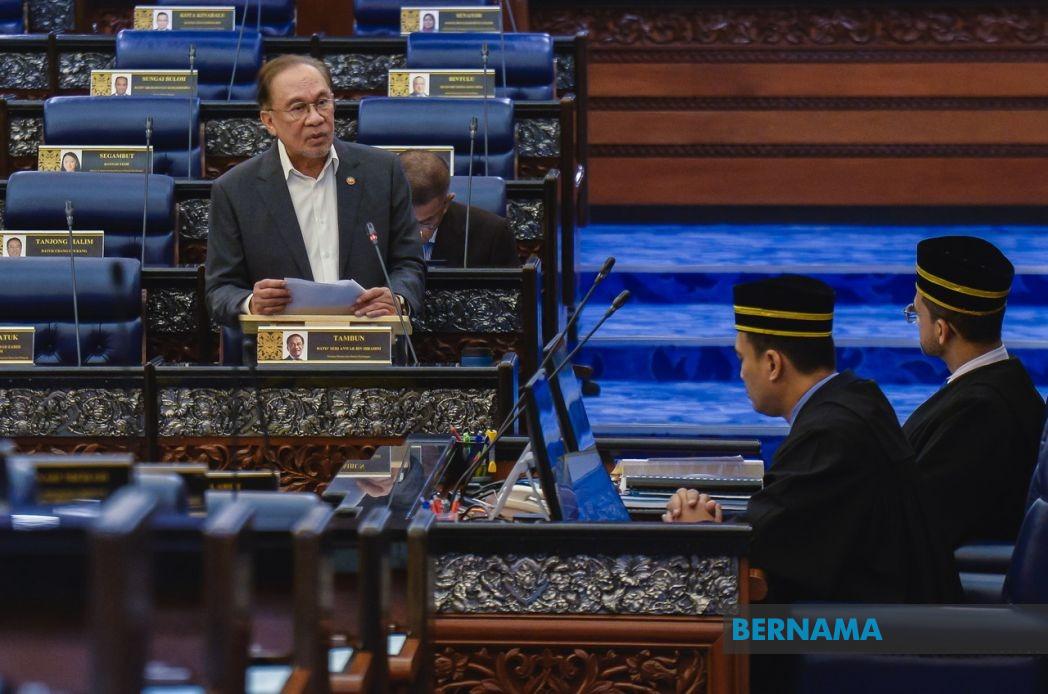
Prime Minister Datuk Seri Anwar Ibrahim moved to dispel confusion surrounding government policy on activities in Federal Land Development Authority (FELDA) settlements yesterday, emphasising that no blanket prohibition exists against holding programmes in these communities. Speaking during the Minister's Question Time in parliament, he sought to clarify the distinction between restricting the use of state resources for electoral purposes and preventing legitimate development activities or state-level initiatives from taking place in FELDA areas.
The clarification came in response to queries from opposition lawmakers about the cancellation of the FELDA Settlers' Day programme that had been scheduled for Kluang, Johor, on June 20 and 21. Anwar rejected suggestions that the federal government had issued directives halting the event, denying involvement in what some had characterised as suppression of community activities. His response underscores ongoing tensions between the federal administration and state governments over governance and resource allocation in these settlement zones, which historically have served as crucial bases for both agricultural development and political mobilisation.
The Prime Minister articulated a nuanced position that appears designed to accommodate state governments' autonomy while maintaining oversight over how federal resources are deployed. State governments retain full authority to organise events and programmes within FELDA areas, he indicated, including activities related to administrative functions such as land title issuance. However, this freedom operates within the boundaries established by Malaysia's electoral laws, which explicitly prohibit the deployment of government machinery—whether federal or state apparatus—for campaign activities. This distinction has become increasingly important as Malaysia's political landscape remains fragmented, with opposition-controlled and coalition-governed states sharing responsibility for rural development.
The clarification assumes particular significance given FELDA's historical role as a politically sensitive domain in Malaysia's electoral mathematics. These settlements, spread across multiple states, represent substantial blocs of voters whose support has long been contested by major political parties. By establishing clear parameters around what constitutes an impermissible use of resources versus legitimate state or federal activity, the government appears to be attempting to reduce ambiguity that could be exploited by rival political forces. The emphasis on electoral law compliance rather than outright prohibition suggests an effort to balance transparency with preserving the government's ability to enforce regulations.
Anwar outlined the MADANI Government's broader commitment to transforming FELDA communities through targeted development initiatives. He referenced the establishment of dialysis centres in settlements and the expansion of infrastructure and facilities through federal agencies as evidence of the administration's priority in addressing historical deficiencies. His comments implicitly criticised previous governance of FELDA areas, suggesting that these communities had been neglected and sidelined in rural development planning. This framing positions the current government's approach as reparative, aimed at rectifying years of underinvestment and administrative inattention.
The Prime Minister specifically noted that Deputy Prime Minister Datuk Seri Dr Ahmad Zahid Hamidi shares this commitment to enhancing FELDA welfare provisions. This pairing of the nation's top two executives in articulating the policy signals the government's intent to present a unified message on the issue. The involvement of both figures also underscores that FELDA revitalisation forms a central component of the coalition government's broader rural development agenda, transcending partisan divisions even as it navigates the complex politics of settlement areas.
State governments' prerogatives in FELDA areas extend beyond merely convening programmes; Anwar confirmed that state administrations can exercise their land management responsibilities, including the issuance of title deeds. This acknowledgment respects the constitutional division of power between federal and state authorities while reinforcing that such legitimate governance functions need not be constrained by electoral considerations. The differentiation between administrative and campaigning activities remains crucial to his argument, as it allows the government to support state development initiatives without appearing to undermine electoral fairness.
The tension between federal oversight and state autonomy in FELDA governance reflects broader challenges in Malaysia's federal system, particularly in regions where governance shifts between different political coalitions. FELDA settlements in opposition-held states may face different pressures and opportunities than those in coalition-governed territories, and the Prime Minister's comments appear intended to reassure all stakeholders that political affiliation will not determine access to development programmes or the ability to conduct community activities. This assurance carries weight given Malaysia's history of resource allocation disparities between states aligned with and opposed to the federal government.
Election law compliance represents a non-negotiable boundary in the government's approach, one that applies uniformly regardless of which party controls a given state. By anchoring the restriction in statutory requirements rather than government discretion, Anwar seeks to depoliticise what has become a contentious issue. The prohibition against mobilising federal FELDA machinery for campaign purposes applies with equal force whether the campaigning party holds federal or state power, a principle he appeared keen to emphasise in addressing parliamentary concerns about potential discrimination.
The broader context for these remarks includes Malaysia's transition to the MADANI framework, which has positioned social welfare, inclusivity, and equitable development as central policy pillars. FELDA communities, whose economic fortunes have fluctuated considerably over recent decades as palm oil markets shifted and agricultural modernisation reshaped settlement economies, represent a crucial test case for these commitments. By pledging enhanced facilities and targeted interventions, the government signals its intention to address rural inequality and ensure that development gains reach communities that have historically occupied a precarious position between agricultural subsistence and modern economic integration.
The clarification also reflects the government's awareness that regulatory ambiguity can fuel political controversy and erode public confidence in institutional fairness. By explicitly stating what is and is not permissible, the administration reduces space for rival parties to allege discrimination or abuse of power. This approach recognises that in Malaysia's polarised political environment, clarity and consistency in how rules are applied across different jurisdictions and parties become essential to maintaining democratic legitimacy. The Prime Minister's parliamentary intervention, therefore, serves not merely to address an immediate controversy but to establish precedent and principle for ongoing federal-state relations in FELDA governance.

