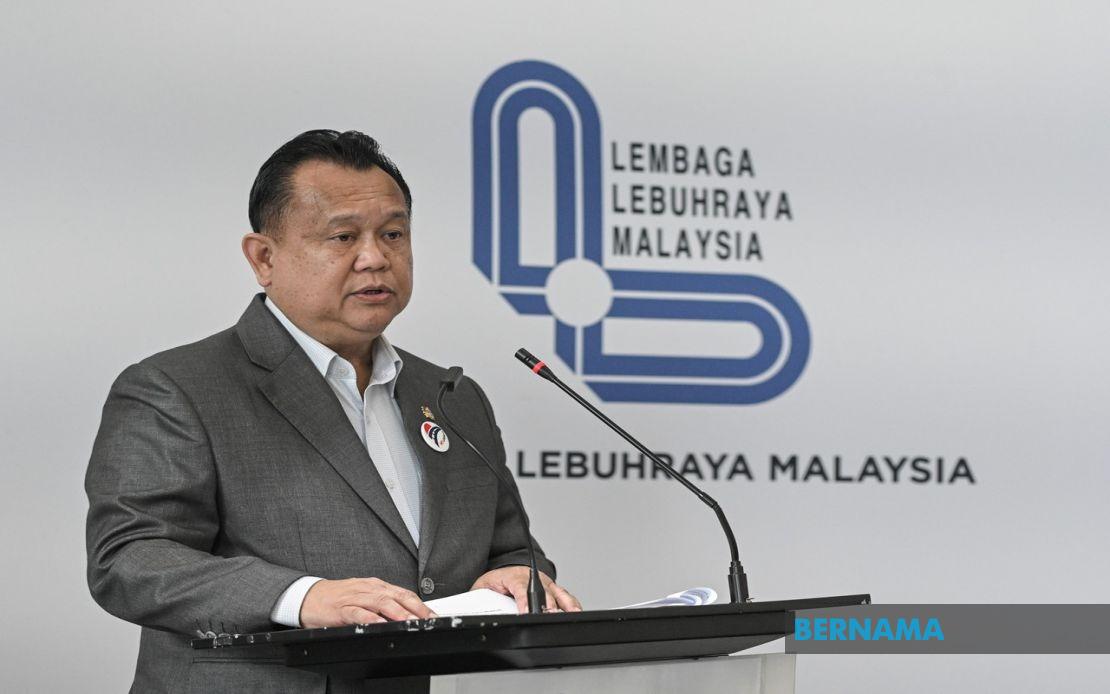
Malaysia's government is moving to address road safety by deploying solar-powered LED street lighting across the nation's most dangerous highway stretches. Works Minister Datuk Seri Alexander Nanta Linggi announced on June 23 that RM25.2 million has been allocated for the opening phase of the initiative, which forms part of the broader MADANI Monitoring programme. The project represents a coordinated effort between the Works Ministry, Finance Ministry, and Malaysian Highway Authority (LLM) to reduce accident rates at 32 high-risk locations nationwide.
The scale of the undertaking reflects the government's commitment to tackling road safety systematically. A total of 3,000 light poles will be installed across the selected highways, creating significantly improved visibility during night-time driving conditions. This investment directly responds to Prime Minister Datuk Seri Anwar Ibrahim's earlier announcement in October's 2026 Budget, where he identified road accidents as a critical public safety concern requiring targeted intervention. The selected contractor has already received the Letter of Acceptance, enabling immediate commencement of on-site construction work.
While the original budgetary proposal suggested RM30 million for the entire programme, the government has adopted a phased approach with RM25.2 million allocated initially. According to Nanta Linggi, this strategy allows the authorities to assess ongoing requirements and deploy remaining funds strategically as implementation progresses. The decision reflects prudent financial management while maintaining momentum on a critical infrastructure project. The remaining allocation will be released following periodic evaluations of project needs and effectiveness metrics.
The choice of solar-powered LED technology represents a forward-thinking infrastructure decision with multiple advantages. Solar systems eliminate ongoing electricity supply dependencies and reduce operational costs associated with conventional grid-connected street lights. LED technology consumes significantly less power than traditional lighting, extending operational life and reducing maintenance requirements. For highway locations, particularly those in rural or remote areas, solar-powered systems provide reliable illumination without requiring extensive grid infrastructure investment.
Road safety statistics across Malaysia have underscored the urgency of such interventions. High-risk highway corridors experience disproportionately high accident concentrations, often during hours of darkness when visibility becomes critical. Improved lighting at accident hotspots addresses a fundamental contributing factor to serious and fatal collisions. The 32 selected locations represent areas where accidents have historically clustered, indicating that lighting improvements could deliver substantial safety gains. These corridors handle significant traffic volumes, meaning the benefits will extend to hundreds of thousands of road users.
The timeline for completion by the end of November 2024 reflects an accelerated implementation schedule. Physical construction begins immediately following contract handover, suggesting the contractor mobilises rapidly with pre-positioned equipment and labour. This aggressive timeline indicates government determination to deliver safety improvements within the fiscal year, avoiding typical delays that often extend infrastructure projects beyond initial schedules. Meeting the November deadline would demonstrate the effectiveness of the streamlined approval and procurement processes.
The solar LED initiative fits within Malaysia's broader road safety modernisation efforts. Beyond simple lighting installation, such projects often incorporate elements of highway infrastructure standardisation and visibility enhancement more broadly. Modern LED systems provide superior light quality compared to older sodium vapour technology, improving motorist visibility of road markings, signage, and potential hazards. For Malaysian highways carrying increasingly heavy traffic volumes, particularly during monsoon seasons when visibility challenges intensify, such improvements address genuine operational safety concerns.
The economic implications extend beyond accident reduction. Fewer serious highway accidents translate into reduced emergency response costs, lower healthcare burdens, and decreased insurance claims. The broader economy benefits when roads become safer, as companies experience fewer fleet vehicle losses and reduced employee downtime from accident-related injuries. For the logistics and transport sectors that rely heavily on Malaysian highways, safety improvements create more predictable operational conditions and reduced risk exposure.
The MADANI Monitoring framework represents an evolution in how Malaysia approaches infrastructure safety monitoring. Rather than reactive response to accidents, the initiative emphasises proactive hazard mitigation through targeted investment. This systematic identification of high-risk locations and strategic intervention reflects contemporary best practices in road safety management. The government's willingness to commit resources to prevention rather than merely addressing accident consequences demonstrates a shift in public safety philosophy.
For Southeast Asian context, Malaysia's investment in highway safety technology positions it among regional leaders in infrastructure modernisation. The solar LED approach particularly resonates across Southeast Asia, where tropical climates and solar exposure create ideal conditions for renewable-powered street lighting. The Malaysian initiative may provide a replicable model for other ASEAN nations facing similar highway safety challenges, potentially influencing regional approaches to road infrastructure investment.
The contractor selection process and project management oversight will prove critical to successful execution. Quality control in light pole installation, solar panel positioning, and LED fixture calibration directly impacts the system's effectiveness. Poor installation could compromise lighting uniformity or reliability, undermining the safety benefits. The government's responsibility extends to establishing maintenance protocols ensuring systems remain operational and effective throughout their service life. Regular inspections and component replacement procedures will determine whether the RM25.2 million investment delivers sustained safety improvements or becomes compromised by maintenance neglect.
Road users, particularly long-distance travellers and commercial transport operators, represent the primary beneficiaries of this infrastructure initiative. Improved visibility during night-time driving reduces fatigue-related errors and enhances hazard detection capabilities. For commercial drivers operating under tight schedules, better lighting conditions potentially reduce accident risks linked to speed miscalculation and inadequate reaction time to sudden obstacles. The psychological benefit of improved lighting—reduced driver anxiety on unfamiliar stretches—should not be underestimated in comprehensive road safety analysis.

