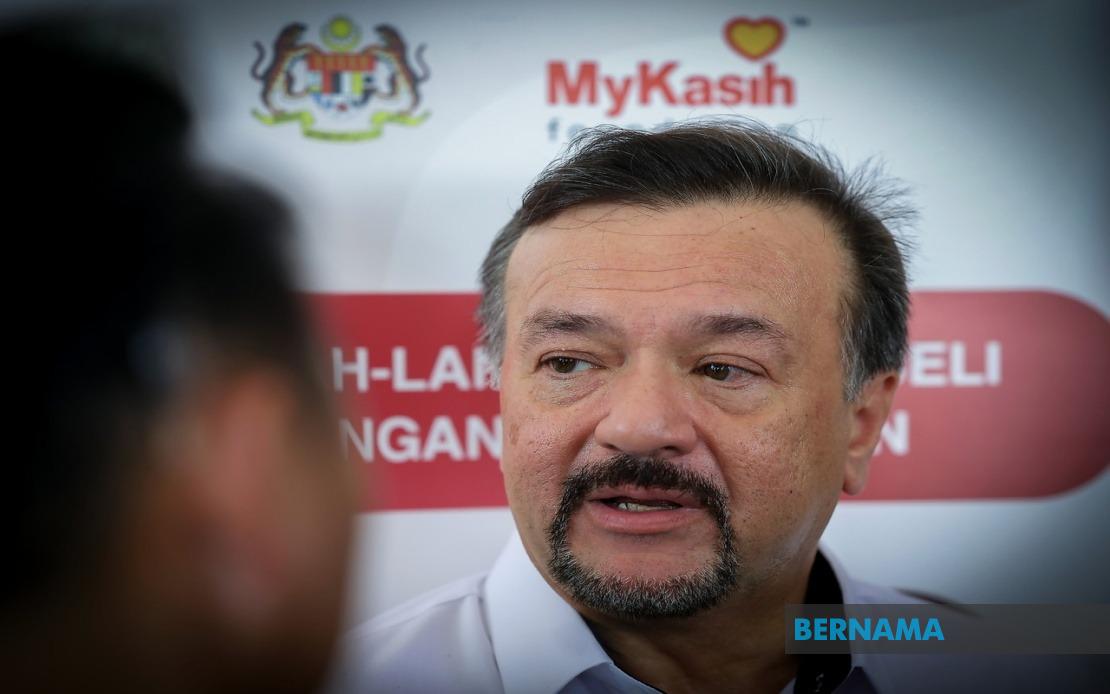
The Malaysian government has adopted a pragmatic stance towards refining its BUDI MADANI Diesel subsidy initiative, signalling willingness to entertain proposals that could strengthen the programme's effectiveness. Finance Minister II Datuk Seri Amir Hamzah Azizan made this position clear during a media briefing in Kuching on June 24, emphasising that any adjustments to the scheme—particularly regarding fuel quotas—would be grounded in empirical usage evidence rather than speculative demands from stakeholders.
The diesel subsidy programme represents a significant shift in how the government manages fuel assistance, moving away from blanket subsidies towards targeted support mechanisms. This evolution reflects broader efforts to ensure that public resources reach those who genuinely need them while maintaining fiscal sustainability. Amir Hamzah's openness to refinement suggests the authorities recognise that no subsidy framework emerges perfectly formed, and refinements based on real-world performance data enhance programme credibility and efficiency.
Early performance metrics from the scheme provide a crucial foundation for policy decisions going forward. Data spanning January through May of this year reveals that only 0.76 per cent of programme participants exceeded the 200-litre consumption threshold, a figure that Amir Hamzah cited to demonstrate the quota structure's current adequacy. This statistic carries particular significance for Malaysian motorists and logistics operators, as it suggests that existing allocation levels accommodate the vast majority of legitimate users without requiring immediate expansion.
The Finance Minister's reference to the RON95 petrol subsidy experience illustrates how initial scepticism about quota sufficiency often proves unfounded once schemes mature. When that programme launched, critics voiced concerns about insufficient allocations, yet subsequent implementation data validated the original parameters. This historical parallel provides confidence that the BUDI Diesel framework, though nascent, may similarly prove adequate upon full maturation and user adjustment.
The government's approach mirrors strategies successfully deployed in managing the e-hailing sector's fuel subsidy programme, a domain where dynamic quota adjustments have become routine. That programme now operates with differential quotas—offering drivers either 600 or 800 litres monthly depending on verified consumption patterns—demonstrating how evidence-based flexibility can accommodate legitimate variations in user needs. Such tiered approaches balance equity against operational realism, recognising that transportation operators genuinely face different fuel demands based on vehicle type, route patterns, and usage intensity.
For Malaysia's logistics and transport sectors, this measured approach carries significant implications. Rather than facing arbitrary quota reductions or sudden programme changes, operators can anticipate that adjustments will reflect documented consumption data. This predictability enables better financial planning for small and medium-sized enterprises dependent on fuel subsidies to maintain competitive pricing. The government's commitment to data-driven decision-making also suggests that well-documented cases of insufficient quotas will receive serious consideration rather than dismissal.
The involvement of Works Minister Datuk Seri Alexander Nanta Linggi at the media briefing underscores the programme's cross-ministerial importance and transport sector significance. Infrastructure and logistics development depend substantially on fuel cost stability, making the BUDI Diesel framework a critical tool for maintaining competitiveness in regional supply chains. Diesel costs directly influence freight pricing, construction project viability, and agricultural mechanisation affordability—sectors vital to Malaysia's economic foundation.
The government's willingness to engage with proposals reflects mature subsidy governance, distinguishing between populist quota demands and legitimate systemic gaps. Amir Hamzah's emphasis on allowing the system to function before premature adjustments recognises that programme stabilisation requires time for usage patterns to stabilise and anomalies to emerge organically. This patience-based approach, while potentially frustrating to those seeking immediate changes, ultimately produces more sustainable and defensible policy outcomes.
Southeast Asian context matters here, as several regional economies operate parallel subsidy schemes with varying sophistication levels. Malaysia's adoption of data-driven diesel subsidy management positions it as a regional model for evidence-based social policy implementation. Countries across ASEAN facing similar fuel subsidy pressures may draw lessons from this framework, potentially influencing broader regional approaches to balancing fiscal responsibility against social support obligations.
Looking forward, the programme's success hinges on robust data collection and transparent policy communication. If usage data genuinely reveals systemic inadequacies—whether geographic disparities, sector-specific pressures, or demographic clusters experiencing disproportionate hardship—the government's stated openness provides a mechanism for addressing legitimate concerns. Conversely, if data confirms that current allocations serve the vast majority adequately, that evidence insulates policymakers against pressure for economically unjustifiable expansions.
The BUDI Diesel programme ultimately represents an attempt to balance competing imperatives: maintaining fuel affordability for working Malaysians and essential services whilst ensuring fiscal sustainability and preventing subsidy dependency. Amir Hamzah's flexibility-within-framework approach offers a measured path between rigid dogmatism and reactive populism. For Malaysian stakeholders—whether individual drivers, transport operators, or policy observers—this stance suggests that reasoned engagement with actual usage data provides the most promising avenue for programme improvements.
As implementation continues through 2024, the government's transparent monitoring of consumption patterns will prove critical. Regular public reporting of usage statistics would enhance stakeholder confidence and prevent speculation about hidden quota constraints. This transparency, combined with the demonstrated openness to evidence-based adjustments, establishes conditions where the subsidy programme can evolve responsively whilst maintaining public trust in government's stewardship of resources.

