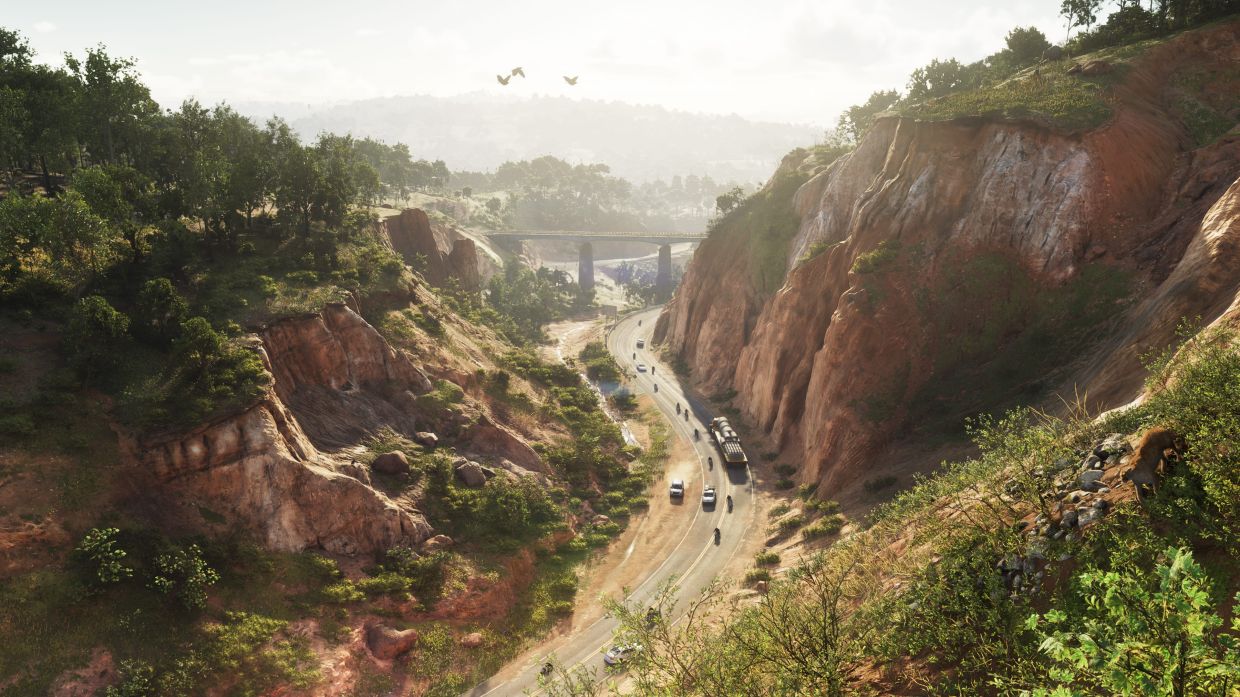
Grand Theft Auto VI's pre-order campaign will officially commence next week, Rockstar Games confirmed through a social media announcement, with the opportunity to secure copies available simultaneously on digital storefronts and through participating brick-and-mortar retailers. The subsidiary of Take-Two Interactive, headquartered in New York, did not specify exact pricing in its public statement, though the company simultaneously unveiled the game's official cover artwork to build momentum ahead of the sales window.
Industry watchers have converged on a consensus regarding the game's launch price point, projecting a base retail cost of US$80, equivalent to approximately RM329 in Malaysian currency. This assessment draws heavily on recent public remarks from Take-Two Interactive CEO Strauss Zelnick, combined with broader patterns observed across major publisher pricing strategies for flagship titles. The figure carries weight as a potential inflection point for how the sector values premium interactive entertainment moving forward.
Speculation had previously circulated within gaming communities and among financial analysts suggesting that Rockstar might position the game more aggressively, potentially at US$100 or roughly RM405. Such a move would have represented a deliberate departure from established pricing conventions within the industry, essentially repositioning consumer expectations around what consumers are willing to pay for a single game experience. The restraint to a comparatively traditional price tier suggests caution regarding market receptivity, despite the franchise's unparalleled commercial track record.
The Grand Theft Auto franchise has maintained its position as gaming's most culturally contentious and commercially dominant property since its 1997 debut, fundamentally shaped by gameplay centred on criminal simulation within expansive metropolitan environments. Players engage with sprawling urban worlds where they assume the roles of criminals executing illicit activities across diverse neighbourhoods and districts. The series has consistently attracted both passionate endorsement from its audience and vigorous critique from cultural commentators concerned with its depictions of violence and sexual content.
The newest entry revisits Vice City, a Miami-inspired setting that players explored extensively in 2002's Grand Theft Auto: Vice City. Development documentation indicates the game will follow Jason Duval and Lucia Caminos, criminal characters whose storylines intersect throughout the narrative. Significantly, the title will introduce a playable female protagonist to the franchise's primary campaign for the first time, representing a meaningful evolution in the series' character representation despite decades of player-controlled options across supplementary modes.
Originally scheduled for release during 2025, Grand Theft Auto VI was first revealed through a cinematic trailer providing glimpses of the Vice City setting and confirming the female protagonist feature. The trajectory toward launch has been marked by industry anticipation reaching unprecedented levels, a phenomenon that Strauss Zelnick acknowledged with characteristic candour during recent investor discussions. The chief executive characterized the situation as "very, very exciting and terrifying because the expectations are so high," a comment that captures the peculiar pressure surrounding a franchise attempting to justify both developmental expense and consumer enthusiasm accumulated over multiple generations.
The franchise's commercial scale provides context for this intensity. Grand Theft Auto V, released in 2013, has accumulated sales exceeding 230 million copies globally, positioning it among the most commercially successful entertainment products ever created regardless of medium. The 2013 release fundamentally demonstrated the franchise's capacity to generate sustained revenue across console generations and computing platforms, establishing a financial baseline that the new entry must substantially exceed to be considered a commercial success by publisher standards.
The path to Grand Theft Auto VI's anticipated launch has not proceeded without significant obstacles and controversies. A substantial security breach occurred in 2022 when unfinished gameplay footage and developmental materials circulated widely across internet communities, constituting one of the gaming industry's most prominent cybersecurity incidents. The leak compromised Rockstar's ability to control the pacing and presentation of information regarding the game, forcing accelerated official announcements to establish narrative control.
Labour relations surrounding the game's development have also drawn considerable public scrutiny. Rockstar executed substantial workforce reductions during 2024, decisions that labour organizing groups characterised as union-busting activities designed to suppress employee organising efforts. These reductions occurred despite the company's record profitability and the massive market capitalisation of its parent entity, framing the cost-reduction measures within broader industry tensions between executive compensation philosophies and worker compensation standards. The reputational impact has resonated particularly within Southeast Asian gaming communities, where workforce fairness concerns carry increasing salience as the region's gaming industry expands.
For Malaysian audiences specifically, the pre-order announcement carries particular significance. The region represents a substantial gaming market where English-language AAA titles occupy prominent positions in consumer consciousness. A US$80 price point translates to meaningful consumer consideration within Malaysian purchasing contexts, where currency conversion significantly influences decision-making around entertainment spending. The franchise's cultural prominence means the release will inevitably generate discussion within Malaysian gaming spaces regarding both the game's content and the industry dynamics surrounding its production and distribution.

