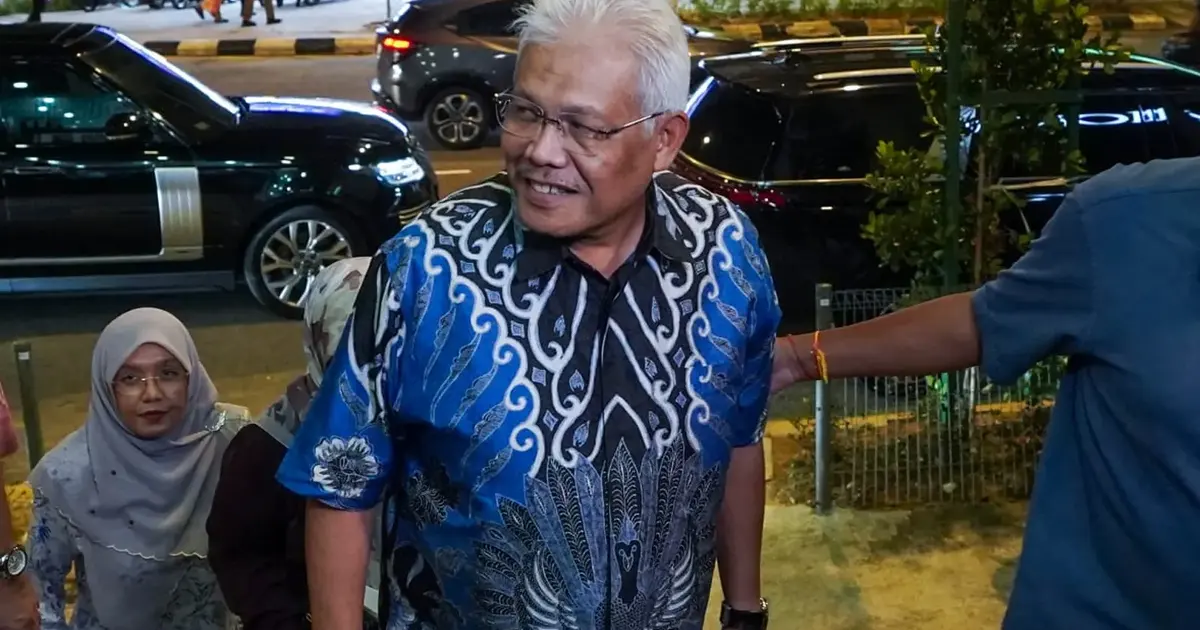
Prominent opposition politician Hamzah was among several lawmakers spotted entering PAS headquarters this week for what sources described as a significant closed-door meeting, adding another layer to the mounting political instability gripping the Perikatan Nasional coalition.
The timing of the gathering carries particular weight given the dramatic upheaval that has destabilised PN in recent days. Last week's decision by PAS to formally dissolve its partnership with Bersatu has sent shockwaves through Malaysia's political landscape, dismantling what had appeared to be a cornerstone alliance and setting the stage for unpredictable realignments across the opposition benches.
The presence of multiple opposition MPs at PAS's premises underscores how quickly Malaysian politics can pivot. Rather than functioning as a consolidated bloc capable of challenging the ruling coalition, PN now finds itself fractured and vulnerable to further defections or strategic repositioning by its constituent parties. PAS, as the dominant force within the PN framework, appears to be reassessing its options and potential partnerships as the political terrain shifts beneath its feet.
The nature of the discussions that took place at the meeting remains unclear, though observers suggest several plausible scenarios. Opposition figures may be exploring whether PAS intends to operate independently in future parliamentary votes, whether a realignment with other opposition parties is being contemplated, or whether informal agreements about legislative priorities are being negotiated. Such meetings typically indicate either formal coalition-building or at minimum, the groundwork for tacit arrangements on critical votes.
For Malaysian observers, the implications are significant. Perikatan Nasional has positioned itself as an alternative to both the ruling government and the main opposition Pakatan Harapan alliance. Its collapse into internal discord raises questions about its viability as a unified force. If PAS and Bersatu cannot maintain their partnership, the calculus for other PN members like GERAKAN becomes considerably more fraught, as their relevance within an increasingly unstable coalition diminishes.
The Bersatu-PAS split itself reflects deeper ideological and strategic rifts that have long simmered within the PN framework. Bersatu, led by Muhyiddin Yassin, has positioned itself as a multiethnic party capable of appealing across communal lines, while PAS maintains its Islamic-nationalist orientation with particular resonance among Malay-Muslim voters. The erosion of trust between the two parties, culminating in last week's formal rupture, suggests these differences have become irreconcilable at least for now.
For Hamzah's participation in the PAS meeting, the optics warrant scrutiny. His presence signals either that opposition MPs are attempting to create a broader counterweight to government influence, or that various political operators are hedging their bets as established coalition frameworks crumble. Hamzah's role as a seasoned political operator means any meeting in which he participates typically carries significance beyond the surface narrative.
The broader context for these developments involves the government's own precarious parliamentary position. While currently commanding enough support to govern, the administration faces persistent pressure from opposition benches that have become increasingly volatile. The breakdown of PN unity potentially creates both opportunities and risks for the government, depending on how these freed-up opposition MPs choose to align themselves on future critical votes.
Southeast Asian political dynamics are uniquely fluid, and Malaysia exemplifies this volatility. Unlike Westminster systems with stronger party discipline or formal coalition agreements, Malaysian politics often operates through fluid alignments where MPs retain considerable agency over their parliamentary behaviour. The fact that PAS and Bersatu have formally severed ties does not necessarily mean their lawmakers will vote against each other consistently or that new coalitions will crystallise immediately.
The meeting at PAS headquarters represents a moment in which established political arrangements are being questioned and new possibilities explored. Whether this coalesces into formal realignment or simply reflects the natural networking among opposition figures remains to be seen. What is clear is that PN's fracturing has opened space for political conversations that would have been unthinkable weeks ago.
Regional observers watching Malaysian politics will note that such fluidity, while potentially destabilising, also creates opportunities for more diverse coalitions and non-traditional alliances to emerge. The next weeks and months will reveal whether the opposition can forge more stable arrangements, or whether parliamentary life will remain characterised by the unpredictability that has become its defining feature.