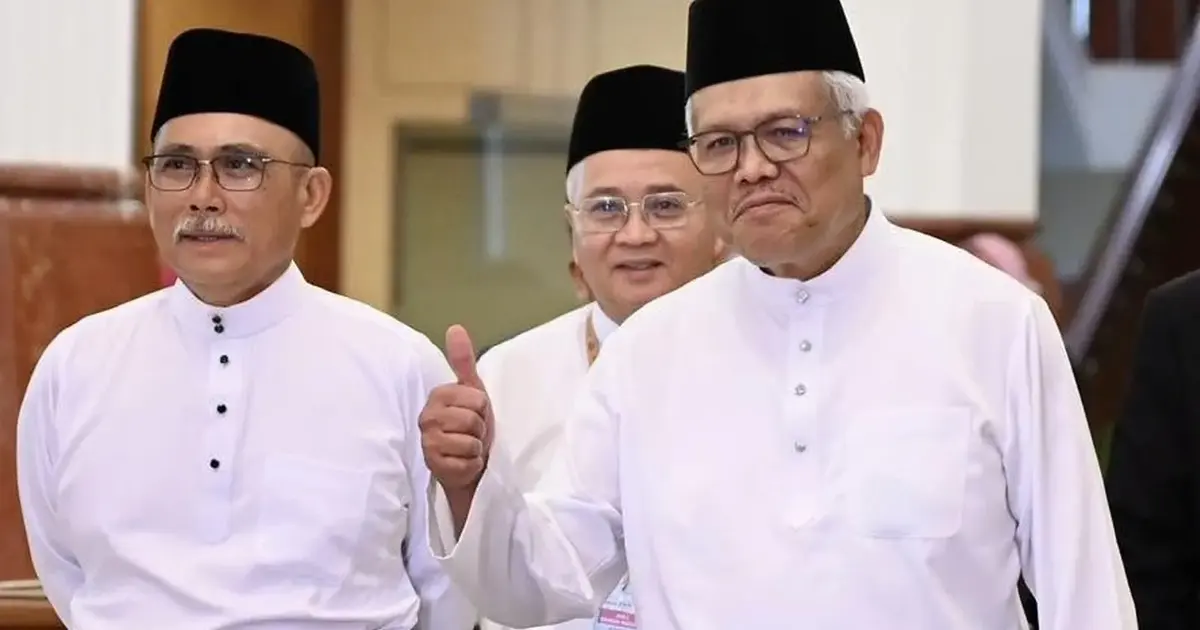
Hamzah Zainudin's elevation to opposition leader has been formally endorsed by a coalition commanding substantial parliamentary numbers, according to explanations from within Bersatu's leadership ranks. The Larut member of parliament secured the position through backing that extended across multiple parties, with senior party figures publicly confirming the breadth of support underpinning his appointment to Malaysia's primary opposition role.
A suspended Bersatu vice-president provided the most detailed account to date of the parliamentary arithmetic that enabled Hamzah's rise. The official stressed that the entire PAS parliamentary contingent moved as a unified bloc in supporting the appointment, a significant show of solidarity from the Islamist party that has emerged as a central player in opposition politics. Beyond PAS's coordinated backing, the same source indicated that representatives of Bersatu—the reformist party now outside government—contributed their weight to the outcome, with a majority of the party's parliamentary members throwing their support behind Hamzah's candidacy.
The emphasis on numerical strength carries particular weight in Malaysia's current political configuration, where opposition movements have fragmented across multiple parties and factions. Hamzah's appointment represents an attempt to consolidate these scattered forces under singular leadership, a move that assumes greater importance given the ruling coalition's parliamentary dominance. The gathering of PAS support en-bloc demonstrates the extent to which major opposition components have coalesced around a common choice, suggesting a degree of unity absent from Malaysian opposition politics in recent years.
Bersatu's role in this arrangement merits closer examination, particularly given the party's complex trajectory. The party that emerged from internal divisions within the ruling coalition has positioned itself as a credible opposition force, with its parliamentary members apparently seeing advantage in Hamzah's leadership. The confirmation that a majority of Bersatu MPs backed the appointment suggests that internal party management—a perpetual challenge for the organization—remained sufficiently stable to deliver united support for this initiative.
The appointment carries implications for opposition strategy heading into Malaysia's electoral calendar, whenever the next general election materializes. A consolidated opposition with clearly identified leadership stands better positioned to articulate coherent policy positions and mobilize voter support than a fragmented movement. Hamzah's appointment, validated through cross-party parliamentary arithmetic, signals an attempt to move beyond the personalist leadership struggles that have historically weakened Malaysian opposition effectiveness.
However, the public confirmation of support mechanics also exposes underlying vulnerabilities in the opposition coalition. The need to emphasize that backing derived from discrete blocs—PAS moving en-bloc, Bersatu delivering a majority—suggests these remain somewhat brittle arrangements subject to shifting party interests. Unlike government coalitions that operate with constitutional authority to allocate resources and offices, opposition configurations lack such binding instruments, making cohesion inherently more challenging to maintain.
The role of PAS in this arrangement deserves particular attention for regional observers. The party's unified parliamentary support for Hamzah represents an important signal about opposition coalition dynamics at a time when Islamist parties have gained electoral ground across Southeast Asia. PAS's decision to throw institutional weight behind Hamzah, rather than positioning one of its own members for the opposition leadership role, indicates either confidence in Hamzah's capacity or strategic calculation that his appointment serves broader coalition interests.
For Malaysian business and investor communities, the consolidation of opposition leadership under identifiable figures and coalitions provides some clarity in an otherwise uncertain political environment. Markets typically respond better to governments with clear power distribution and opposition structures, as such arrangements reduce unpredictability even when political tensions run high. The confirmation that opposition support for Hamzah draws from multiple parliamentary sources offers a measure of institutional stability to an opposition movement.
The broader context involves ongoing tensions within Bersatu itself, where the suspension of the vice-president making these comments reflects internal party divisions. Despite this disciplinary action, the official proceeded to publicly explain and justify Hamzah's appointment, suggesting that even Bersatu figures sidelined from current party management remain engaged in broader coalition politics. This willingness to speak publicly about opposition arrangements despite personal suspension illustrates how Malaysian politicians often maintain engagement across factional and party boundaries even amid formal disputes.
Looking forward, Hamzah's legitimacy as opposition leader will ultimately rest less on the formal confirmation of parliamentary support and more on his capacity to translate that support into effective political opposition. The coming months will test whether the numerical coalition backing his appointment can maintain cohesion on substantive policy matters and election preparations. The strength of current arrangements will become apparent as opposition parties navigate inevitable disagreements over strategy, candidate selection, and policy platforms.
The appointment also affects opposition's capacity to hold government accountable on specific issues. An opposition with unified leadership and clear institutional backing from multiple parties stands better positioned to mount coordinated parliamentary tactics, commission investigations into government programs, and present alternative policy frameworks. In this regard, Hamzah's appointment represents not merely a personnel decision but a potential recalibration of opposition institutional capacity.