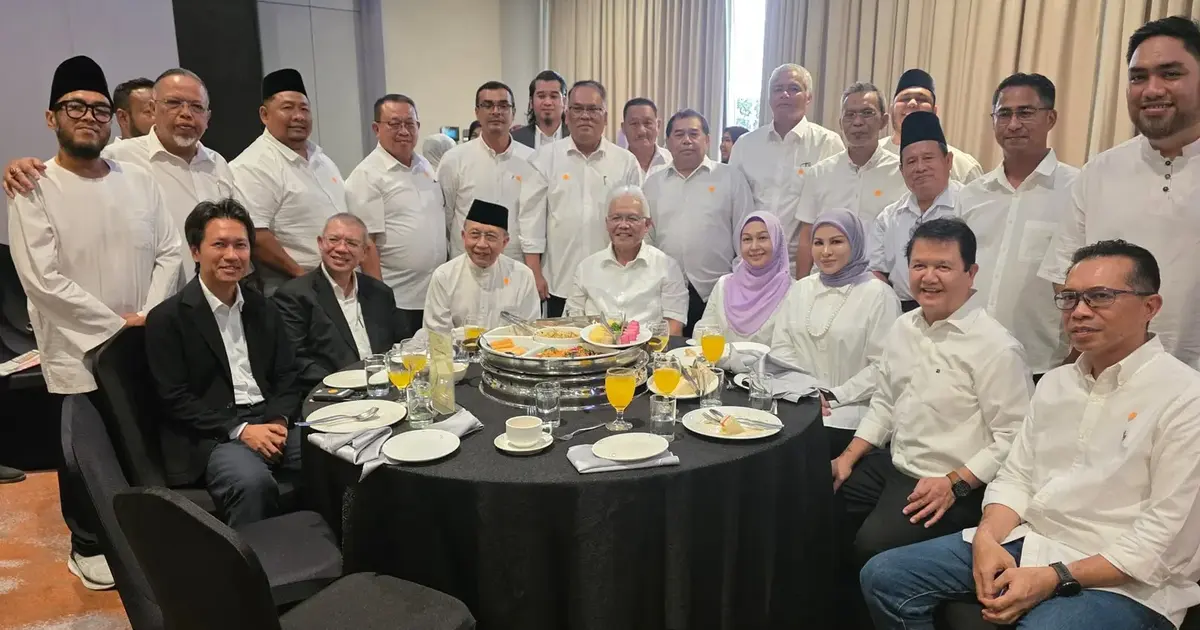
Hamzah has assumed the presidency of Wawasan, marking a significant leadership restructuring at the political and advocacy organisation. The appointment signals a consolidation of experienced figures within the movement's upper echelon, reflecting an apparent strategy to strengthen institutional governance and broaden the coalition's appeal across Malaysia's diverse political landscape.
Rais Yatim, a long-serving politician with extensive ministerial experience spanning multiple government administrations, has been elevated to the position of chairman. His appointment underscores Wawasan's intention to leverage decades of institutional knowledge and political credibility at the highest levels. Rais Yatim's career encompasses senior cabinet roles and deep networks within Malaysia's political establishment, positioning him to provide strategic direction and stakeholder engagement across government and civil society spheres.
Complementing this leadership structure, Saifuddin Abdullah, the Member of Parliament for Indera Mahkota, has been designated as secretary-general. As a serving legislator, Saifuddin brings parliamentary expertise and a direct connection to constituency-level politics, bridging the gap between Wawasan's national agenda and grassroots political operations. His appointment suggests the organisation aims to maintain active engagement with legislative processes and electoral dynamics.
The timing of these appointments warrants scrutiny within Malaysia's contemporary political context. Political organisations frequently restructure their leadership in response to shifting electoral circumstances, policy realignments, or efforts to consolidate support among key demographic and geographic constituencies. Wawasan's decision to install a president, chairman, and secretary-general indicates a hierarchical governance model designed to distribute responsibilities across strategic pillars of organisational management.
For Malaysian readers, these developments reflect broader patterns of political realignment and coalition-building that have characterised the nation's landscape in recent years. The appointment of individuals with extensive ministerial and parliamentary backgrounds suggests Wawasan is positioning itself as a serious political force capable of influencing national policy directions and potentially participating in future government formations.
Rais Yatim's transition into a formal leadership role within Wawasan represents a continuation of his sustained political engagement following his various ministerial tenures. His presence at the helm of the organisation lends institutional gravitas and suggests that Wawasan has secured commitments from established political figures willing to dedicate their networks and reputations to advancing its objectives.
The role of secretary-general, held by Saifuddin Abdullah, typically encompasses day-to-day operational management, party discipline, and coordination of internal party machinery. For an MP simultaneously holding this position, the arrangement indicates Wawasan's expectation that parliamentary work and organisational administration can be integrated effectively, or conversely, reflects confidence in Saifuddin's capacity to balance both responsibilities.
These leadership appointments invite consideration of Wawasan's strategic priorities and policy platform. Political organisations typically align their leadership compositions with intended policy emphases and target constituencies. The combination of an experienced former minister and an active parliamentarian suggests focus areas likely span both legislative advancement and administrative implementation.
For Southeast Asian political observers monitoring Malaysian developments, the Wawasan restructuring contributes to the region's broader picture of coalition dynamics and political competition. Malaysia's multi-party, multi-ethnic political system continues to generate complex arrangements and realignments, with organisations like Wawasan positioning themselves within this competitive landscape.
The appointment architecture also reflects decisions about generational leadership transition. While Rais Yatim represents established political machinery and institutional continuity, the involvement of Saifuddin Abdullah as an active parliamentarian suggests intentional integration of mid-career political figures into senior decision-making roles.
Regional analysts following Malaysian politics should monitor how this leadership configuration influences Wawasan's substantive policy direction, coalition-building efforts, and electoral strategy in coming months. The appointments suggest the organisation is consolidating its institutional foundations while positioning itself for expanded political influence within Malaysia's competitive multiparty environment.
Looking forward, these leadership changes provide the foundation for Wawasan to advance its stated objectives through both institutional channels and electoral participation. The appointment of experienced figures like Rais Yatim and active legislators like Saifuddin Abdullah indicates confidence in the organisation's capacity to execute meaningful political work and compete effectively within Malaysia's complex political marketplace.

