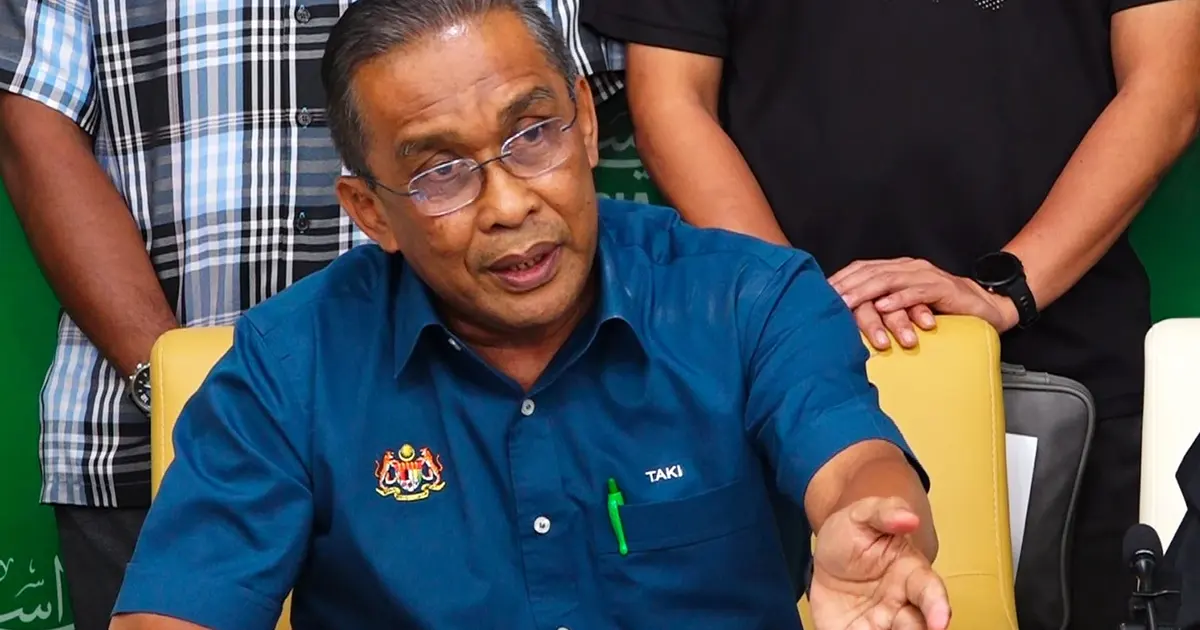
Perikatan Nasional's chief whip Takiyuddin Hassan has officially informed the speaker of the Dewan Rakyat that Hamzah Zainudin will take on the mantle of opposition leader, marking a significant repositioning within the opposition bloc. The announcement comes after a coordinated agreement among 61 opposition members of parliament, signalling a consolidated move to restructure the opposition's parliamentary leadership architecture.
Hamzah Zainudin's appointment represents a return to a prominent parliamentary role for the former Bersatu deputy president, who has been a central figure within the Perikatan Nasional coalition. His elevation to opposition leader status underscores the coalition's ambition to present a unified and cohesive alternative to the current government, particularly as parliament prepares for potentially contentious legislative sessions ahead.
The coordination required to secure backing from 61 opposition MPs demonstrates the level of alignment achieved across the opposition benches. This figure encompasses members from multiple opposition parties and independent lawmakers who have coalesced around the decision to position Hamzah at the helm of the opposition's parliamentary operations. Such unity is noteworthy given the historically fragmented nature of Malaysian opposition politics, where differing party interests often complicate unified positioning.
For Malaysian readers, this development carries implications for parliamentary dynamics and the government's legislative agenda. An organised and unified opposition presence typically results in more robust scrutiny of government legislation, more strategic questioning during parliamentary debates, and increased capacity to coordinate alternative policy proposals. The effectiveness of parliamentary checks and balances depends substantially on opposition cohesion, making this consolidation structurally significant.
Hamzah's background as a senior figure within Bersatu, a party that has navigated complex coalition politics in recent years, positions him with experience in managing diverse political interests. His prior roles within the party leadership apparatus suggest familiarity with bridge-building across different ideological and organisational perspectives within the opposition framework. This experience may prove valuable in maintaining the 61-MP coalition and preventing the traditional drift toward fragmentation that opposition blocs often experience.
The timing of this announcement reflects broader positioning as parliament enters a phase where multiple policy matters require legislative action. The government's legislative programme often faces rigorous examination during this period, and opposition parties strategically position their leadership to maximise their influence over proceedings. Hamzah's appointment allows the opposition to present clearer messaging and more coordinated parliamentary tactics throughout these sessions.
Regionally, Malaysia's opposition dynamics remain of interest to Southeast Asian observers monitoring democratic processes within the region. A structured, visible opposition leadership demonstrates institutional maturity and contributes to the perception of democratic vigour within parliamentary systems. The formality with which Takiyuddin notified the speaker reflects procedural respect for parliamentary conventions, even as the substantive change reflects political recalibration.
The 61-MP foundation provides Hamzah with a substantial bloc within the 222-member parliament, though it falls short of majority status. This positioning allows the opposition to function as a meaningful legislative force capable of tabling motions, initiating debates, and mounting amendments to government-backed bills. The practical effect is that government legislation cannot proceed entirely unchallenged, and opposition amendments command enough numbers to require formal consideration rather than dismissal.
Within Perikatan Nasional itself, this appointment reinforces the coalition's internal hierarchy and clarifies parliamentary representation structures. By securing formal notification to the speaker, the coalition ensures institutional recognition of its designated leadership, which carries procedural advantages in parliamentary protocol, speaking rights prioritisation, and resource allocation within the opposition office infrastructure.
The move also suggests confidence that the 61-MP coalition will remain stable through parliamentary sessions ahead. Maintaining such alignments requires consistent party discipline and shared strategic objectives. The opposition's success in this endeavour depends partly on whether member parties perceive tangible benefits from unified parliamentary operations, whether through legislative influence, media visibility for their respective causes, or enhanced positioning for future electoral contests.
For stakeholders observing Malaysian politics, including business constituencies and civil society organisations, a clearly structured opposition provides a more predictable and accessible interlocutor for articulating concerns and interests. Rather than engaging with fragmented opposition voices, stakeholders can direct engagement toward identifiable leadership and expect more coordinated responses to policy matters affecting their interests.
Looking forward, the stability of this arrangement will likely depend on whether the opposition can translate numerical strength into tangible parliamentary achievements. Governments typically possess procedural and numerical advantages in legislatures, and opposition effectiveness ultimately rests on strategic deployment of available parliamentary tools. Hamzah's role involves both maintaining internal coalition cohesion and optimising the opposition's legislative and oversight functions within these structural constraints.

