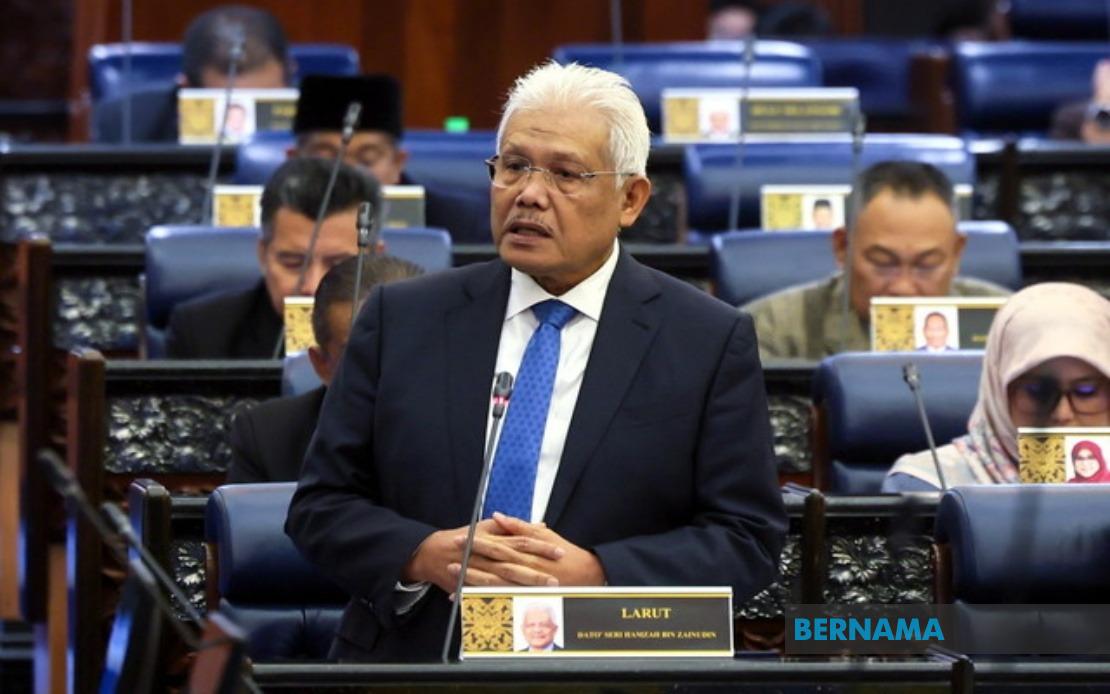
The Parliament leadership confirmed a significant shift in opposition ranks this week, with Dewan Rakyat Speaker Tan Sri Johari Abdul formally announcing that Larut MP Datuk Seri Hamzah Zainudin has reassumed his position as Opposition Leader effective June 18. The announcement, made during opening remarks before Oral Question Time, brought clarity to recent parliamentary developments that had seen the opposition leadership rotate between two senior figures over a six-week span.
According to the Speaker's statement, Hamzah's tenure in the opposition leadership role has been more complex than a simple continuous appointment. He initially took on the position of Opposition Leader beginning May 20, 2026, marking a significant moment in parliament's institutional structure. However, this tenure was not immediate or uninterrupted, reflecting the dynamic nature of parliamentary politics where leadership roles can shift in response to various developments and circumstances within government and opposition ranks.
The interim period witnessed Kemaman MP Datuk Seri Dr Ahmad Samsuri Mokhtar stepping in to fulfil the Opposition Leader responsibilities from May 21 through June 10. This arrangement represented a temporary adjustment rather than a permanent change, and the Speaker took the opportunity to formally acknowledge Dr Ahmad Samsuri's service during this period. Johari's remarks included appreciation for the Kemaman representative's work during what appears to have been a transitional phase in opposition politics, setting a respectful tone for the parliamentary record.
The rotation of the Opposition Leader position carries significant implications for Malaysian parliamentary practice and opposition coherence. The Opposition Leader role, defined under Standing Order 4A(3) of the Dewan Rakyat Standing Orders, holds considerable institutional weight. This individual serves as the formal spokesperson for opposition members and plays a crucial role in parliamentary debates, shadow questioning, and public representation of the opposition's policy positions. The brief interregnum suggests that questions or circumstances had arisen regarding Hamzah's status or availability, prompting the temporary delegation to Dr Ahmad Samsuri.
For Malaysian political observers, these developments underscore the importance of formal parliamentary procedures and the Speaker's regulatory role in maintaining institutional clarity. By announcing the Opposition Leader status through official parliamentary channels and making explicit reference to the Standing Orders, Johari ensured that all members and the public record understood exactly who held this influential position at any given time. Such procedural attention may seem routine, but it reflects parliament's need for unambiguous leadership structures.
The announcement also prompted the Speaker to address separate parliamentary matters on the same occasion. Johari confirmed that two parliamentary seats—Pandan and Setiawangsa—had become vacant following the resignations of their respective incumbents. Datuk Seri Rafizi Ramli, representing Pandan, and Nik Nazmi Nik Ahmad, representing Setiawangsa, both submitted letters formally relinquishing their parliamentary memberships on May 18. These departures came earlier than the Opposition Leader leadership developments, suggesting a broader period of personnel changes within opposition circles.
The handling of parliamentary vacancies follows constitutional protocols carefully. Johari's notification to the Election Commission regarding the Pandan and Setiawangsa seats invoked Article 54(1) of the Federal Constitution, which governs the formal procedures for declaring and managing parliamentary vacancies. This constitutional requirement ensures that the electoral machinery is properly informed and can proceed with necessary steps, whether that involves by-elections or other constitutional remedies. For Malaysian voters in these constituencies, such formal notifications trigger the machinery that may lead to fresh electoral contests.
These resignations merit consideration within the context of opposition dynamics and parliamentary representation. When sitting members choose to step down from parliament, it often reflects broader shifts in political strategy, personal circumstances, or party restructuring. The timing—with both departures occurring within days of one another—suggests these may have been coordinated decisions rather than isolated incidents. This pattern is relevant for understanding how opposition parties manage their human resources and political positioning.
The circumstances surrounding Hamzah's initial assumption of the Opposition Leader role and his brief displacement remain implicit in the Speaker's official statement. Parliamentary convention does not always require full public disclosure of the reasons behind such changes, and the focus remains on establishing institutional clarity rather than explaining underlying political maneuvers. This reflects a deliberate distinction between parliamentary procedure and political commentary, where the Speaker's role emphasizes formal accuracy over political analysis.
For the broader Malaysian political system, these developments matter because the Opposition Leader position influences parliamentary dynamics significantly. This individual shapes opposition strategy in question time sessions, leads public messaging on government policies, and serves as a focal point for media interest in parliamentary affairs. Hamzah's return to this role after the interim period suggests some resolution to whatever circumstances had prompted the temporary arrangement, restoring continuity to opposition leadership structures.
The formal confirmation also provides clarity for international observers and diplomatic missions monitoring Malaysian parliamentary affairs. Governments and foreign observers typically track the identities of key parliamentary figures to understand the opposition's structure and influence. Having these matters formally confirmed through parliamentary records and the Speaker's official pronouncements ensures that everyone—domestically and internationally—understands Malaysia's current parliamentary leadership configuration.
Moving forward, Hamzah's resumed tenure as Opposition Leader sets the stage for his role in upcoming parliamentary sessions and legislative challenges. The opposition will look to him to coordinate their parliamentary strategy, particularly as various bills and government initiatives reach the legislative agenda. His leadership will also influence how the opposition positions itself ahead of eventual general elections, making this formal confirmation a significant moment in Malaysia's political calendar.

