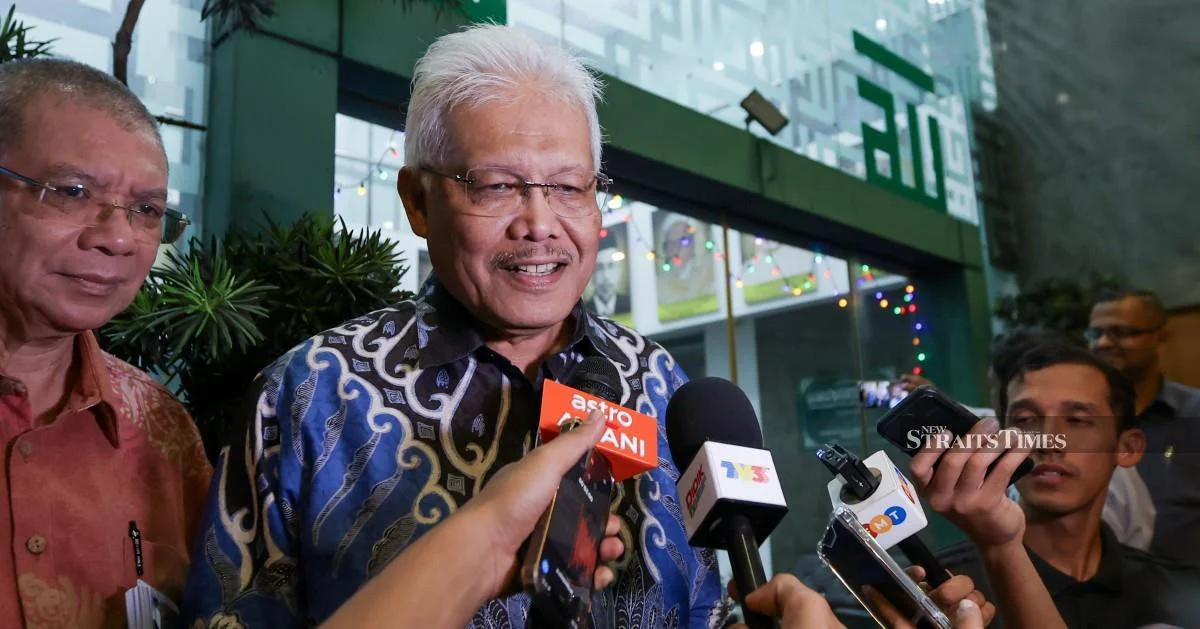
Datuk Seri Hamzah Zainudin is set to reclaim the opposition leader's seat in Parliament this Monday, according to the latest seating arrangement in the Dewan Rakyat. The repositioning represents a significant shift in the opposition's parliamentary structure, with Bersatu president Tan Sri Muhyiddin Yassin moving further along the bench to accommodate the change.
The parliamentary seating chart, which serves as an official indicator of leadership roles and hierarchies within Parliament, confirms the realignment that has been anticipated within opposition circles. In Malaysia's Westminster-style legislative system, the position of opposition leader carries substantial symbolic weight and procedural significance, as the holder traditionally has expanded speaking rights and leads questioning during parliamentary sessions. The physical rearrangement of seats underscores broader organisational shifts within the opposition coalition.
Hamzah's return to the front bench opposition seat marks a development in the opposition's internal dynamics. The role of opposition leader grants the occupant formal recognition and enhanced parliamentary privileges, including priority in debates and the ability to put forward key policy challenges to the ruling government. This positioning is crucial for the opposition's ability to hold the administration accountable and present a cohesive alternative government narrative.
The movement of Muhyiddin down the seating row reflects the evolving configuration within Bersatu and the broader opposition alliance. Muhyiddin, who has helmed Bersatu since its formation, continues to maintain influence within the opposition camp despite the change in formal seating hierarchy. The adjustment does not necessarily diminish his political standing, but rather signals a recalibration of official parliamentary roles that may better reflect current coalition dynamics or recent political developments.
For Malaysian observers of parliamentary politics, these seating changes often indicate behind-the-scenes negotiations and agreements among opposition parties. The opposition in the current Parliament comprises multiple political entities with competing interests, and the allocation of formal roles requires careful balancing of factional concerns. Hamzah's reinstatement suggests that key opposition partners have reached a consensus on leadership structure, at least for parliamentary purposes.
The timing of this shift on Monday carries additional significance, as it will be formally reflected in Parliament's operations from that date onwards. Parliamentary seating is not merely ceremonial; it determines question-asking order, debate sequencing, and media visibility. Opposition leaders seated in the front row enjoy substantially higher public profile during parliamentary proceedings, making the physical position a matter of considerable political importance.
Bersatu's position within the opposition coalition has been fluid in recent months, with the party navigating complex relationships with PKR, DAP, and other opposition members. Muhyiddin's move does not necessarily indicate a weakening of Bersatu's influence in opposition deliberations, but rather reflects a pragmatic reorganisation where different parties' interests are accommodated through adjusted parliamentary roles. The party's president remains a significant voice in opposition strategy discussions despite stepping back from the formal opposition leader position.
For Malaysian politics more broadly, these parliamentary changes demonstrate the ongoing fluidity of opposition dynamics. Since the 2022 general election, the opposition has undergone multiple recalibrations as different parties and leaders have negotiated their roles and responsibilities. The fact that such adjustments occur relatively frequently suggests that consensus on leadership structures remains challenging, requiring periodic fine-tuning based on emerging circumstances and inter-party negotiations.
The opposition leader's role in Parliament carries implications for government accountability and legislative scrutiny. The person holding this position effectively becomes the primary opposition voice articulating critiques of government policy and presenting alternative perspectives to the public through parliamentary debates and media coverage. Hamzah's return to this position therefore signals which leader the opposition coalition has determined should take primary responsibility for this accountability function in the coming period.
For Southeast Asian political analysts observing Malaysian parliamentary practice, these seemingly technical arrangements reveal important insights into how coalition politics operate in the region. The ability to reach consensus on leadership roles, even when parties have competing interests, demonstrates the opposition's capacity to maintain organisational coherence despite substantial internal differences on policy and strategy.

