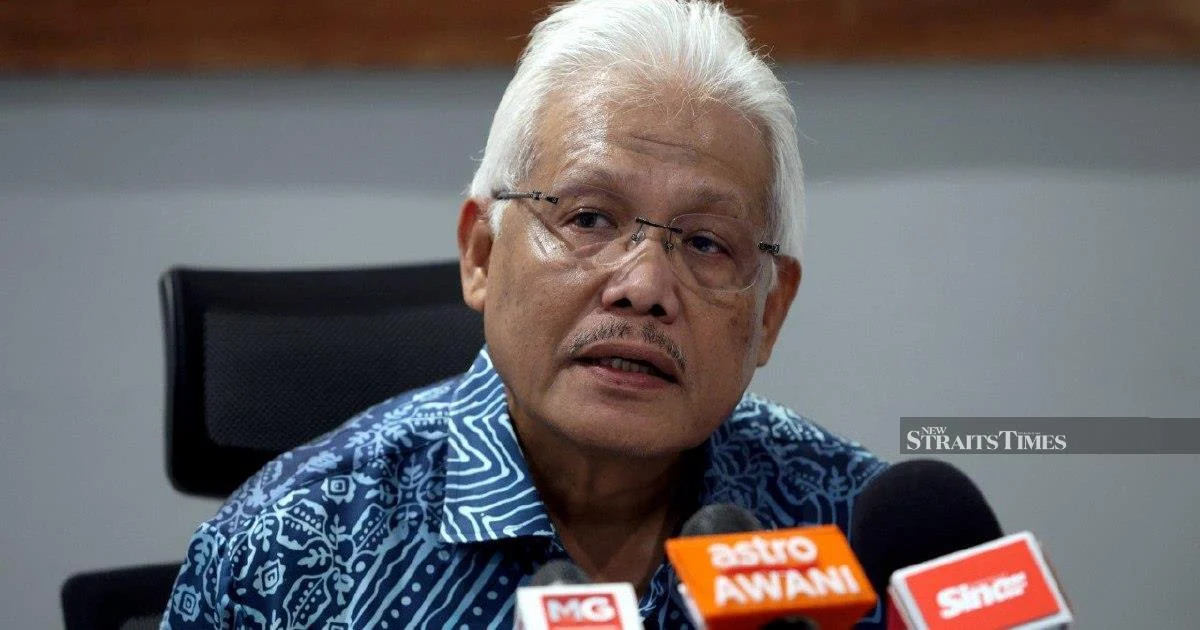
Parti Wawasan Negara, the recently rebranded political entity previously known as Parti Cinta Malaysia, has signalled its willingness to function as a stabilising intermediary between two of Malaysia's most influential Malay-Muslim parties, PAS and UMNO. The move represents a strategic repositioning by the party, which seeks to address deepening fractures within the Malay political landscape that observers argue could undermine both community interests and national cohesion. Party leadership has framed this mediatory role as essential to preserving the collective strength of Malay-Muslim representation in the country's political architecture.
The rebranding itself carries significance beyond cosmetic repackaging. Parti Wawasan Negara—literally translating to National Vision Party—signals an evolution in ideological positioning and political ambition. By adopting a name that emphasises nation-building and broader vision rather than communal attachment, the party appears to be repositioning itself as a force capable of transcending the narrower factional divisions that have increasingly characterised the PAS-UMNO relationship. This linguistic shift mirrors a deliberate effort to establish credibility as an honest broker among constituencies that have grown suspicious of one another's motives and political direction.
The relationship between PAS and UMNO has deteriorated markedly over the past several years, characterised by competing claims to represent Malay-Muslim interests, theological disputes, and strategic disagreements about electoral alliances and governance priorities. UMNO, traditionally positioned as the centrist establishment party, has found itself challenged by PAS's more explicitly Islamist platform and organisational reach, particularly in the northern and east coast states. These tensions have spilled into cabinet politics, parliamentary procedures, and coalition arrangements, creating recurring crises that have disrupted government formation and policy implementation. Hamzah Zainudin's initiative appears designed to address this structural fragmentation before it inflicts further damage on political stability.
Hamzah Zainudin himself brings substantial political experience and network credibility to this intermediary project. As a figure with connections across multiple political formations and government structures, he occupies a position where both major parties might conceivably listen. His party's willingness to assume a bridging role could resonate with fence-sitters within both PAS and UMNO who recognise that perpetual conflict undermines their collective bargaining power relative to other political blocs, particularly opposition coalitions and non-Malay-Muslim political actors. The implicit argument is that Malay-Muslim unity, however difficult to achieve, remains strategically superior to continued balkanisation.
From a Malaysian political economy perspective, the fragmentation of Malay-Muslim political representation creates vulnerabilities that extend beyond intra-community disputes. When UMNO and PAS compete fiercely rather than cooperate, they create space for non-Malay parties to extract concessions or occupy the political centre ground, potentially altering the traditional power distribution that has characterised Malaysian governance since independence. Coalition governments become more fragile, legislative agendas become subject to blackmail by smaller parties, and policy coherence deteriorates. A successful mediatory effort by Parti Wawasan Negara could theoretically address these systemic vulnerabilities by rebuilding channels of communication and establishing frameworks for managed competition rather than destructive conflict.
The timing of this initiative warrants careful examination. Malaysian politics operates within cyclical patterns shaped by electoral calendars, demographic shifts, and generational transitions in leadership. Both UMNO and PAS face internal succession questions and evolving factional dynamics. In this context, a third party that positions itself as guardian of Malay-Muslim interests while remaining detached from the most bitter personal and ideological feuds might find receptive audiences. Parti Wawasan Negara may be calculating that it can gradually accumulate political capital by performing the thankless work of facilitation, building relationships and goodwill that translate into electoral returns or coalition leverage down the line.
The regional dimensions of this initiative deserve consideration as well. Southeast Asia's broader political trajectory shows increasing polarisation between Islamist and secular-nationalist movements across multiple countries. Malaysia's capacity to manage this polarisation through internal bridge-building mechanisms carries implications not just for domestic stability but for regional dynamics. If PAS and UMNO continue fragmenting, competing ideological visions could calcify into irreconcilable positions with serious consequences for minority rights, governance standards, and regional cooperation. A successful mediatory framework could offer a model for managing religious-political tensions that other Southeast Asian nations might ultimately study.
Critics might question whether a relatively smaller party like Parti Wawasan Negara possesses the structural weight to meaningfully influence two established giants. UMNO, despite recent electoral setbacks, retains deep state institutional connections and substantial financial resources. PAS controls several state governments and commands devoted grassroots support. Neither party has compelling incentive to accept mediation from a much smaller player unless doing so advances their immediate interests or addresses urgent mutual threats. Hamzah Zainudin's credibility and personal network may provide initial opening, but sustaining mediation requires demonstrating tangible benefits—whether through electoral cooperation frameworks, policy consensus, or governance arrangements that all parties perceive as advantageous.
The practical mechanisms through which such mediation might operate remain somewhat undefined. Previous attempts at Malay-Muslim political cooperation have typically involved formal coalitions or explicit electoral pacts, both of which require substantial agreement on strategic direction. Looser frameworks based on dialogue and understanding, while less demanding, also carry less binding power. Parti Wawasan Negara would need to develop institutional structures that simultaneously accommodate PAS's religious-conservative priorities and UMNO's developmental-pragmatic concerns without simply papering over genuine ideological disagreements.
Success for this initiative would likely require both PAS and UMNO to acknowledge that their competitive advantages depend partly on the stability of the broader system within which they operate. As long as each party calculates that destroying the other or maximising zero-sum advantage serves its core interests, mediation efforts will founder. Only when leadership in both parties recognises that mutual weakening ultimately strengthens their opponents—whether opposition coalitions, non-Malay blocs, or external pressures—will genuine bridge-building become possible. Hamzah Zainudin's Parti Wawasan Negara is essentially wagering that this recognition will eventually emerge.

