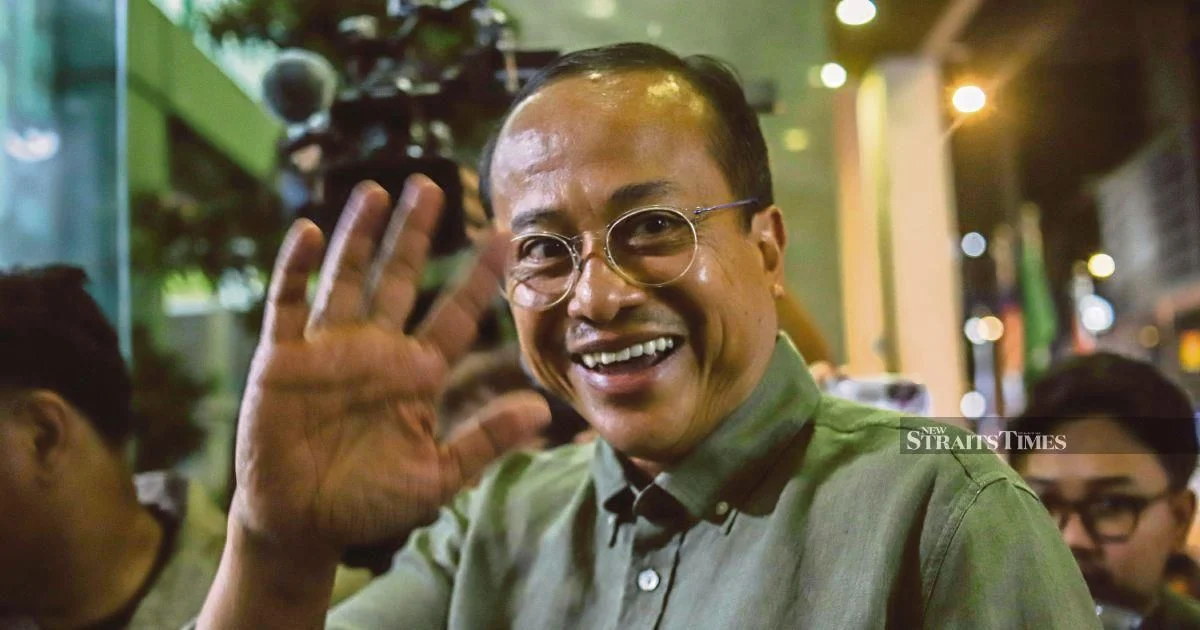
Datuk Seri Hamzah Zainudin's reappointment as Opposition Leader in the Dewan Rakyat exists in a state of institutional limbo, with no formal notification yet received from Perikatan Nazionale to officially recognise his position. The Larut member of Parliament has been functioning in the role without the documentary backing that typically accompanies such parliamentary appointments, raising questions about the clarity of Malaysia's opposition leadership structure.
The absence of formal notice from PN represents an unusual procedural gap in Malaysia's parliamentary system, where the Official Opposition holds significant constitutional importance. The Opposition Leader position carries specific privileges, parliamentary responsibilities, and resource allocations that depend on formal recognition. Without PN's official submission, relevant parliamentary authorities have been unable to log Hamzah's appointment in their administrative records, creating ambiguity about his de facto versus de jure status in the role.
This situation underscores broader governance questions about how Malaysia's coalition-based politics manages transitions between leadership roles. Perikatan Nationale, as the bloc claiming Opposition status, bears responsibility for communicating such structural changes to Parliament's administrative machinery. The delay or omission of this notice suggests either internal procedural inefficiency within the coalition or possible deliberation about the appointment's permanence or terms.
Hamzah's position as PN's leader and Opposition figurehead carries weight in Malaysian politics following the 2022 election transition. His appointment to lead the Opposition reflected PN's consolidation as an institutionalised alternative to the government, distinct from scattered independent MPs or smaller formations. Yet the paperwork gap hints at potential fragilities in how cleanly this arrangement has been formalised across different institutional levels.
For Malaysian parliamentarians and legislative staff, the missing formal notice creates practical complications. Allocations for Opposition resources, assignment of prime speaking slots, recognition of parliamentary privilege, and coordination of scrutiny functions all theoretically depend on confirmed identification of who holds the Opposition Leader mantle. Ambiguity could affect everything from budget approvals for opposition research support to seating arrangements and procedural priorities in the chamber.
The timing of this disclosure is notable within Malaysia's volatile political environment, where coalitions have frequently fractured or reorganised. Strengthening the formal documentation of opposition leadership would insulate such arrangements against sudden challenges or claims of illegitimacy. The current gap leaves room for disputation if future parliamentary disputes arise about who truly holds opposition authority.
Penikatan Nationale comprises three major parties—PAS, Bersatu, and the Gabungan Padu Umno—representing significant parliamentary numbers. As the primary opposition force, PN's administrative management of its own structures carries implications for all member parties' members of Parliament. Institutional clarity benefits not only PN but the entire system's functioning, ensuring Parliament operates with unambiguous leadership across government and opposition benches.
From a Southeast Asian perspective, Malaysia's parliamentary conventions and documentation practices shape how democracies in the region approach opposition recognition and parliamentary protocol. Observers in other ASEAN nations often study Malaysian parliamentary procedures, meaning procedural gaps here can influence thinking elsewhere about how formally to anchor opposition leadership positions.
The situation also reflects how Malaysia's democratic structures continue adapting to a more fluid, coalition-driven political landscape. Decades of dominant single-party rule left institutional frameworks sometimes designed for clearer, more straightforward leadership transfers. As Malaysia experiences genuine two-coalition competition, these systems are being tested by real-world scenarios their original architects may not have fully contemplated.
Moving forward, formalising Hamzah's position requires PN to submit the required notices to Parliament's administration, likely the Speaker's office or relevant procedural authorities. Once formal notification arrives, parliamentary records can be updated to reflect his official status, providing the institutional recognition currently absent. This administrative action, though technical, carries weight in establishing the foundation for opposition functions in the coming parliamentary term.
The delay in completing this procedural step raises broader questions about institutional readiness in Malaysian politics. If PN, as the organised primary opposition, encounters difficulties in formally notifying Parliament of its leadership appointments, it suggests potential weaknesses in either the coalition's internal coordination or Parliament's administrative frameworks for processing such changes swiftly. Addressing these gaps would strengthen parliamentary democracy's mechanics.
For Hamzah personally, operating without formal recognition as Opposition Leader carries subtle disadvantages in terms of public legitimacy and institutional weight. Official designation matters in parliamentary systems, where formal position translates to public authority. Until PN submits notice and relevant authorities formally recognise him, any external claims about his opposition credentials lack the documentary support that institutional endorsement would provide.
Moving beyond this immediate issue, the episode hints at broader structural questions Malaysian politics will need to answer: how to manage opposition succession and leadership transitions, what documentation should accompany parliamentary appointments, and how to ensure coalition arrangements are sufficiently transparent and formally recorded. Addressing these systematically would make Malaysia's opposition and parliamentary functions more resilient and clearly delineated.