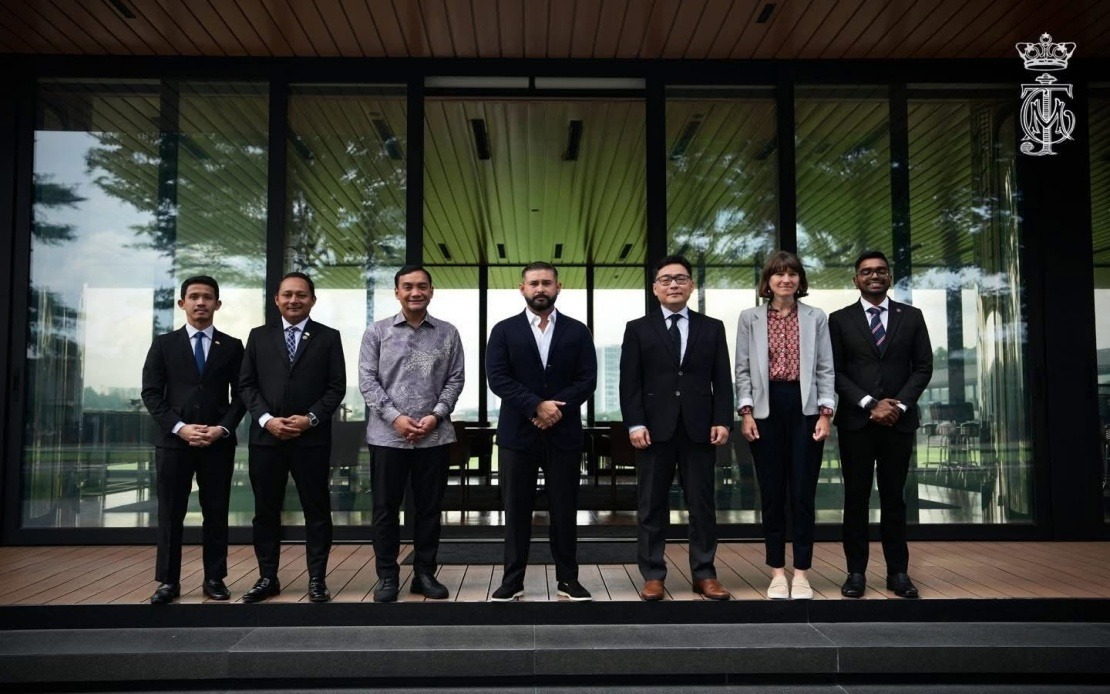
Johor's education landscape is set for a significant upgrade through a strategic collaboration with one of the world's most prestigious universities. A total of 100 secondary school students from two Johor institutions are poised to participate in the Program for Scientifically-Inspired Leadership (PSIL), a Harvard University initiative that emphasises experiential learning, analytical reasoning, interpersonal skills and personal development. The partnership marks a deliberate effort by the Johor State Government to internationalize its educational offerings while maintaining alignment with Malaysia's national curriculum standards.
The PSIL framework, which Harvard established in 2019, represents a departure from traditional classroom instruction towards engagement-based methodologies that cultivate independent thought and decision-making capabilities among learners. According to Aznan Tamin, chairman of the Johor State Education and Information Committee, the programme's core architecture revolves around fostering students' capacity for evidence-based reasoning, articulate expression and the ability to lead collaborative initiatives. These competencies have become increasingly vital in a rapidly evolving global economy where technical knowledge alone proves insufficient for career advancement and meaningful contribution to society.
The pilot implementation, scheduled to commence in January 2027, will draw participating students from Sekolah Menengah Kebangsaan Tasek Utara and Sekolah Menengah Kebangsaan Seri Kota Puteri 2, both located within the Johor Bahru vicinity. The selection of these two institutions reflects a calculated approach to testing the programme's effectiveness across different school environments before potential broader rollout. By concentrating initial efforts on a manageable cohort, educators and administrators can gather detailed feedback on implementation challenges, measure student outcomes rigorously, and refine pedagogical approaches to suit the Malaysian educational context.
Beyond student participation, the collaboration extends meaningful professional development to 40 teaching staff from Sekolah Rintis Bangsa Johor. These educators will participate in intensive workshops focused on active learning methodologies, equipping them with contemporary instructional techniques designed to foster student engagement and creative problem-solving. This investment in teacher capacity represents recognition that educational transformation cannot succeed through student programmes alone; educators themselves require exposure to innovative pedagogical frameworks and ongoing support to implement them effectively within their classrooms.
The recent visit by Harvard University representatives to Johor underscores the institutional seriousness underlying this partnership. Dr Dominic Mao, assistant director of Undergraduate Studies and lecturer in Molecular and Cellular Biology, and Dr Andrea Wright, assistant dean of Harvard College, met with Tunku Mahkota Ismail, the Regent of Johor, signalling high-level commitment from both parties. Such delegation visits typically precede formal programme launches and serve to establish shared understanding of objectives, resource requirements, and success metrics between international and local stakeholders.
For Johor's education ecosystem, this Harvard partnership carries substantial symbolic and practical significance. It positions the state as forward-thinking in educational innovation and demonstrates willingness to engage with global best practices while maintaining fidelity to Malaysia's educational philosophy and language policies. The emphasis on strengthening English proficiency without diminishing Malay language mastery reflects this careful balance, ensuring students develop international communication competencies without cultural dilution.
The PSIL programme also aligns closely with national imperatives around Science, Technology, Engineering and Mathematics (STEM) skill development. Malaysia's economic competitiveness increasingly depends on nurturing a workforce capable of innovation and technological adaptation. By exposing secondary students to Harvard's scientifically-inspired frameworks during formative educational years, the initiative aims to cultivate interest in STEM disciplines and demonstrate their real-world applications, potentially influencing career trajectories and field selections among participating cohorts.
Implementation of an international educational programme within the Malaysian system requires careful navigation of regulatory environments and assessment frameworks. Sekolah Rintis Bangsa Johor's existing emphasis on competency-based evaluation aligned with international standards positions it advantageously for integrating the Harvard curriculum. The school's operational philosophy, which prioritizes student marketability alongside academic excellence and character development, creates institutional compatibility with PSIL's comprehensive approach to student development.
The timing of this partnership announcement also reflects broader regional trends in educational internationalization. Southeast Asian nations increasingly recognize that competitive advantage in global knowledge economies necessitates exposure to pedagogical innovations pioneered in leading international institutions. By facilitating such exposure through carefully structured programmes, Johor positions itself as an education hub within Malaysia, potentially attracting motivated students and establishing infrastructure that could support expanded international partnerships in subsequent years.
As implementation approaches, success will depend on multiple factors including sustained institutional commitment, adequate resourcing, effective teacher training, and rigorous monitoring of student outcomes. The programme's initial cohort of 100 students effectively serves as a proof-of-concept, generating evidence regarding programme efficacy, cost-effectiveness, and suitability for Malaysian educational contexts. Should preliminary results prove positive, expansion possibilities could eventually benefit substantially larger student populations across Johor's secondary education system.
The partnership ultimately reflects confidence that Malaysian students possess intellectual capacity comparable to their international peers and deserve exposure to world-class educational opportunities. By bringing Harvard's scientifically-inspired leadership framework to Johor schools, state education officials demonstrate commitment to preparing their young people not merely for examination success, but for meaningful participation in an increasingly complex, technologically-driven global society where critical thinking, effective communication, and ethical leadership command premium value.