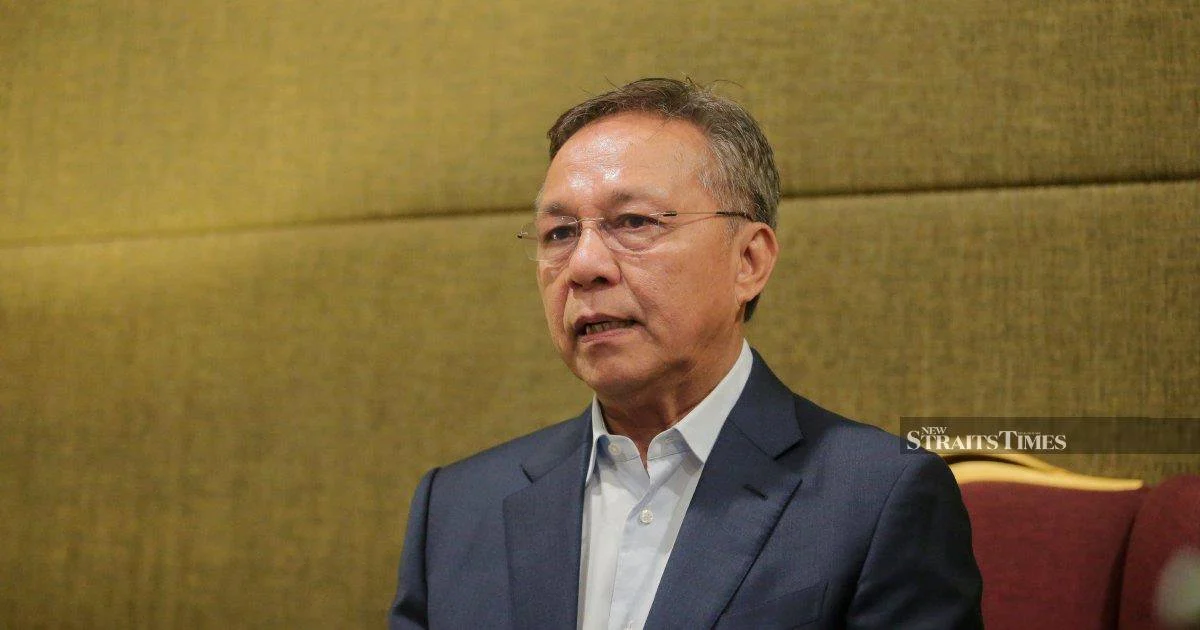
Datuk Seri Hasni Mohammad, who previously served as Johor's menteri besar, has been notably absent from the Barisan Nasional candidate roster for the forthcoming Johor state elections. The removal of the senior politician from the slate has triggered considerable speculation within political circles about his next move, with observers suggesting that a shift towards contesting a parliamentary seat in the next general election could be on the horizon.
The decision to exclude Hasni represents a significant development in Johor's political landscape, where the Barisan Nasional coalition has traditionally maintained a strong grip on state-level politics. His departure from the state election candidate list marks a departure from his established role in state politics and suggests a potential recalibration of his political trajectory. The timing of this exclusion comes as various political movements and party restructurings continue to reshape Malaysia's electoral landscape ahead of the general election cycle.
For Malaysian observers, the implications of Hasni's removal extend beyond a simple administrative adjustment to candidate lists. The move may signal internal deliberations within Barisan Nasional regarding the positioning of senior figures and the party's electoral strategy for both state and federal contests. In a political environment where securing competitive seats remains crucial for party fortunes, the decision to drop a figure of Hasni's stature suggests either a mutual understanding about his future direction or broader strategic calculations within the coalition.
The speculation surrounding Hasni's potential parliamentary ambitions reflects the complex dynamics of Malaysian politics, where transitions between state and federal politics are often laden with significance. Politicians of his seniority and experience typically do not leave the electoral arena entirely; instead, they often recalibrate their approach to maintain influence and relevance. A move to parliamentary politics could provide him with a platform that transcends state boundaries and positions him within the broader national political discourse.
Barisan Nasional's decision-making process regarding its candidate lists carries weight throughout Southeast Asia's largest economy, where the coalition remains a formidable political force despite recent electoral setbacks. The composition of candidate slates often reflects internal power dynamics, demographic considerations, and strategic assessments about electoral viability. Hasni's exclusion therefore warrants examination not merely as a personnel matter but as a potential indicator of broader shifts within coalition politics.
For Johor specifically, the state has long been a critical battleground in Malaysian politics and a traditional stronghold of Barisan Nasional support. The selection and positioning of candidates for state elections directly influence the coalition's prospects in what many analysts consider a strategically vital state. Changes in the candidate lineup, particularly involving senior figures, can reshape local political narratives and affect voter engagement across multiple demographic groups in the state.
The parliamentary route has historically offered Malaysian politicians an alternative or complementary path to state politics, particularly when circumstances make state-level contests less attractive or strategic. Federal representation can provide enhanced visibility, access to national policy-making forums, and opportunities to address constituency concerns within a broader legislative framework. For someone of Hasni's standing and experience, such a transition would represent a logical evolution of his political career rather than a departure from politics altogether.
Beyond the immediate personalities involved, this development reflects the ongoing evolution of Malaysia's political party systems and coalition structures. The Barisan Nasional, despite maintaining significant institutional advantages and grassroots networks, continues to navigate significant electoral and internal organisational challenges. How the coalition manages the positioning of senior figures like Hasni will partly determine its ability to project unity and strategic coherence to voters in both state and federal contests.
The broader context of Malaysian politics also matters here. With public attention increasingly focused on governance quality, institutional integrity, and economic management, the movement of senior politicians between different electoral levels carries implications for how parties present their governance agenda. A shift by Hasni towards parliamentary politics could be framed as either consolidating experience at the federal level or, conversely, as a strategic withdrawal from state-level electoral competition depending on political messaging and communication strategies deployed by Barisan Nasional.
For Johor voters and political observers across Malaysia, the exclusion of Hasni from the state candidate list represents more than routine administrative adjustment. It signals potential realignments within coalition politics, hints at future electoral strategies, and demonstrates the dynamic nature of Malaysian political calculations where multiple contests and competing interests intersect. As the political calendar advances, the ultimate destination of Hasni's political efforts and the reasoning behind Barisan Nasional's reconfigured candidate strategy will likely provide valuable insights into broader coalition calculations for the critical elections ahead.

