The HAWANA 2026 Summit, being held at the PICCA Convention Centre @ Arena Butterworth and to be officiated by Prime Minister Datuk Seri Anwar Ibrahim, has unveiled a comprehensive photo exhibition that captures eight years of Malaysia's flagship celebration for journalism professionals. The dual-focus gallery represents a deliberate effort to preserve institutional memory around the National Journalists' Day movement while simultaneously documenting the human impact of the accompanying Tabung Kasih@HAWANA charitable initiative, which has become integral to supporting media workers facing personal crises.
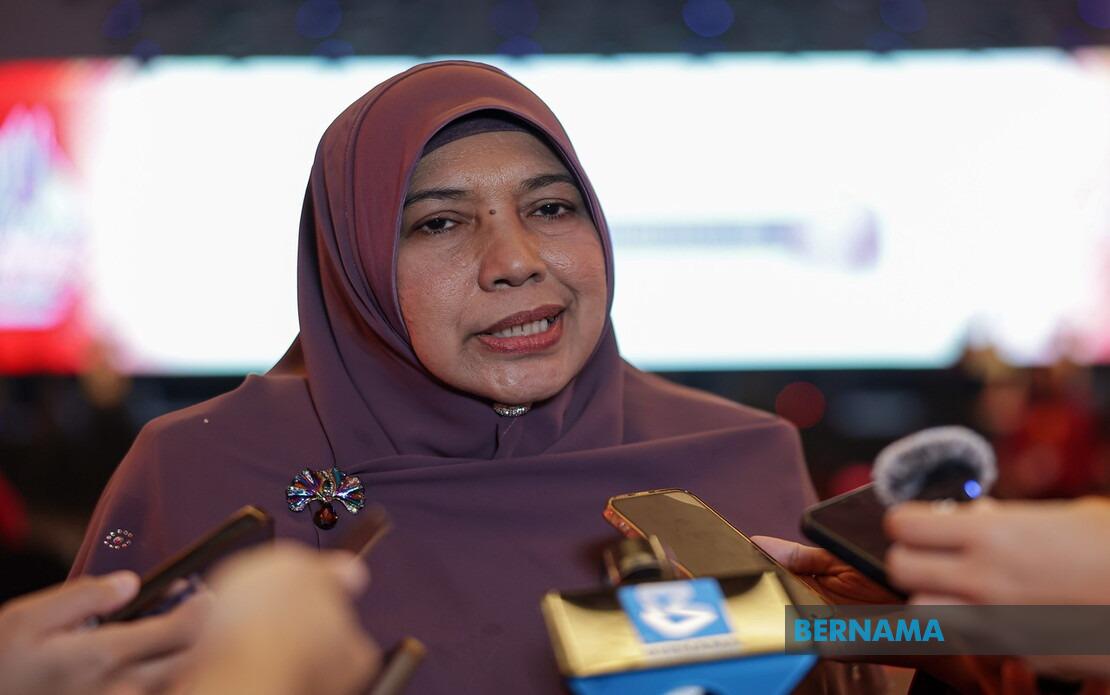
Datin Paduka Nur-ul Afida Kamaludin, chief executive officer of the Malaysian National News Agency (Bernama) and chairman of the HAWANA 2026 Working Committee, explained that the exhibition occupies two distinct curatorial spaces. The first section traces HAWANA's development from its inception in 2018 through 2025, presenting visual markers of how the celebration has evolved as an institution within Malaysia's media landscape. The second segment shifts focus to the individuals who have benefited from Tabung Kasih@HAWANA support, using photographs and personal narratives to illustrate the tangible assistance provided to journalists and veteran media practitioners confronting serious illness or economic difficulty.
Bernama's role as both the secretariat administering Tabung Kasih@HAWANA and the summit's implementing agency has historically remained peripheral to media coverage of the event itself. The exhibition serves to elevate this institutional contribution into public view, allowing visitors to understand the infrastructure and ongoing commitment that sustains the initiative. Nur-ul Afida emphasised that the primary intention is to acknowledge the media profession's collective participation in an occasion designed expressly for their recognition and benefit, shifting the narrative from behind-the-scenes operations toward acknowledging journalism as a profession deserving of structured community support.
The curation process reflects considerable editorial deliberation. Mohamad Bakri Darus, editor of the Bernama Photo Desk, noted that image selection underwent rigorous review by the Bernama team to ensure representative quality and historical accuracy. Each photograph carries bilingual captions in both Malay and English, a design choice that facilitates comprehension across Malaysia's diverse readership and reinforces the inclusive nature of the journalism profession itself. This accessibility consideration underscores recognition that HAWANA appeals to and involves practitioners and observers from multiple linguistic and cultural communities within the country's media ecosystem.
The exhibition specifically recalls five previous HAWANA venues spanning different regions of Malaysia, demonstrating the celebration's intentional geographic rotation. Kuala Lumpur hosted the inaugural 2018 gathering and again in 2025, establishing the capital as a recurring anchoring point for the movement. Subsequent venues have progressively extended HAWANA's presence into Malaysia's regional centres: Melaka in 2022, Ipoh in Perak during 2023, and Kuching in Sarawak in 2024. This geographic distribution reflects a strategic commitment to ensuring that journalists and media professionals outside the Klang Valley can participate directly in celebration and solidarity activities, preventing HAWANA from becoming an exclusively urban or centralised phenomenon.
The substantive programming elements memorialised in the exhibition reveal the multifaceted nature of HAWANA as both professional gathering and community celebration. Strategic Partner Meetings facilitate dialogue between media organisations and supporting institutions, establishing collaborative frameworks for addressing industry challenges. Media Forums provide platforms for discussing journalism practice, ethics, and the evolving media landscape in Malaysia. The HAWANA-DBP Pantun Festival integrates traditional Malaysian literary arts into the celebration, grounding journalism within broader cultural contexts and demonstrating the profession's connections to national heritage. HAWANA Carnivals and exhibitions transform the events into accessible public experiences rather than insular professional gatherings, while sports programming injects competitive and recreational dimensions that build camaraderie among participating journalists.
Tabung Kasih@HAWANA represents a particularly distinctive feature of Malaysia's approach to supporting media professionals during vulnerability. Unlike purely professional or industry associations that might focus on advocacy or collective bargaining, the Tabung Kasih model emphasises mutual aid and communal responsibility toward colleagues experiencing hardship. The fund's operation demonstrates recognition that journalism, while professionally rewarding, does not guarantee economic security or protection against unexpected medical expenses and life crises. By institutionalising charitable assistance alongside celebration, HAWANA acknowledges the precarious dimensions of media work in contemporary Malaysia.
For Malaysian and Southeast Asian media practitioners more broadly, the exhibition carries implications regarding profession-wide support infrastructure. Malaysia's institutionalisation of HAWANA and Tabung Kasih@HAWANA provides a model for how journalism communities might organise collective care beyond the boundaries of individual news organisations. At a moment when media employment globally has become increasingly precarious due to digital disruption and advertising migration, the deliberate establishment of profession-wide safety nets through celebratory occasions offers alternative frameworks for thinking about sustainable journalism ecosystems. The exhibition invites reflection on whether similar mechanisms might strengthen media sectors across Southeast Asia, where journalists frequently operate without comprehensive institutional protections.
Nur-ul Afida's emphasis on communicating the success of Tabung Kasih@HAWANA assistance to journalists facing health and life challenges addresses an often-invisible dimension of media work. The visibility provided by the photo exhibition combats the stigma that individuals sometimes experience in seeking help from professional mutual aid funds. By showcasing recipients' stories alongside celebration highlights, the exhibition normalises the idea that media professionals may require communal support during specific life circumstances. This framing transforms assistance from charity into institutionalised professional solidarity, a distinction with psychological and social significance for those who benefit.
The exhibition's bilingual presentation—in Malay and English—reflects deliberate inclusivity in a Malaysian media landscape where linguistic accessibility remains consequential for professional participation and public engagement. This curatorial choice acknowledges that journalists and media professionals in Malaysia work across multiple language communities, and that professional solidarity transcends linguistic boundaries. The commitment to dual-language captioning throughout the gallery demonstrates that HAWANA itself aspires to be an inclusive institutional space rather than one dominated by any single language or regional perspective.
Looking forward, the HAWANA 2026 Summit represents an opportunity for Malaysia's media community to assess what the previous eight years have accomplished and to consider how the celebration and Tabung Kasih initiative might evolve. The exhibition transforms the summit from a single annual event into a cumulative historical project, positioning 2026 within a longer arc of institutional development. By documenting and displaying this history contemporaneously, Bernama and the HAWANA Working Committee signal that the celebration has achieved sufficient maturity and significance to warrant archival preservation and ongoing reflection. The summit's presidential opening by Prime Minister Anwar Ibrahim further underscores government recognition of journalism's professional importance and the legitimacy of creating institutional mechanisms for industry support.

