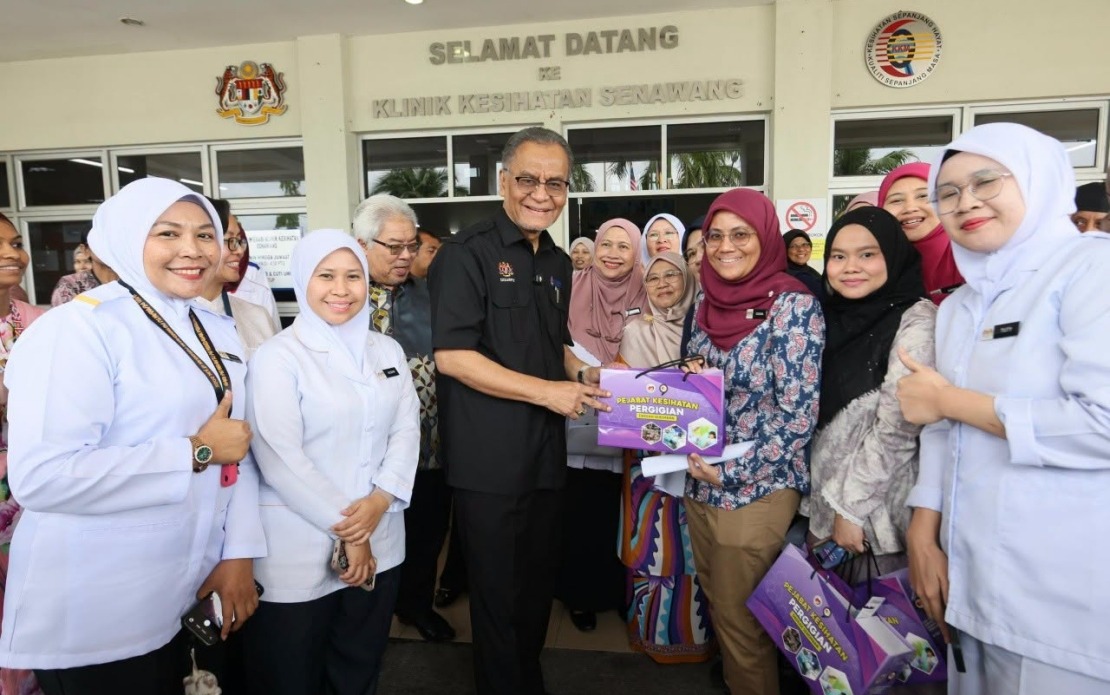
The Ministry of Health has committed RM805,700 to strengthen healthcare infrastructure at Senawang Health Clinic in Seremban, marking a significant investment in primary care capabilities across Negeri Sembilan's central district. The announcement by Health Minister Datuk Seri Dr Dzulkefly Ahmad underscores the government's prioritisation of upgrading facilities in secondary towns where demand for public health services often strains existing resources.
The funding breakdown reveals a deliberate approach to addressing multiple operational gaps. The Health Clinic itself receives RM588,400, while the adjacent Dental Clinic benefits from RM217,300 earmarked specifically for structural improvements and equipment procurement. This division reflects recognition that oral health services operate under separate but complementary infrastructure needs, and both require urgent attention to maintain service quality.
Among the tangible improvements, the Dental Clinic building will undergo comprehensive upgrading to enhance patient comfort and operational efficiency. The ageing facility, which serves thousands annually, has long required modernisation to meet contemporary healthcare standards. Better physical infrastructure directly translates to improved patient experience and can reduce anxiety associated with dental procedures, particularly among children and elderly residents who form significant portions of the patient base.
The acquisition of a new ultrasound machine represents a critical enhancement to diagnostic capacity at the facility. Ultrasound imaging is foundational to modern primary healthcare, enabling practitioners to detect complications during pregnancy, assess abdominal and pelvic conditions, and identify structural abnormalities without invasive procedures. For a clinic serving over 220,000 residents, access to reliable diagnostic imaging reduces referrals to tertiary hospitals and enables faster treatment decisions.
Equally important is the procurement of two additional vehicles designated for field duties. Healthcare personnel conducting home visits, mobile clinics, and community outreach programmes have historically faced mobility constraints that limit their effectiveness. Enhanced transportation capacity allows the clinic to extend primary healthcare reach to rural pockets and underserved communities within the catchment area, directly supporting the Ministry's universal health coverage objectives across diverse terrain and settlement patterns.
The Senawang Health Clinic occupies a pivotal role in Seremban's healthcare ecosystem. Recording approximately 1,000 patient visits daily, the facility functions as the entry point to Malaysia's public health system for residents across extensive surrounding areas. This volume underscores the clinic's strategic importance as a screening and triage centre, where early intervention prevents progression to serious complications requiring expensive hospital admissions.
Serving a population exceeding 220,000, the clinic exemplifies how primary care facilities in mid-sized urban centres experience disproportionate pressure. Unlike rural clinics with smaller catchments or major hospitals with tertiary specialties, these intermediate facilities balance high patient throughput with limited specialist resources and often deteriorating infrastructure. The RM805,700 injection addresses this operational squeeze directly.
Dr Dzulkefly's emphasis on efficiency, equity and comfort reflects policy priorities embedded in Malaysia's National Health Policy. Efficiency gains materialise through better diagnostic tools reducing unnecessary referrals; equity improves when improved facilities and transport expand service access to marginalised populations; and comfort matters because patient satisfaction influences healthcare-seeking behaviour and chronic disease compliance. Together, these elements create multiplier effects beyond the immediate investment.
For Malaysian healthcare observers, the Senawang allocation signals continued commitment to preventive care infrastructure despite budget constraints affecting the health sector nationwide. Primary healthcare investment typically yields higher returns than hospital-centric spending, as prevention reduces downstream demand for acute services. The timing suggests the Ministry recognises that deferring facility upgrades ultimately costs more through increased complications and emergency admissions.
The investment also carries implications for healthcare workforce retention in secondary centres. Clinics with modern equipment and functional facilities attract better-qualified staff and enable more fulfilling work, reducing burnout and attrition. For Senawang, improved conditions may strengthen capacity to address non-communicable diseases and chronic conditions increasingly prevalent among Malaysia's ageing population.
Regionally, the allocation reflects how Southeast Asian health systems are grappling with similar challenges: aging infrastructure, rising disease burdens, and the need to extend quality care beyond metropolitan areas. Senawang's experience offers a template for how strategic capital investment in middle-tier facilities can address equity gaps and strengthen health system resilience across the region.

