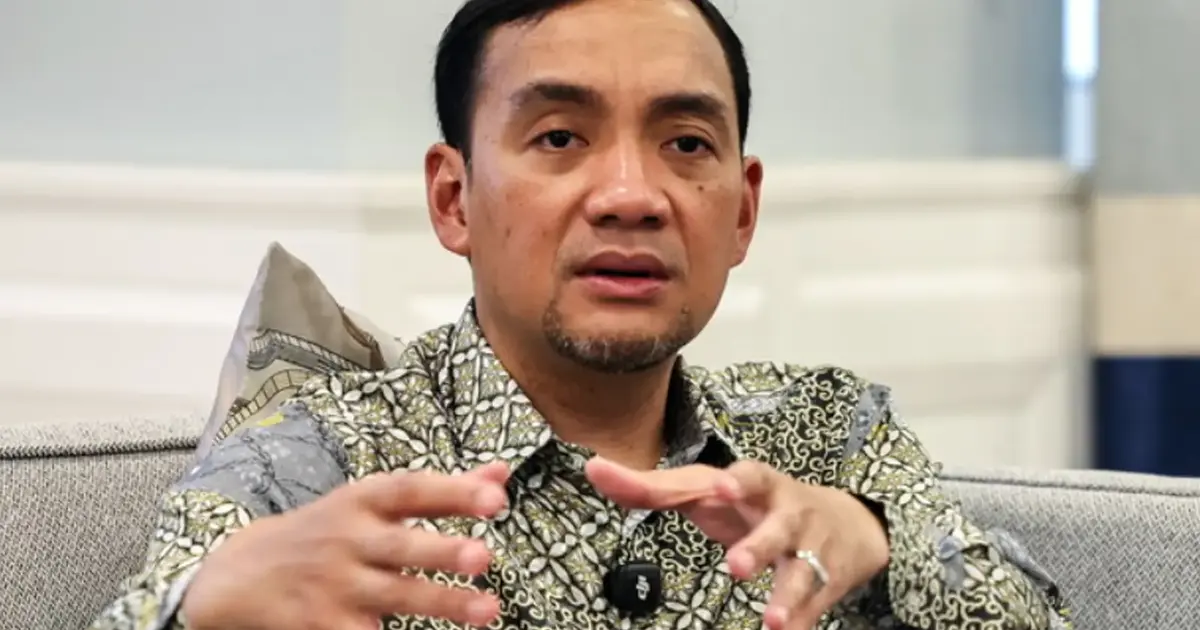
Johor Menteri Besar Onn Hafiz has underscored a fundamental principle of Malaysian constitutional governance, cautioning that even the most visible and celebrated political figures cannot ascend to the state's highest office without formal royal sanction. In remarks that reflect the intricate dynamics of Malaysia's monarchical system, Onn Hafiz articulated how institutional protocols and constitutional requirements supersede individual ambition or popular standing when determining who will helm the state administration.
The statement comes at a time of evolving political alignments across Malaysia's constituent states, where ambitious politicians often cultivate public personas and pursue media prominence as pathways to leadership. Yet Onn Hafiz's assertion serves as a corrective to assumptions that such visibility translates automatically into administrative authority. His emphasis on royal prerogative reflects not merely ceremonial tradition but a substantive constitutional reality that shapes how power devolves within Malaysia's federal structure.
Johor's political landscape remains significant within the broader Malaysian context, given the state's historical importance, economic weight, and its role as a strategic counterbalance to federal-level politics. The Menteri Besar position carries considerable influence over state development, resource allocation, and policy implementation affecting millions of residents. Onn Hafiz's clarification therefore carries implications extending beyond Johor itself, signalling to political aspirants throughout the nation that pathways to high office operate according to constitutional conventions rather than mere popular acclamation.
The role of royal consent in Malaysia's system represents a distinctive feature of the country's constitutional monarchy, distinguishing it from purely Westminster-style democracies. While elected representatives and political parties form governments and advance policy agendas, the institution of the monarchy retains formal authority to validate such appointments. This creates a dual legitimacy structure where electoral success and popular mandate must be complemented by royal recognition. Failure to secure such approval can render even commanding electoral victories insufficient for accessing office.
Onn Hafiz's remarks likely address widespread speculation within Johor's political circles regarding potential succession scenarios and the positioning of various political figures for future advancement. State-level transitions in leadership often trigger intense jockeying among senior party members, each cultivating support networks and attempting to enhance their visibility and standing. His comments effectively remind ambitious politicians that such internal manoeuvring occurs within constitutional boundaries established by royal authority.
The Johor sultanate has historically wielded considerable influence within the state's governance framework, with rulers playing active roles in constitutional interpretation and political arbitration. Successive sultans have demonstrated willingness to intervene in political matters deemed to affect state stability or institutional integrity. This suggests that royal consent should not be understood as a rubber-stamp formality but rather as a consequential constitutional act informed by institutional judgment.
For Malaysian political observers, Onn Hafiz's statement reinforces several enduring realities about the nation's power structures. Democratic elections and party politics operate within a constitutional architecture that includes non-elected institutions with real authority. This hybrid system, sometimes described as a constitutional monarchy with democratic elements, requires political actors to navigate multiple sources of legitimacy simultaneously. Success demands not only electoral strength or factional dominance within parties but also alignment with institutional interests and constitutional expectations.
The timing and tenor of Onn Hafiz's comments suggest awareness of ongoing political repositioning within Johor's United Malays National Organisation branch and allied coalition partners. As senior figures potentially contemplate their futures within shifting party hierarchies, reminders about constitutional requirements serve pragmatic purposes. They discourage overreach by ambitious subordinates while simultaneously validating the current leadership's legitimacy and institutional standing.
For regional observers monitoring Malaysian politics, such statements illuminate how constitutional monarchy remains a practical force shaping governance rather than merely ornamental tradition. Unlike some Commonwealth realms where royal powers have atrophied into ceremonial functions, Malaysia's monarchical institutions retain substantive authority, particularly at state levels where sultans command respect and exercise discernible influence over administrative appointments.
The broader implications for Malaysian governance extend to questions about accountability and power distribution. By emphasizing royal consent as a prerequisite for office, Onn Hafiz highlights how formal authority remains diffused across multiple institutions. This distribution can serve as a check against naked factional dominance, though it may also obscure democratic accountability if royal preferences prove opaque to electoral constituencies.
Onn Hafiz's assertion ultimately reflects practical statecraft within Malaysia's constitutional framework. Aspiring political leaders must simultaneously cultivate public support, maintain party standing, and secure institutional recognition from non-electoral authorities. This multi-layered requirement shapes strategic behaviour throughout Malaysia's political ecosystem, encouraging politicians to demonstrate not only popular competence but also trustworthiness to traditional institutional guardians. His statement serves as quiet but unmistakable reminder that constitutional requirements remain binding regardless of individual prominence.

