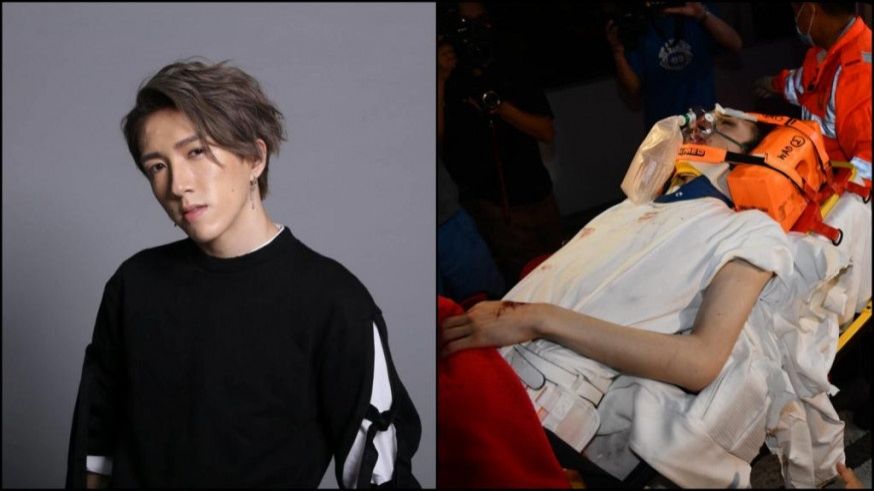
A Hong Kong dancer has secured compensation of HK$6.29 million (approximately RM3.32 million) after a catastrophic stage accident during a Cantopop concert left him permanently paralysed. The District Court's ruling on June 15 represents a significant outcome in a case that highlighted serious safety failures at a major entertainment venue and the devastating consequences that can result from workplace negligence in the live performance industry.
Mo Li Kai-yin, 31, was performing as a backup dancer at Hong Kong Coliseum during the fourth show of a planned 12-concert run by the boy band Mirror when a four-by-four-meter LED panel fell from the ceiling on July 28, 2022. The impact caused a cervical spine dislocation, instantly severing his spinal cord and leaving him paralysed from the neck down. He was rushed to Queen Elizabeth Hospital for emergency surgery, beginning what would become a long and ongoing journey through intensive medical treatment and rehabilitation.
The court determined that his employer, Studiodanz, bore responsibility for the accident and awarded Mo the maximum compensation available across multiple categories recognising the full extent of his injuries. The judgment acknowledged that Mo had suffered what the court explicitly described as "catastrophic" disabilities, finding him permanently and totally incapable of work. Beyond immediate damages, the award included provisions for lifetime caregiving costs, periodic payments to support his ongoing medical needs, and coverage of all related healthcare expenses. The ruling also obligated Studiodanz to cover Mo's legal costs and pay interest on the damages.
The severity of Mo's condition cannot be overstated. The court noted that he now requires three full-time caregivers working on a round-the-clock basis to assist with every aspect of personal care and daily living. According to the judgment, he is "incapable of ever leading or appreciating an independent adult life," a sobering assessment that underscores the permanent nature of his injuries and his total dependence on others for survival. Before the accident, Mo had built a promising career in the entertainment industry, performing at concerts, television programmes, advertisements and music videos while also teaching dance at multiple studios across Hong Kong.
Mo's journey into dance began while he was attending university between 2015 and 2019, according to reports in the South China Morning Post. He transitioned to full-time professional dancing in 2019, combining performance work with teaching commitments at four studios, including Studiodanz, which would later be found liable for his injuries. His career trajectory was cut short by the accident, eliminating not only his ability to perform but his capacity to teach or engage in any form of professional work.
The medical aftermath of the accident has been complex and ongoing. Following his emergency surgery at Queen Elizabeth Hospital, Mo was transferred to private medical institutions both within Hong Kong and overseas, where he has continued to undergo surgical procedures and intensive rehabilitation. Despite the severity of his paralysis, he has made some incremental progress through advanced treatment technologies, including regenerative medicine approaches and an implantable microstimulator designed to restore some neural function. These developments have resulted in regaining limited movement in his right arm and restored sensation in bladder and bowel functions, small but significant victories in his recovery.
Though Mo's physical improvements remain limited, he has demonstrated remarkable resilience. A video posted on his Instagram account in March showed him operating an electric wheelchair using his right hand, suggesting that even modest gains in motor function can translate into meaningful improvements in his autonomy and quality of life. His ongoing rehabilitation programme, while intensive and demanding, represents hope that further progress may be possible, though full recovery from his cervical spinal dislocation remains medically unlikely.
The personal toll on Mo's family has been profound. His father, Reverend Derek Li Shing-lam, made the extraordinary decision to resign from his pastoral duties in Canada and return to Hong Kong to become Mo's full-time caregiver. He dedicated his remaining years to his son's care and support until his death on April 25, leaving Mo dependent on professional caregivers for the round-the-clock assistance his condition demands.
Studiodanz's absence from the trial and subsequent compensation ruling is notable. The company did not participate in the legal proceedings, a decision that may have reflected either confidence in legal defences or pragmatic acceptance of liability. Prior to the compensation award, Studiodanz had already faced regulatory consequences, being fined HK$132,000 for violating occupational safety regulations in connection with the incident. This earlier penalty suggested that authorities had identified specific safety failures in how the venue and production team had managed the LED screen installation and security.
The case carries broader implications for workplace safety standards in Hong Kong's entertainment industry and across Asia more widely. Large-scale productions involving complex rigging, lighting and display equipment require rigorous safety protocols, regular equipment inspections, and comprehensive risk management systems. The Mirror concert accident, resulting in catastrophic injury to a young performer, serves as a stark reminder of what happens when these protocols fail. For performers, venue operators and production companies throughout the region, the judgment underscores both the legal and moral imperative to prioritise safety at every stage of event planning and execution.
Mo's compensation award, while substantial, cannot restore his health or undo the transformation his accident has wrought on his life. However, it provides crucial financial resources to support his medical care, rehabilitation efforts and living expenses across what may be decades of life ahead. The judgment also sends a clear message to employers and venue operators that negligence resulting in serious workplace injuries carries significant financial consequences, potentially incentivising greater investment in safety measures throughout the entertainment industry.

