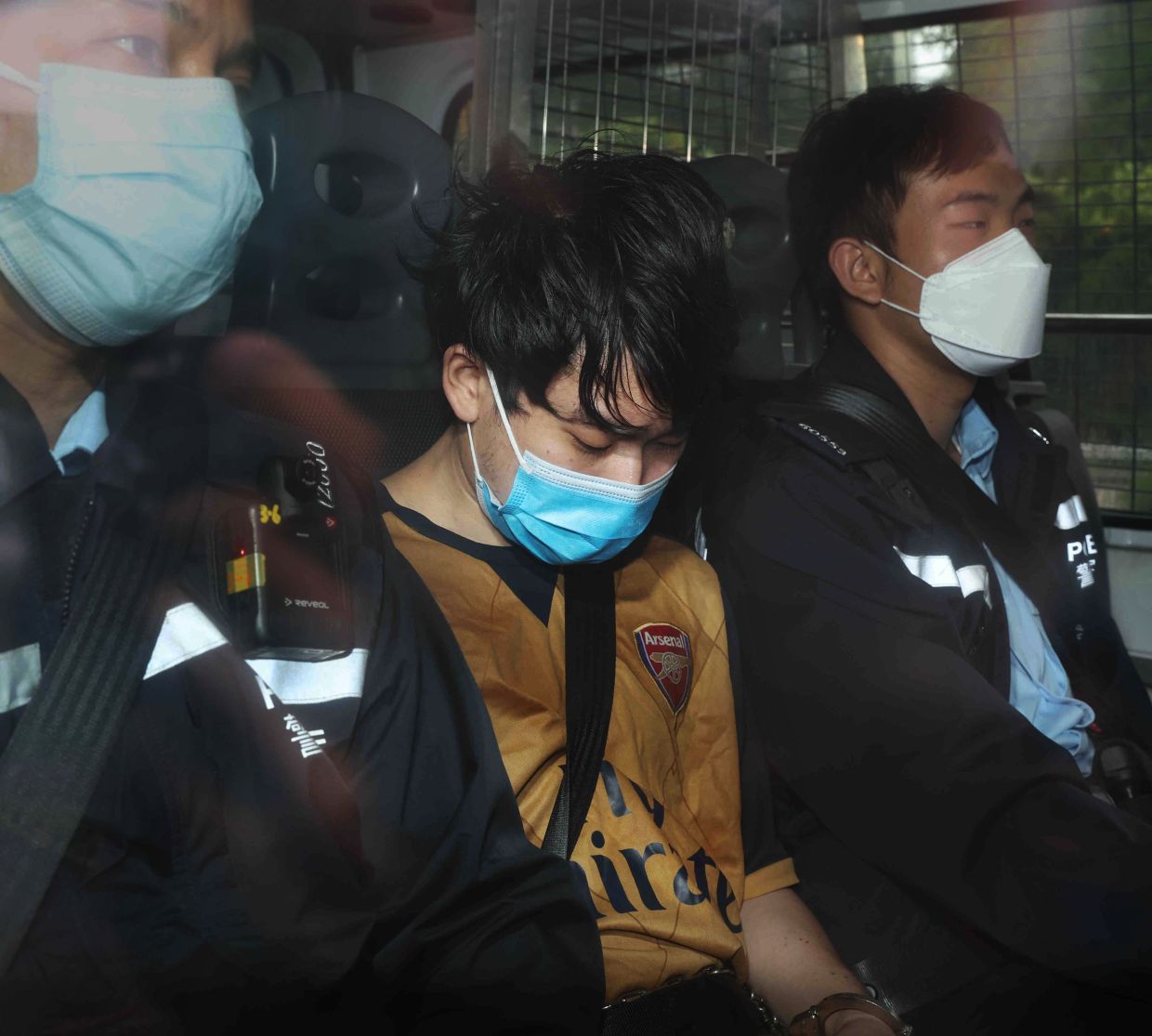
A 29-year-old jobless man has appeared before Hong Kong's High Court charged with the 2022 murder of his 30-year-old girlfriend, offering an extraordinary defence that he fatally struck her while attempting to assist her in losing weight. Ng Ka-sing stands accused of killing Yip Tsz-ching in their modest 700-square-foot apartment in Galore Garden, Hung Shui Kiu, during the final days of April 2022. The case has drawn significant attention for both the brutality of the alleged crime and the implausible explanations the accused has provided to authorities. Prosecutors firmly reject his version of events, signalling their confidence that the evidence will demonstrate a premeditated act rather than a tragic accident.
The formal charges against Ng encompass not only the murder allegation but also the separate offence of illegally disposing of his partner's remains. The defendant initially offered to plead guilty to the lesser charge of manslaughter, a proposal the prosecution declined, indicating their determination to pursue the more serious murder conviction. This rejection of the manslaughter plea suggests prosecutors believe the circumstances point to intentional killing rather than an act committed in the heat of the moment. The disposal charge arose from Ng's actions on the morning of 29 April 2022, when residents and street workers witnessed him transporting what appeared to be a human body wrapped in quilting and plastic film on a wheelboard along Tin Ha Road in the early hours.
Senior public prosecutor Audrey Parwani laid out the Crown's position during her opening statement, emphasising that the defendant's multiple explanations to police lack credibility and internal consistency. She highlighted that Yip's body bore extensive corrosive burns covering 55 per cent of its surface area—injuries that do not align with Ng's claimed accident scenario. The prosecution's case rests on presenting this evidence to convince the jury that Ng's narrative of attempting to keep his girlfriend awake through physical means was a fabrication designed to obscure his true intentions. Parwani's assertion that Ng was not telling the complete truth signals the prosecution's commitment to dismantling his defence piece by piece.
According to Ng's own account to police, captured in a cautioned interview, he struck Yip repeatedly with a rod starting on the night of 27 April, believing that sleep deprivation would assist her in reducing body weight. The beating allegedly continued intermittently over two days, with Ng claiming he persisted because his girlfriend did not explicitly tell him to cease his actions. Even more remarkably, Ng suggested that when he paused briefly to ask whether he should stop, a female relative sharing their flat—identified as his sworn sister—encouraged him to continue. This detail, if proven, would suggest the involvement of a third party in the incident. The Crown's case indicates that the physical assault transpired between 10pm on 27 April and 1:30am the following morning, followed by a resumption from 3am to 5:30am on 28 April.
The extent of the violence inflicted during this period becomes clearer through Yip's injuries. She suffered multiple bruises, abrasions and lacerations across her head and body consistent with blunt force trauma such as punching and kicking. Beyond the beatings, Ng claimed Yip poured drain cleaner over herself, while he splashed the caustic liquid on the floor purportedly to stimulate her feet. He further asserted that she struck herself against a wall seven to eight times after slipping on the contaminated surface. Government pathologist Dr Foo Ka-chung, however, established that the 55 per cent of her body covered by corrosive burns, combined with the blunt force injuries and subsequent suffocation, indicated a cascade of trauma rather than self-inflicted damage. The pathologist determined that Yip died from suffocation following her head injuries and extensive chemical burns to her chest, abdomen and limbs.
The timeline of Yip's deterioration offers critical insight into the nature of the assault. By approximately 5am on 28 April, Yip reportedly informed Ng that she was experiencing severe pain and feared she might not survive. The prosecution will likely argue this moment demonstrates Ng's awareness of the grave harm he had inflicted. Yip subsequently lapsed into a coma and made no further utterances after 7:21am that morning. Her body remained in the flat for several more hours before Ng's decision to transport it through the streets at dawn, a choice that would ultimately lead to his undoing.
The discovery of Yip's body occurred when early morning joggers spotted a human leg protruding from a rolled-up quilt secured to Ng's wheelboard at approximately 6am on 29 April. Jogging enthusiast Lau Kwok-yan, who reported the discovery to police, testified that Ng remained standing nearby with apparent composure, displaying no visible signs of panic or distress. This demeanour may prove significant to the jury's assessment of guilt, as it contradicts the image of a man devastated by a tragic accident. Street cleaner Wong Ah-sum further testified that when he confronted Ng about the cargo, the accused calmly identified it as a corpse and stated his intention to deliver it to the police station—a claim that strains credulity given his subsequent behaviour.
Upon his arrest at 6:36am, Ng made what could be interpreted as either a confession or an admission cloaked in his weight-loss narrative. He declared: "This was my girlfriend. I hit her to death with a rod by mistake." Yet the circumstances surrounding the body's handling suggest far more deliberate actions than those consistent with accidental killing. Forensic specialist Lo Man-hung documented that Yip's body had been secured to an overturned wooden chair using black rubbish bags and rope, then enveloped in a quilt. Her head was additionally wrapped in multiple layers of cling film and adhesive tape—precautions that indicate an intention to conceal identity and prevent fluid leakage, not the actions of someone who had merely stumbled into tragedy. Government pathologist Dr Foo Ka-chung estimated Yip had been deceased for 12 to 24 hours at the time of discovery, placing her death sometime during 28 April.
The trial before Justice Judianna Barnes and a seven-member jury is scheduled to extend for 18 days, allowing both the prosecution and defence considerable time to develop their competing narratives. The Crown's case appears constructed to demonstrate not only that Ng deliberately killed Yip but that his subsequent actions—the concealment, the wrapping, the attempted disposal—reveal consciousness of guilt and premeditation. The defence's reliance on the weight-loss explanation, combined with claims that Yip herself inflicted some injuries and that a third party encouraged the violence, appears designed to sow reasonable doubt about the defendant's murderous intent. However, the careful wrapping and securing of the body, the extent of injuries, and Ng's composed demeanour when discovered suggest to prosecutors a narrative of calculated harm rather than accident.
This case carries implications beyond the courtroom, highlighting concerning patterns of intimate partner violence and the disturbing justifications sometimes offered by perpetrators. The claim that Ng was merely assisting his girlfriend in weight management—while she subjected herself to assault and chemical burns—epitomises the warped logic sometimes employed to rationalise abuse within relationships. For Hong Kong and the broader Southeast Asian region, the trial serves as a reminder of the dangers lurking within domestic settings and the importance of intervention mechanisms when signs of abuse emerge. The jury's verdict will ultimately determine whether Ng's account achieves even a veneer of plausibility or whether the physical evidence and circumstantial details prove definitively that he orchestrated his partner's death with deliberation.

