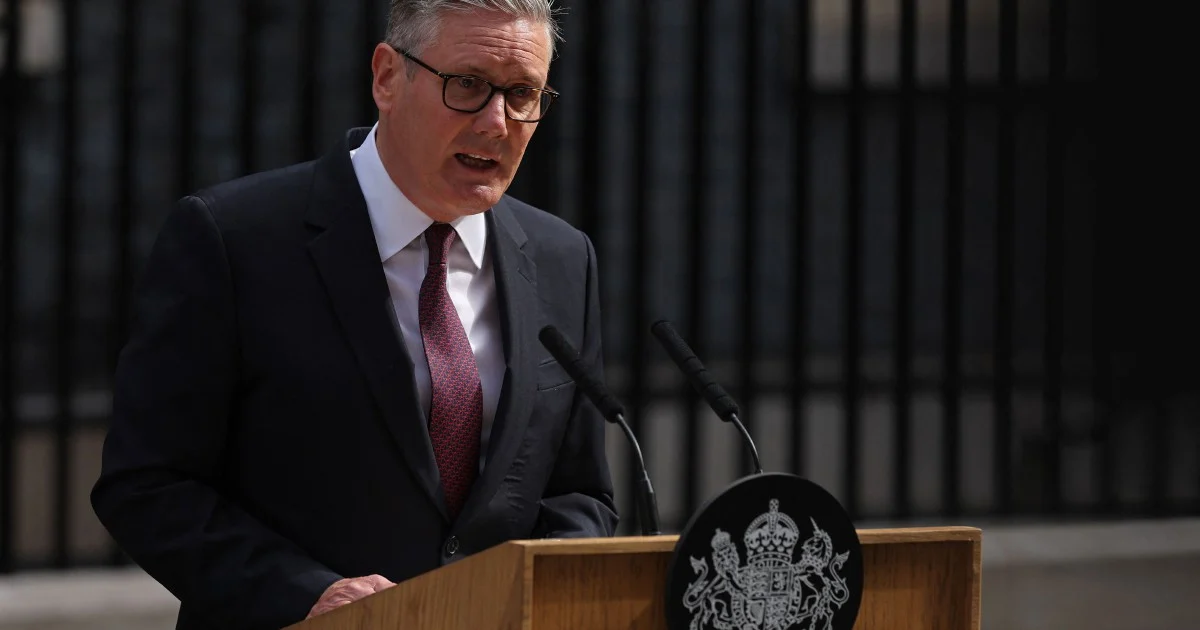
Prime Minister Keir Starmer announced on Monday that he would step down from his position, setting in motion a process that will determine Britain's next leader before parliament reconvenes in September. The decision marks another chapter in the nation's unusual period of political instability, with the country preparing to welcome its seventh prime ministerial appointment within ten years—a frequency that underscores the fractured nature of contemporary British politics across both major parties.
The Labour Party, which Starmer has led since April 2020, possesses well-established constitutional procedures for selecting a successor when the incumbent chooses to depart. Unlike snap elections or sudden incapacitations, a voluntary resignation allows the party machinery to conduct a methodical process designed to ensure broad membership participation and democratic legitimacy. This stands in contrast to some international precedents where such transitions might occur through backroom negotiations or parliamentary manoeuvring.
Under Labour's current rulebook, the party's National Executive Committee would first oversee the establishment of nomination thresholds. Candidates seeking the leadership typically must secure endorsements from a minimum proportion of the party's Members of Parliament and members across regional constituencies. These gatekeeping mechanisms serve dual purposes: they ensure that only viable candidates with meaningful parliamentary support can proceed, while simultaneously allowing grassroots members to influence which figures reach the ballot. The specific percentages and timings have evolved over successive Labour leadership contests, reflecting ongoing debates within the party about balancing parliamentary judgment with membership democracy.
Once candidates have cleared nomination hurdles, the party moves toward a formal ballot. Labour's membership—currently numbering in the hundreds of thousands—would cast votes according to a one-member-one-vote system, a framework adopted after controversies surrounding previous leadership elections. This method represents a significant departure from Labour's traditions, where parliamentary colleagues once held predominant influence. The shift reflects broader movements across centre-left European parties toward enhanced grassroots engagement, though it has occasionally produced outcomes that surprise Westminster establishments.
The September timeline that Starmer has specified creates considerable practical constraints on this process. Parliamentary recess in summer typically extends from late July through early September, a period when many MPs and activists juggle holiday schedules with party business. The Labour Party must compress what is normally a months-long deliberation into a matter of weeks, requiring accelerated campaigning and voting procedures. Regional hustings—where candidates face party members in public forums across different areas of Britain—may occur at a brisk pace, potentially limiting the depth of scrutiny that candidates receive compared to more leisurely contest periods.
Several potential contenders have already emerged as possibilities within Labour circles, each representing different ideological wings and demographic constituencies. The choice between them will likely reflect fundamental questions about the party's direction following a period of relative electoral success followed by internal turbulence. Candidates with strong parliamentary backing may possess an advantage during the nomination phase, whilst those with substantial grassroots popularity could benefit when voting proceeds to the broader membership base. This tension between different power centres within Labour has historically produced intense campaigns.
Malaysian and Southeast Asian observers of British politics might find the rapid succession of leaders somewhat bewildering, particularly when contrasted with more stable governmental arrangements in the region. Yet the Labour Party's formal procedures for leadership transition, despite the compressed timeline, represent functioning democratic institutions capable of adapting to circumstances. The process privileges neither unilateral executive decision-making nor obscure factional bargaining, instead relying upon transparent mechanisms that involve multiple stakeholder groups.
The international implications of Britain's leadership transition deserve consideration. A new Labour leader would inherit complex foreign relationships, including engagements with ASEAN nations and broader Indo-Pacific strategy considerations. UK trade policy, particularly as it relates to regional partnerships and supply chain networks that affect Malaysian and other Southeast Asian economies, may shift depending upon the new leader's priorities. Energy security discussions, technology cooperation frameworks, and defence arrangements could all face recalibration under different leadership.
The broader context of this transition reveals underlying questions about political durability and institutional stability in mature democracies. When prime ministers or party leaders change with considerable frequency—as Britain has experienced recently—governments struggle to implement long-term strategies or maintain credibility in international negotiations. Each leadership change typically involves personnel shifts across government departments, policy emphasis adjustments, and renewed attention to internal party management rather than external challenges.
Labour faces particular pressure to select a leader capable of maintaining parliamentary cohesion and reconnecting with voters in constituencies the party has lost in recent years. The successor will inherit governing responsibility during a period of economic constraint, significant public service demands, and complex geopolitical circumstances. Whether the party's democratic procedures for leadership selection will produce someone capable of addressing these challenges remains an open question that the September result will answer.
The coming weeks will see intense speculation, candidate positioning, and grassroots engagement within Labour's membership. Media coverage will naturally focus on personality and style differences between contenders, yet the underlying process—however compressed—remains rooted in democratic principles and inclusive participation that reflect the party's values. How effectively this abbreviated selection manages to identify a credible alternative leader will have ramifications extending far beyond Westminster, affecting Britain's diplomatic and economic relationships throughout the Asia-Pacific region.

