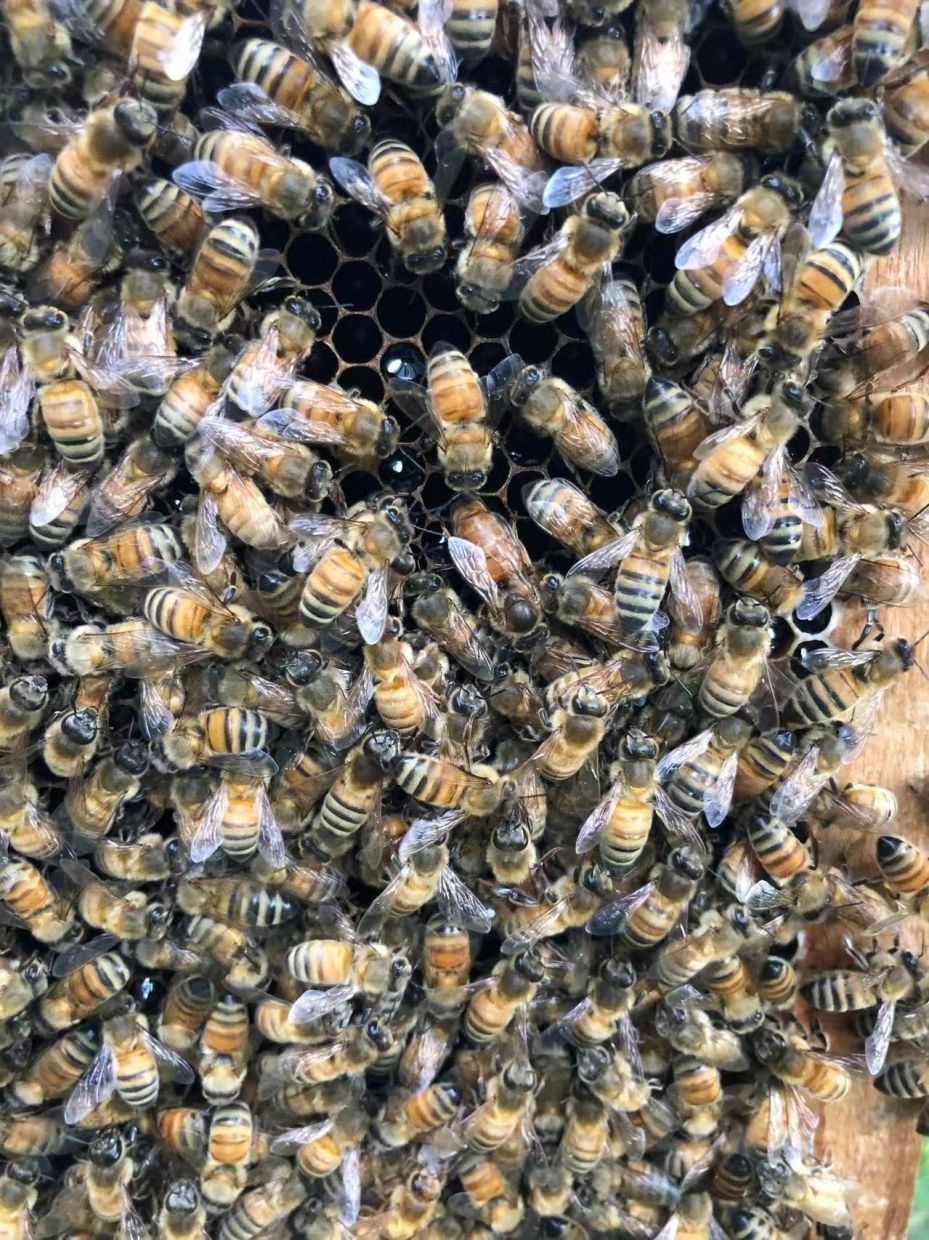
Honeybees present one of nature's most intriguing puzzles: how a single fertilised egg gives rise to either a future queen or a worker bee, despite both developing from genetically identical beginnings. For decades, the scientific consensus held a straightforward answer—the chosen larva simply receives a special diet of royal jelly, the protein-rich secretion produced by worker bees. Yet groundbreaking research led by Kai Wang at the Institute of Apicultural Research under the Chinese Academy of Agricultural Sciences now reveals that this nutritional explanation, while important, captures only part of the story. The architecture of the womb itself plays an equally critical role in determining the bee's destiny.
The study, published in the prestigious journal Nature, examined the western honeybee and uncovered an elegant biological principle: the physical structure and chemical composition of the chamber in which a larva develops fundamentally influence whether it becomes a productive worker or assumes the singular reproductive role of queen. What beekeepers have observed for generations—distinctive peanut-shell-shaped chambers hanging from the honeycomb—were long dismissed as merely passive containers. Wang's team has reframed these structures as precisely engineered biological incubators, demonstrating that the colony collectively manipulates its architectural environment to shape developmental outcomes.
The distinction between ordinary worker cells and royal chambers extends beyond mere appearance. The wax used to construct a queen's chamber possesses markedly different physical properties than the hexagonal cells that house developing workers. This royal wax is considerably softer and melts at a significantly higher temperature than standard honeycomb wax, creating an environment with distinct thermal characteristics. More intriguingly, the wax itself releases a different chemical profile—what researchers describe as a distinctive chemical "perfume"—that appears to communicate crucial developmental signals to the growing larva within.
These environmental factors operate in concert with royal jelly to orchestrate the transformation from ordinary larva to queen. The softer chamber walls provide expanding room as the larva grows, accommodating the greater physical demands of royal development. The altered melting point of the wax maintains precise thermal conditions throughout the developmental period. Most remarkably, the chemical compounds released by the royal wax appear to function as hormonal triggers, potentially signalling to the larva's genetic machinery that it occupies a place of singular importance within the colony.
The evidence supporting this architectural hypothesis proves compelling. When researchers exposed larvae to standard worker-cell wax while providing royal jelly nutrition, the results were stark: the larvae exhibited significantly poorer queen development patterns and substantially elevated mortality rates. This outcome suggests that despite receiving optimal nutrition, larvae require the specific sensory experience—the smell and tactile sensation—of royal chambers to survive the transition to queenhood. The implications challenge the reductionist view that nutrition alone determines caste assignment.
The bees responsible for constructing these royal chambers undergo temporary physiological changes that equip them for this specialised task. Research revealed that the workers building queen cells exhibit unusually elevated body temperatures, particularly in their thoraxes, with measurements exceeding 39 degrees Celsius—comparable to running a fever. This self-imposed heat generation allows them to manipulate the wax into the precise form and composition required. Wang describes these young workers as "living furnaces," consciously raising their own body temperatures to process and mould the special high-melting-point wax.
Yet these workers maintaining elevated temperatures are not members of a distinct, permanent caste. Rather, they represent ordinary, flexible young bees temporarily recruited for an extraordinary task. Their gene expression patterns shift dramatically during this period, enabling the metabolic changes necessary for wax production and architectural work. What distinguishes them is not permanent genetic difference but rather temporary, context-dependent shifts in which genes are activated. Wang characterises them as "ultimate multitaskers" because they simultaneously maintain their everyday hive responsibilities—distributing food among nestmates, inspecting other cells for health—while performing the demanding work of queen-chamber construction.
This discovery fundamentally challenges what Wang terms the "deeply rooted dogma" of nutritional determinism that has dominated honeybee science. The assumption that feeding a larva royal jelly represents the singular secret to queen development proved incomplete. The colony's collective behaviour in designing, constructing, and maintaining the physical environment contributes equally to caste determination. This revelation extends the conversation beyond simple nature-versus-nurture dichotomies, demonstrating instead that biology operates through integrated systems where nutrition, architecture, chemistry, and sensory experience converge.
The research does not yet pinpoint precisely which chemical compounds or physical characteristics prove decisive. Wang indicates that the next frontier involves identifying the molecular switches—the specific chemical scents or tactile stimuli—that communicate to a queen larva's DNA the message that it occupies royal status. This mechanistic understanding remains elusive despite the demonstration of the phenomenon itself. The complexity of the system suggests multiple factors likely operate in concert, requiring sophisticated future research to disentangle their individual contributions.
The implications extend well beyond abstract biology. For modern beekeeping, which depends fundamentally on queen production for colony maintenance, these discoveries offer practical pathways toward breeding healthier, more resilient queens. Boris Baer, professor of pollinator health at the University of California, Riverside and a co-leader of the study, emphasises that understanding how colonies naturally produce high-quality queens could transform beekeeping practices. Managed honeybees provide pollination services to more than 80 major agricultural crops globally, making queen quality directly relevant to food production security. At a moment when beekeepers across North America and Europe report substantial colony losses, insights into natural queen development mechanisms offer potential solutions for strengthening bee populations.
Wang's broader interpretation frames these findings within the superorganism concept—the idea that a honeybee colony functions as an integrated biological entity rather than merely a collection of individual insects. The colony's collective intelligence shapes an ordinary larva into its future mother through coordinated nutrition, architectural engineering, and chemical signalling. The workers that construct the royal chamber, heat their bodies, and provide royal jelly are not following explicit instructions but rather responding to colony-level signals and environmental conditions. This decentralised coordination produces outcomes that appear deliberately engineered but arise from accumulated individual decisions.
The philosophical implications merit consideration as well. Wang's observation that "eating well is important, but living in the perfect home is what truly changes your destiny" resonates beyond insect biology, suggesting that environmental context and nurture matter as profoundly as genetic potential. The honeybee colony demonstrates how organisms collectively engineer their social and physical environments to shape individual development and determine life trajectories. Wang suggests that similar principles may operate in other social insects—termite mounds and wasp paper nests may function as more than mere shelters, while the intricate wax structures of stingless bees could harbour comparable developmental secrets. Future research investigating these systems may reveal that environmental engineering for developmental control represents a widespread biological strategy among eusocial species.

