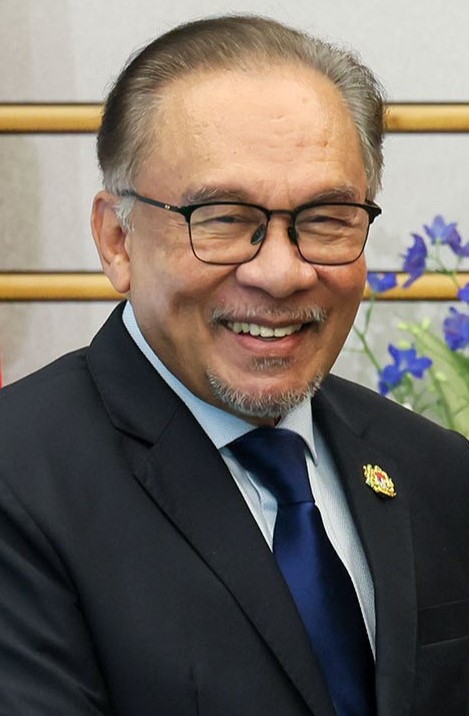
Dr Shukri Abdullah, Kedah's recipient of the Tokoh Maal Hijrah award, credits a pivotal moment of hardship for reshaping the entire trajectory of his life. At 76, the accomplished educationalist reflected on how a two-week detention under the Internal Security Act in 1974 became the watershed moment that propelled him from an undistinguished student to a celebrated figure in Malaysian education and personal development. The detention followed his activism as a student leader at Universiti Sains Malaysia, where he participated in the Baling Demonstrations, a watershed moment for youth political expression in Malaysia during that turbulent period.
The immediate consequences of his detention were severe. Authorities withdrew his scholarship, leaving him without financial support for his continued education. Yet rather than descend into bitterness or despair, Dr Shukri chose to interpret the setback as a wake-up call. He describes the experience as crystallising his understanding that education represented not merely an academic pursuit but the fundamental pathway through which individuals could reclaim agency over their circumstances and rebuild their lives. This philosophical reorientation marked the true beginning of his transformation, rooted in a deeper awareness of how personal discipline and intentional planning could reverse even the most unfavourable situations.
What makes Dr Shukri's trajectory particularly remarkable is that he did not enter university as a standout student. His secondary school performance was decidedly average, and his initial application to USM was rejected outright. Rather than accept this verdict as final, he took a pragmatic step, working as a journalist for Utusan Melayu in 1980 for approximately one year while preparing his reapplication. This intermediary period working in media proved formative, exposing him to the wider world beyond campus activism and allowing him time to mature intellectually and emotionally. Upon his successful reapplication to USM, he approached his studies with renewed focus and determination that bore fruit in tangible academic achievement.
The results of his disciplined commitment were extraordinary. Dr Shukri emerged as USM's overall best student, an accomplishment that carried particular significance given his modest academic origins. The university subsequently honoured him with the privilege of delivering the valedictory address as the institution's top graduate, a recognition that stood in stark contrast to his earlier academic struggles. This achievement illustrated a principle he now emphasises in his work: that past performance does not determine future potential, and that transformative change becomes possible when an individual awakens to their own agency and potential.
Following his undergraduate success at USM, Dr Shukri pursued postgraduate studies in the United Kingdom, obtaining a PhD from the University of Essex in an impressive two years and two months. The speed of completion demonstrates both his intellectual capability and his capacity for sustained focus once he had clarified his life direction. Upon returning to Malaysia, he entered academia as a lecturer at USM, positioning himself within the institutional framework where his own transformation had occurred. However, his career trajectory eventually led him away from traditional academic roles toward a calling that had become increasingly meaningful to him: the systematic mentoring of students and parents through structured motivational programmes.
For more than three decades, Dr Shukri has dedicated himself to this mission of inspiring others through the sharing of his personal journey and insights into human transformation. His work addresses a critical gap in Malaysian education and society, where many young people lack clear guidance on life direction and purpose. By demonstrating through his own example that ordinary individuals can achieve extraordinary results through discipline, self-awareness, and determined effort, he provides a counter-narrative to the notion that circumstances determine destiny. His programme emphasises the role of early goal-setting in channelling youthful energy toward productive pursuits rather than allowing young people to drift into unstructured or counterproductive activities.
Dr Shukri's family life further testifies to his values and priorities. As the father of ten children and grandfather of twenty-two, he has embodied the principles he advocates, particularly regarding parental responsibility in shaping the direction and aspirations of the next generation. He consistently emphasises that excellence is not an accident but the product of disciplined cultivation, requiring both personal determination and supportive family structures that communicate clear expectations and values. In this respect, his philosophy mirrors traditional Malaysian and Southeast Asian cultural emphases on filial respect and intergenerational knowledge transmission, adapted for contemporary contexts.
At the Kedah State-Level Maal Hijrah Celebration held in Alor Setar, Dr Shukri received formal recognition of his lifetime contributions to education and society. The Raja Muda of Kedah, Tengku Sarafudin Badlishah Sultan Sallehuddin, presented him with a certificate of appreciation and RM15,000 in cash, acknowledging his three decades of service as a motivational speaker and educator. This honour reflects official recognition that his work has measurably contributed to the welfare of Kedah's communities and represents an embodiment of the ideals of the Tokoh Maal Hijrah award itself.
Dr Shukri's narrative carries particular resonance for Malaysian society as it grapples with questions of youth engagement, educational equity, and social mobility. His trajectory demonstrates that an individual's starting point, whether academically, socioeconomically, or circumstantially disadvantaged, need not determine their ultimate destination. In the context of Malaysia's ongoing educational debates and concerns about youth unemployment and social disengagement, his emphasis on clarity of purpose and disciplined self-development offers a philosophical framework grounded in lived experience rather than abstract theory. The principles he articulates—the importance of goal-setting, the transformative power of education, the necessity of personal discipline, and the role of awareness in initiating change—address fundamental developmental challenges that extend across Southeast Asia.
Furthermore, Dr Shukri's willingness to draw meaning from his period of political detention and use it as a catalyst for constructive engagement with society illustrates a mature approach to adversity that has broader implications for how individuals and societies process difficult historical moments. Rather than allowing state action to embitter him or confirm a narrative of victimhood, he channelled the experience into deeper self-examination and commitment to service. This approach models a form of civic resilience that remains relevant to contemporary discussions of justice, reconciliation, and meaningful citizen contribution.