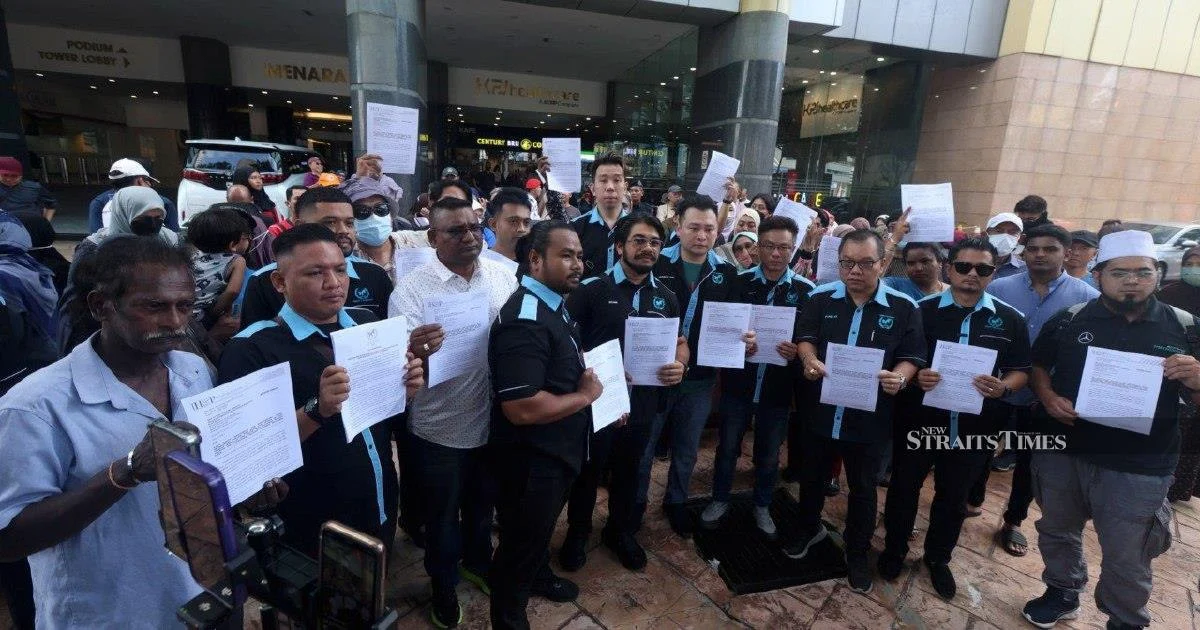
The Malaysia International Humanitarian Organisation marshalled over one hundred victims of investment fraud in Kuala Lumpur today, mounting public pressure on law enforcement to prioritise their investigations into eighteen companies and digital investment platforms implicated in what appears to be an organised criminal network specialising in financial deception.
The gathering represents a significant coordinated response from scam victims seeking to amplify their individual complaints into collective action. Organising such a large group of affected parties underscores the scale of suspected fraud operations currently active in Malaysia, where investment schemes continue to proliferate across multiple platforms and operating entities. The involvement of MHO, a humanitarian body, suggests these investigations extend beyond financial loss to encompass broader social harm affecting vulnerable segments of the population.
The eighteen companies and investment platforms under investigation form what authorities suspect is a syndicated operation rather than isolated fraudulent ventures. This distinction carries substantial investigative significance, as proving connection between seemingly separate entities requires more complex evidence gathering and coordination between different police units. Syndicated fraud networks typically utilise layered ownership structures, shell companies, and obfuscated financial flows to obscure the genuine decision-makers and beneficiaries of the illegal enterprise.
Investment scams represent an evolving threat landscape in Malaysia and across Southeast Asia. Unlike traditional financial crime, investment fraud schemes often exploit technological sophistication and psychological manipulation alongside false documentation. Perpetrators typically cultivate trust through fraudulent credentials, forged regulatory approvals, and simulated investment platforms that generate fake returns to retain victim confidence during the accumulation phase. The apparent existence of multiple coordinated platforms suggests a highly developed criminal infrastructure.
The victims assembled by MHO likely represent only a fraction of actual losses and affected individuals. Many investment fraud victims fail to report incidents due to embarrassment, distrust of authorities, or ignorance regarding proper complaint procedures. The visibility created by organising large victim gatherings can consequently attract additional complainants previously reluctant to come forward, potentially expanding the scope of investigations and revealing connections between seemingly unrelated cases.
Police resource allocation presents a substantial practical challenge in addressing the complaint. Investigation of complex financial crime requires specialists trained in forensic accounting, digital evidence recovery, and financial tracing. Building prosecutable cases against organisations suspected of syndicated operations demands meticulous documentation and coordination with external agencies including financial regulators and telecommunications authorities. Expediting investigations without compromising evidentiary standards remains a delicate balance for enforcement agencies managing multiple competing priorities.
The timing and scale of victim mobilisation may reflect growing frustration with investigation progress. When law enforcement appears unable to deliver timely results, public pressure becomes a strategic tool for victims seeking accountability. Such demonstrations can influence resource allocation decisions within police hierarchies and signal to the media and political leadership that investment fraud warrants higher priority classification within policing priorities. However, sustained investigation momentum requires consistent institutional commitment beyond immediate public attention cycles.
Malaysian regulators including the Securities Commission and Bank Negara Malaysia maintain supervisory responsibility for investment platforms, though enforcement jurisdiction can blur between regulators and criminal investigators. Companies operating investment schemes typically face simultaneous regulatory investigation and criminal inquiry, requiring coordination that frequently proceeds slowly across institutional boundaries. The eighteen entities under investigation may be subject to parallel civil and criminal proceedings, complicating the overall investigation landscape.
Regional context matters significantly for understanding Malaysia's investment fraud problem. Singapore, Indonesia, and Thailand report similar proliferation of suspected investment schemes targeting cross-border participants. Criminal networks frequently establish operations across multiple countries to access larger victim pools while complicating jurisdictional pursuit. Some Malaysian victims may have engaged with platforms registered overseas but accessible through digital channels, introducing international legal and investigative complications.
Victims gathered by MHO likely include individuals from diverse demographic backgrounds, though investment fraud disproportionately affects middle-income and older populations with savings to invest but limited financial sophistication. The financial losses extend beyond individual victim accounts to encompass broader economic effects including reduced consumer confidence, potential impacts on legitimate investment platforms, and reputational damage to Malaysia's financial services sector internationally.
The humanitarian organisation's intervention highlights evolving roles for civil society in addressing financial crime. MHO functions as a victims' advocate mobilising collective action where individual complaints might otherwise remain isolated. Such intermediary organisations can amplify victim voices, organise evidence sharing among complainants, and apply sustained pressure on authorities through public demonstration. Their involvement suggests individual victims recognise that aggregated complaints carry greater institutional weight than scattered isolated reports.
Police responsiveness to such organised victim pressure carries implications extending beyond individual cases. Demonstrating capacity to accelerate investigations involving significant victim populations builds institutional credibility and may encourage future victims to report frauds rather than accepting losses silently. Conversely, failure to deliver timely investigative results reinforces victim cynicism regarding law enforcement effectiveness and may encourage civil remedies or self-help approaches that undermine formal justice mechanisms.
Resolution of these eighteen suspected cases would establish important precedents regarding investigation timelines, evidence standards, and prosecutorial strategy for Malaysian authorities handling complex financial crime. Successful investigation and prosecution could disrupt syndicated networks and deter future similar operations, though criminal enterprises typically reconstitute under different ownership structures when exposed. The MHO-organised gathering represents a critical juncture where victim mobilisation meets institutional investigation capacity.

