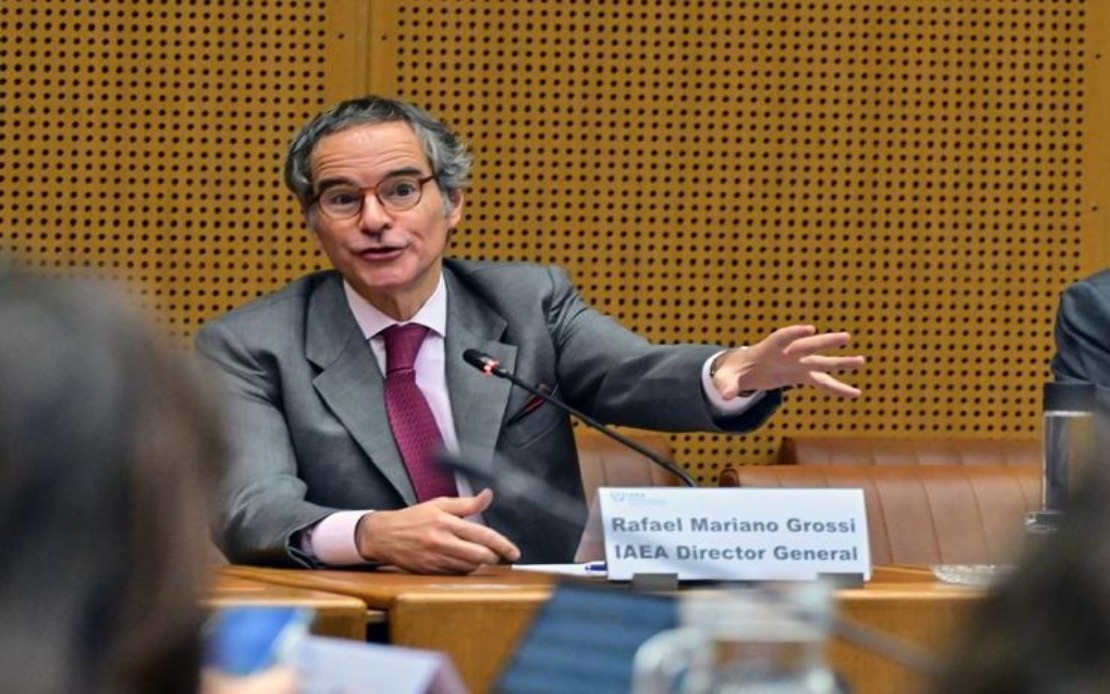
International Atomic Energy Agency Director General Rafael Mariano Grossi has underscored the vital role that diplomatic channels must play as American and Iranian representatives gather for substantive discussions in Switzerland on Sunday. Speaking from Istanbul, Grossi stressed that this pivotal moment demands sustained commitment to negotiation, framing the upcoming engagement as an opportunity that must not be squandered. His intervention reflects the IAEA's prominent position in monitoring the technical dimensions of any potential agreement, particularly regarding Iran's nuclear programme and compliance verification.
The forthcoming meeting in Burgenstock represents the most direct engagement between Washington and Tehran in recent years, signalling a potential shift in one of the region's most intractable diplomatic standoffs. The talks follow a significant development when US President Donald Trump and Iranian President Masoud Pezeshkian signed the Islamabad Memorandum of Understanding on Wednesday, creating the foundation for these face-to-face negotiations. This document, though its precise contents remain partially opaque to international observers, appears to have established sufficient common ground to justify the convening of delegations at a neutral Swiss location.
Grossi's public remarks carry particular weight given the IAEA's institutional independence and technical expertise. By emphasizing that "at this critical moment, it's important to give diplomacy every opportunity to succeed," he was essentially calling on all parties to approach negotiations with flexibility and genuine intent to reach resolution. The nuclear watchdog's role transcends mere observation; it would be instrumental in verifying any future commitments Iran makes regarding its nuclear activities, making the IAEA's confidence in the negotiation process psychologically important to regional and global stakeholders.
Swiss Foreign Minister Ignazio Cassis has positioned his country as an active facilitator rather than a passive venue provider. His separate meetings with both Grossi and Iranian Foreign Minister Abbas Araghchi demonstrate Switzerland's deliberate effort to maintain balanced engagement with all parties. Zurich and Bern have historically leveraged their diplomatic neutrality and extensive international institutional presence to host sensitive negotiations. The choice of Burgenstock, a location in central Switzerland with no particular political baggage, underscores this commitment to creating an atmosphere divorced from the regional tensions that have characterized US-Iran relations.
For Malaysia and other Southeast Asian nations, these developments carry implications extending beyond the immediate bilateral dispute. A potential US-Iran rapprochement could reshape energy markets, with implications for oil pricing that directly affects economies dependent on petroleum imports. Moreover, any comprehensive nuclear agreement would influence regional security calculations across Asia, potentially altering the strategic balance that smaller powers must navigate. The success or failure of these talks will signal whether great powers remain capable of negotiating settlements to longstanding conflicts, a lesson relevant to various regional disputes in Southeast Asia.
The IAEA's institutional credibility has been tested repeatedly over Iranian nuclear matters. Grossi's emphasis on diplomacy reflects the organization's assessment that negotiated solutions offer better prospects for long-term verification and compliance than scenarios involving escalation or military intervention. The watchdog maintains extensive inspections capacity and technical knowledge about Iran's nuclear infrastructure, making its quiet support for diplomatic efforts a significant asset to negotiators seeking reassurance that any agreement can be effectively monitored.
The Islamabad Memorandum itself warrants scrutiny regarding its implications. While details remain closely held, the fact that both Trump and Pezeshkian participated in its signing suggests mutual recognition that certain baseline understandings could enable dialogue. This contrasts sharply with periods of radio silence and maximum pressure strategies that characterized earlier phases of their relationship. The willingness of either side to engage in preliminary confidence-building measures indicates genuine movement beyond rhetorical posturing.
Switzerland's role extends beyond providing meeting space. The Swiss government has cultivated relationships with Iranian officials spanning decades and maintains institutional memory regarding previous nuclear negotiations. Swiss diplomats understand Iranian negotiating patterns and can offer insights to American counterparts unfamiliar with the nuances of Iranian decision-making. This institutional expertise, combined with genuine Swiss interest in international stability, positions Bern as more than a neutral venue but as an active diplomatic resource.
The timing of these talks warrants consideration. Both administrations appear motivated to demonstrate progress on their respective policy priorities. For the American side, resolving the nuclear question could facilitate broader normalization and regional cooperation. For Iran, relief from economic sanctions remains paramount, though nuclear programme preservation also constitutes a red line. Identifying sufficient overlap between these positions will determine whether Burgenstock produces substantive breakthroughs or merely restarts a familiar cycle of engagement followed by disappointment.
Grossi's public intervention serves multiple purposes simultaneously. It reinforces the IAEA's commitment to supporting diplomatic solutions while subtly reminding negotiators that the organization exists to provide technical verification capacity, thereby potentially facilitating confidence-building. It also signals to international observers that the nuclear watchdog believes conditions exist for productive negotiation, lending credibility to the diplomatic process among countries and constituencies concerned about Iranian compliance.
The stakes encompassing these talks extend far beyond bilateral relations. A successful outcome could reshape regional security architecture and demonstrate that even deeply adversarial relationships can find negotiated pathways. Conversely, failure would reinforce patterns of mutual suspicion and potentially accelerate more confrontational approaches. For Malaysia and the broader Asian region, the outcome carries implications for everything from energy security to the broader international rules-based order that smaller nations depend upon for protection.

