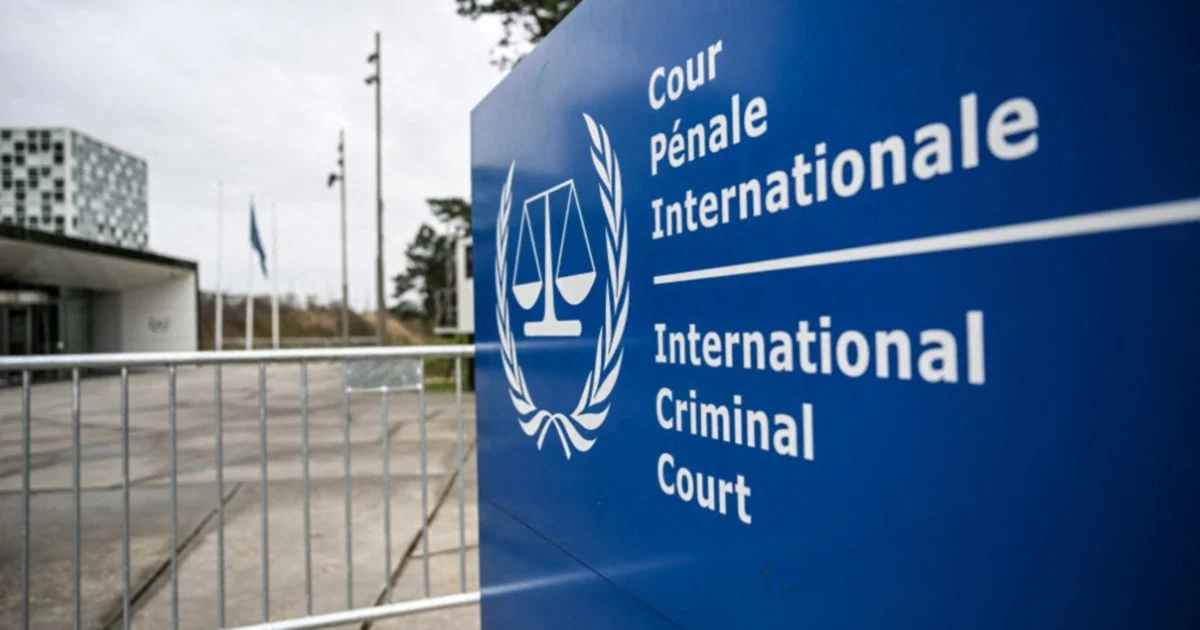
Three judges from the International Criminal Court have filed a lawsuit in a United States federal court challenging the validity of sanctions imposed against them by the Trump administration, marking an escalation in tensions between Washington and the global judicial institution. The legal action, filed on Wednesday, targets President Donald Trump alongside other high-ranking American officials, with the judges arguing that the punitive measures lack lawful foundation and represent an abuse of executive power.
The sanctions in question were levied as part of broader US opposition to ICC investigations into American military personnel and Israeli actions. The Trump administration has historically viewed the tribunal with suspicion, contending that it operates beyond proper oversight and poses risks to American interests. These restrictive measures typically include asset freezes and travel bans, restrictions that the ICC judges argue have caused tangible hardship to them personally and professionally.
The lawsuit places the judges in a position where they must convince American courts that their constitutional rights have been violated despite the executive branch's traditional latitude in foreign policy matters. The case hinges on whether the court will accept arguments that the sanctions constitute arbitrary punishment without due process and whether the judiciary can overturn decisions made on national security grounds. This legal confrontation underscores the fundamental disagreement between the US government and the ICC over jurisdictional authority and institutional legitimacy.
For Southeast Asian observers, this dispute carries significance beyond bilateral US-ICC relations. Several regional nations, including Cambodia, the Philippines, and others, are ICC member states with their own complicated relationships with the institution. Thailand, while not a member, has witnessed debates about whether to join. The broader principle at stake—whether powerful nations can unilaterally override international legal mechanisms—affects the stability of multilateral governance systems that smaller nations depend upon for protection of their interests.
The Trump administration's antagonistic stance toward the ICC reflects longstanding American exceptionalism regarding international courts. Previous US administrations had similarly resisted ICC jurisdiction, but the sanctions targeting judges represent a more aggressive posture. This approach signals that Washington views the tribunal not merely as misguided but as actively hostile to American strategic interests, justifying financial and diplomatic punishment of its officials. The judges contend this position transforms foreign policy disagreement into unlawful persecution.
The timing of the lawsuit, filed during Trump's presidency, suggests the judges chose to pursue remedies in American courts as a strategy to challenge the measures through institutional channels rather than through diplomatic negotiation. This approach acknowledges that political resolution through negotiation with the current administration appears unlikely, making litigation a viable alternative. However, securing victory in US courts requires demonstrating that executive authority over sanctions has constitutional limits applicable even in foreign policy contexts.
What remains legally uncertain is whether federal judges will intervene in executive decisions regarding international relations and sanctions policy. Historically, American courts have granted presidents considerable deference in these domains, citing the need for unified foreign policy conduct. The ICC judges must overcome this presumption by framing the sanctions not as legitimate policy instruments but as personal attacks unrelated to genuine national security concerns. This distinction between policy disagreement and unlawful retaliation becomes central to their legal strategy.
The ICC itself continues investigating allegations involving Palestinian territories, Ukraine, and other jurisdictions, investigations that Washington finds objectionable. By sanctioning ICC judges directly, the administration seeks to deter investigation into areas sensitive to American security interests. The judges' counterargument suggests that such sanctions constitute interference with judicial independence, a principle fundamental to any legitimate legal system.
For Malaysia specifically, though not directly involved, the outcome carries implications for how regional states can engage with international institutions. Malaysia maintains close relationships with both the United States and various international bodies. The outcome of this case will inform assessments about whether participation in multilateral legal frameworks provides meaningful protection or whether powerful nations can simply disregard rulings and penalise participants when convenient.
The lawsuit also highlights the fragmentation of international law enforcement. The ICC was established as a mechanism to address mass atrocities and crimes beyond national borders, yet its effectiveness remains constrained by geopolitical realities. When major powers refuse to recognise or cooperate with the institution, and actively punish its officials, the entire framework becomes compromised. This fundamental contradiction between the aspirational vision of universal justice and the practical limitations imposed by state sovereignty remains unresolved.
The coming months will determine whether American courts see grounds to intervene in this dispute or whether they defer entirely to executive prerogative. Either outcome carries significance for international relations and the future viability of institutions designed to transcend national interest calculations. For regional states watching from Southeast Asia, the case demonstrates that participation in global institutions carries risks when powerful actors view those institutions as threatening their interests.

