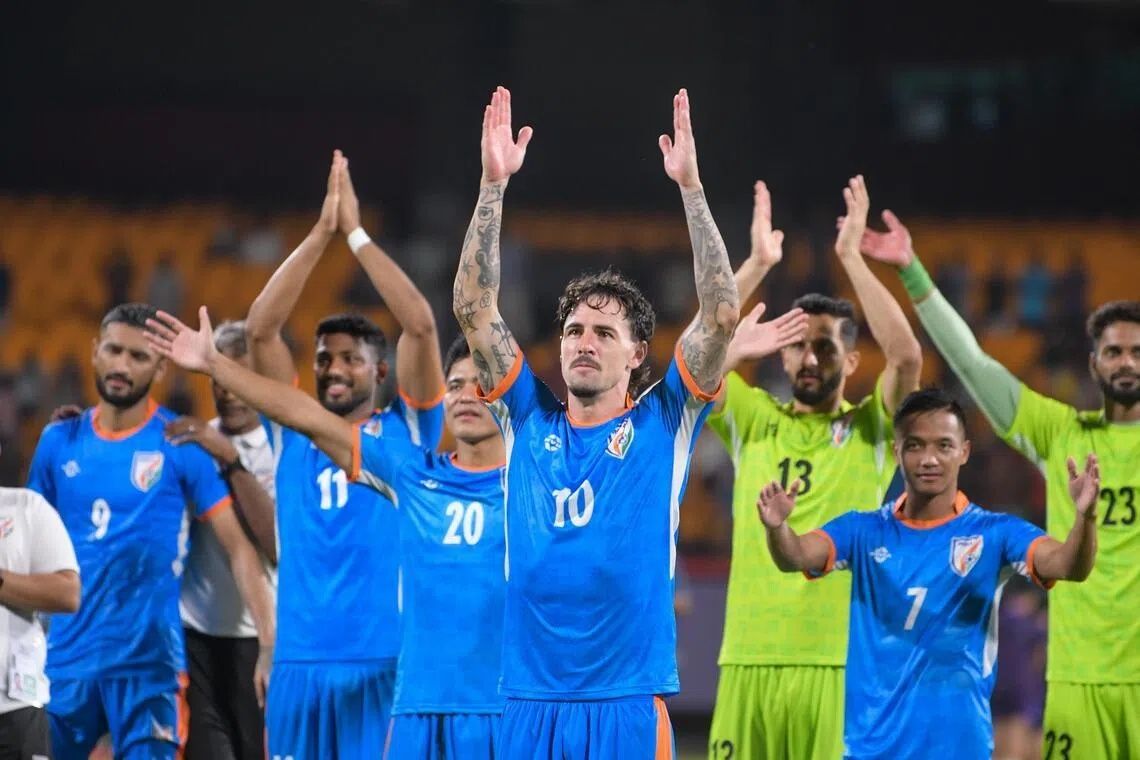
India's sports establishment is pursuing an ambitious policy shift that could fundamentally reshape how the country fields its national teams across multiple sports. The Ministry of Youth Affairs and Sports has reportedly forwarded a detailed Sports Passport proposal to the Prime Minister's Office, designed to permit athletes of Indian descent—including Overseas Citizens of India and Persons of Indian Origin—to represent India without surrendering their existing foreign nationalities or acquiring full Indian citizenship. If implemented, the framework could take between six and eight months to receive government approval, according to officials involved in its development.
The proposal emerges from a frustration that has built among Indian sports enthusiasts, particularly football fans. During the FIFA World Cup 2026 qualification cycle, social media users tracked Indian-origin players representing other nations: Tahsin Mohammed Jamshid, the 19-year-old Malayalee forward from Kerala now playing for Qatar; Diogo Costa, the Portuguese goalkeeper descended from Goan ancestry; Sarpreet Singh, New Zealand's midfielder with Punjabi heritage; and Samuel Moutoussamy, Congo's midfielder whose father is Tamil. Meanwhile, India's men's football team remains outside global competition, ranking 139th internationally, while the women's team sits at 69th. This disparity has prompted national conversations about whether India is unnecessarily limiting its talent pool through restrictive citizenship requirements.
India's current immigration and sports framework creates unusual constraints compared to its regional and global peers. The nation does not permit dual citizenship—a position shared by neighbouring countries including Singapore, Malaysia, and Japan. Historically, this prohibition made sense within the sporting context: decades ago, overseas-born Indians did represent the country in swimming, rugby, and tennis. However, in 2008, the sports ministry implemented a watershed policy mandating that only Indian passport holders could compete for India at the international level. The rationale was protecting domestic players' opportunities, preventing them from being sidelined by wealthier, more professionally experienced athletes from overseas Indian communities. The Sports Passport proposal seeks to reverse this decades-old restriction through a middle path that avoids requiring full citizenship or dual nationality status.
What makes this moment particularly significant is the global context within which India operates. Sports lawyer Nandan Kamath, managing trustee of the GoSports Foundation, highlights a fundamental mismatch between Indian law and international sporting practice. While Indian immigration law prohibits dual nationality, FIFA and other global sports bodies operate on entirely different principles. Football's governing body explicitly permits athletes to represent any country with which they can demonstrate a meaningful connection—whether through ancestral heritage, residential history, or familial ties. This rules-based flexibility has created a global trend: at the 2026 FIFA World Cup, nearly a quarter of all participating players represent nations other than their birthplaces, compared to just 10 percent during the early 2000s. India's proposed Sports Passport would essentially create a carve-out within existing citizenship law, allowing a narrow exception specifically for athletes competing internationally. As Kamath notes to The Straits Times, "there is no point holding back when the rest of the world is adopting this."
The strategic calculus behind this proposal extends beyond merely improving India's World Cup chances. Experts involved in the policy discussions indicate the initiative directly supports India's bid to host the 2036 Olympic Games and represents part of the broader National Sports Policy 2025, which explicitly aims to engage the Indian diaspora more meaningfully. With more than 37 million overseas Indians scattered globally, the largest diaspora population in the world, India recognizes untapped potential. This policy targets sports where grassroots infrastructure and institutional development have lagged cricket's overwhelming dominance: specifically football, basketball, and tennis. For a nation of 1.4 billion people, India's international sporting performance remains underwhelming, constrained by bureaucratic inefficiencies, inadequate grassroots programmes, and the cultural gravity of cricket that drains resources and attention from alternative sports.
The practical mechanics of how a Sports Passport might function in practice already exist elsewhere. Qatar's Mission Passport system, under which 19-year-old Tahsin Mohammed Jamshid plays for the national football team, demonstrates the model. Born in Doha to a Malayalee father working as an accountant, Tahsin became the first Indian passport holder to appear in a FIFA World Cup—ironically representing Qatar rather than India. Qatar's Mission Passport grants no citizenship rights, permanent residency, or access to the financial and social benefits available to Qatari nationals; it exists purely as a sporting credential. Similar systems operate in Bahrain, Spain, and Turkey, all successfully attracting foreign-born talent to strengthen their competitive positioning. If India adopts comparable structures, it would create opportunities for athletes with Indian heritage currently locked out of competing for their ancestral nation.
Foot soldiers in professional Indian football already understand this mechanism's transformative potential. Ryan Williams, an Australian forward, represents perhaps the most compelling case study. Born to an English father and an Indian-born Anglo-Indian mother who represented Australia in football internationally, Williams possessed clear eligibility. However, integrating him required abandoning his Australian citizenship entirely—a threshold most foreign athletes will not cross. The process consumed more than a year of bureaucratic processing. Yet Williams' performance validated his presence: within four minutes of his debut for India in AFC Asian Cup qualifiers against Hong Kong, he scored what media outlets declared the fastest goal in an Indian debutant's history. Kunaal Majgaonkar, a former JSW Sports executive who facilitated Williams' transition, readily admits that while Williams justified his presence on the field, the citizenship requirement represents a prohibitive barrier most talent will refuse to cross. A Sports Passport circumventing this requirement could accelerate recruitment exponentially.
Yet significant institutional resistance persists. Critics contend the proposal represents a structural shortcut rather than genuine reform, and could demoralize domestic talent development pathways. Arata Izumi, who surrendered his Japanese passport to acquire Indian citizenship in 2012 and became the first such convert, epitomizes the skepticism. Having experienced the rigorous integration process firsthand, Izumi argues that assembling a credible national team through recruited foreign players "is just not sustainable," and risks hollowing out investment in developing indigenous players. This criticism carries particular weight in football, where professionalization costs are highest and domestic academies perpetually lack adequate funding. If India begins recruiting foreign-born talent without requiring irreversible citizenship commitment, critics warn the nation risks creating a transient mercenary squad rather than a genuinely representative national team.
The proposal's eventual impact will likely concentrate on team sports, particularly football, where professional infrastructure and financial investment already exist at higher levels than individual sports in India. Unlike swimming, rugby, or tennis—where individual athletes can represent countries relatively independently—football's squad-based structure means several strategically recruited players could substantially alter competitive outcomes. Majgaonkar suggests that importing quality foreign-born players into a heavily professionalized sport like football "will be a game changer," transforming India's international standing far more dramatically than incremental grassroots improvements. However, implementation remains contingent on navigating political and institutional resistance within Indian sports bureaucracy, which has yet to formally respond to proposals.

