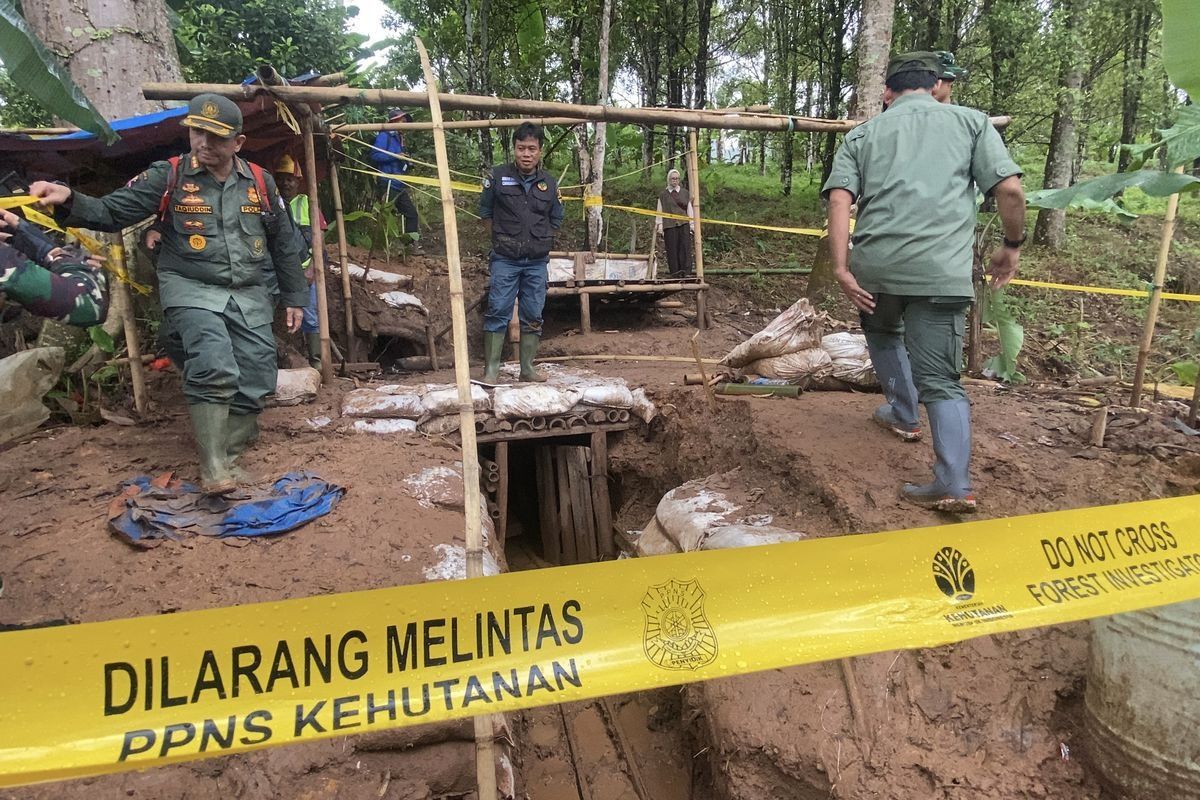
Indonesia has moved to prosecute 24 foreign nationals accused of orchestrating an illegal gold mining operation in the country's Maluku region, marking another significant crackdown on unlicensed resource extraction that has plagued the archipelago's eastern provinces. The energy ministry announcement, made public on Thursday, signals the government's hardened stance against foreign involvement in informal mining networks that circumvent Indonesia's strict resource management protocols and deprive the state of substantial mineral wealth and tax revenue.
According to energy ministry official Jeffri Huwae, the suspects faced allegations of constructing and maintaining extensive infrastructure specifically designed to support unauthorised mining activities in the Gunung Botak locality. This infrastructure reportedly included access roads, processing plants, and ancillary facilities necessary to extract, refine, and prepare gold for distribution. Such systematic development suggests a sophisticated, well-funded operation rather than a small-scale informal venture, indicating organised involvement with supply chains extending beyond the immediate mining zone.
The criminal charges carry considerable legal consequences under Indonesian law, with convictions potentially resulting in maximum custodial sentences of five years. These penalties reflect the seriousness with which Jakarta's authorities treat resource theft and illegal extraction, though observers note that sentences in comparable cases historically fall below statutory maximums. The energy ministry has not disclosed the identities or nationalities of the accused, though regional reporting previously identified the suspects as predominantly Chinese nationals working under sponsorship of PT Harmoni Alam Manise, a local company alleged to have facilitated foreign worker recruitment and operational coordination.
A significant complication in the prosecution emerges from the transnational dimension of the alleged crime. Of the 24 charged suspects, only half remain in Indonesian custody following formal detention procedures. The remaining 12 individuals have apparently departed Indonesian territory, placing them beyond the immediate reach of law enforcement and complicating extradition efforts. This geographical split reflects broader vulnerabilities in Indonesia's enforcement capacity at its porous eastern borders and highlights how international criminal networks exploit jurisdictional gaps to evade accountability after allegations surface.
Beyond the foreign nationals, Indonesia's authorities have also identified two local Indonesian co-conspirators and charged them alongside the foreigners. This domestic involvement underscores how illegal mining operations depend critically on local facilitation, land access, and official connivance. Without Indonesian partners providing logistical support, regulatory navigation, and political protection, such operations struggle to function over extended periods. The inclusion of local suspects suggests investigators have traced operational networks back to their domestic anchors, potentially disrupting broader criminal supply chains rather than merely apprehending migrant workers.
The Gunung Botak case represents the latest in an escalating pattern of illegal mining incidents involving foreign workers in Indonesia's resource-rich eastern regions. Last year, authorities in Papua, Indonesia's easternmost province, arrested four Chinese nationals implicated in gold mining within Senggi district, demonstrating that such incidents span multiple jurisdictions and reflect systemic challenges rather than isolated incidents. The recurring nature of these cases indicates that despite previous enforcement actions, the profit incentives and governance gaps enabling such operations persist across Indonesia's far eastern territories.
For Malaysian policymakers and security officials, the Maluku case carries instructive implications regarding transnational resource crime and illegal migration networks that often intersect with Southeast Asia's porous international borders. Criminal syndicates operating gold mining schemes frequently establish regional hubs across multiple countries, with Peninsular Malaysia and Sabah experiencing periodic discoveries of illegal mining operations with foreign worker components. The operational sophistication evident in the Gunung Botak infrastructure development—including roads and processing facilities—mirrors patterns observed in Malaysian cases, suggesting shared criminal methodologies and potentially overlapping networks.
Indonesia's energy ministry has refrained from disclosing the volume of gold extracted or processed through the Gunung Botak facility, limiting public understanding of the economic scale and impact of this particular operation. However, estimates of illegal gold production across Indonesia suggest annual losses to the state exceeding hundreds of millions of dollars, representing substantial foregone tax revenue and undermining licensed commercial operations. Uncontrolled extraction additionally inflicts environmental degradation through mercury contamination, habitat destruction, and water pollution affecting downstream communities—externalities rarely priced into illegal operators' calculations.
The prosecutorial action signals renewed governmental emphasis on stemming foreign-facilitated resource theft, reflecting international pressure and domestic revenue concerns. Yet enforcement effectiveness depends upon sustained commitment across investigative agencies, prosecutorial services, and the judiciary. Previous cases have sometimes stalled during trial phases or resulted in lenient sentencing despite formal charges, suggesting that institutional follow-through remains uneven. Observers monitoring anti-corruption efforts will scrutinise whether the ministry pursues these cases vigorously through conviction or whether political connections and bureaucratic capacity constraints allow outcomes that fall short of deterrent impact.
For regional stakeholders including Malaysia, the Maluku prosecutions underscore the necessity of coordinated cross-border intelligence sharing and law enforcement cooperation targeting resource crime networks. Illicit mining syndicates operate regionally rather than within isolated national contexts, moving workers, equipment, and proceeds across jurisdictions. Unilateral enforcement, however rigorous, struggles to dismantle networks with multiple geographic nodes and operational bases. Enhanced intelligence cooperation, mutual legal assistance treaties, and joint task forces focused on transnational resource crime represent mechanisms that ASEAN states including Malaysia and Indonesia could strengthen to improve collective enforcement capacity against such networks.

