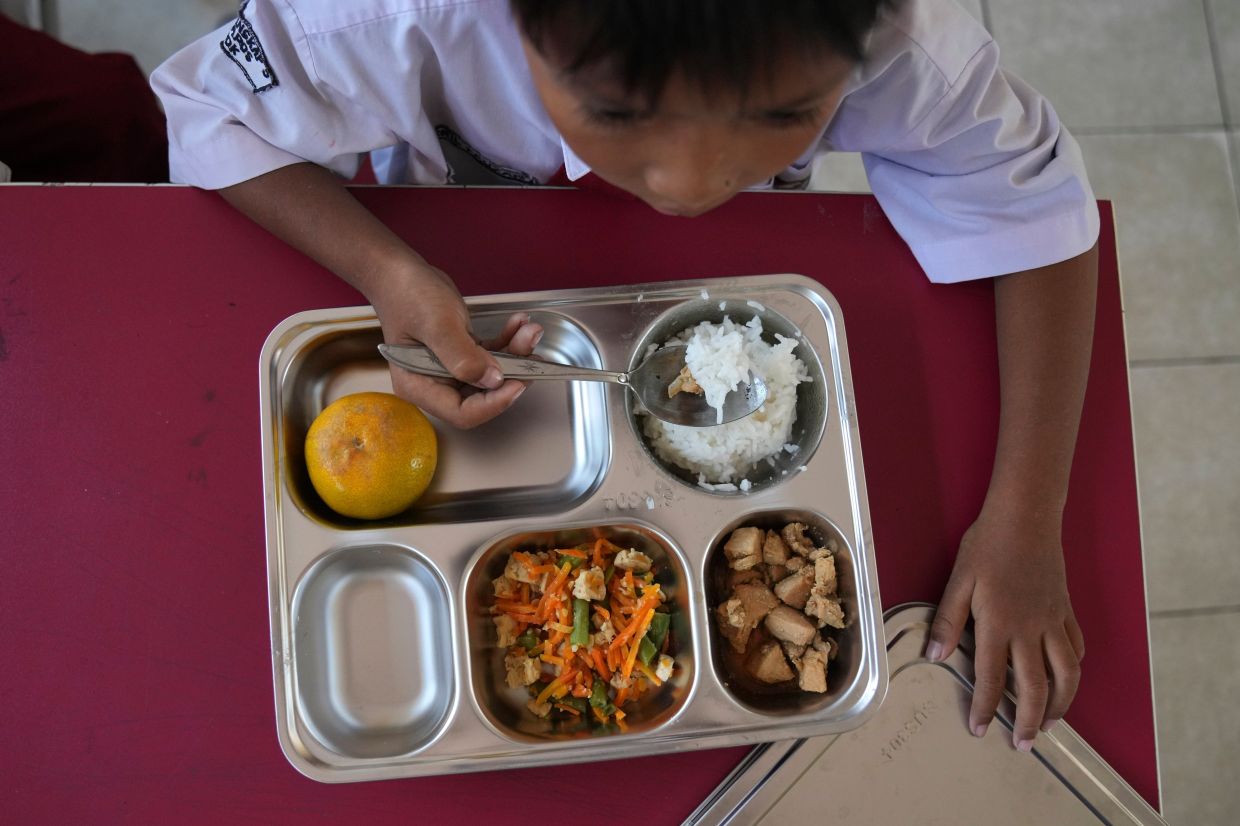
President Prabowo Subianto's signature free meals programme faces mounting pressure to halt operations entirely, with a leading anti-corruption organisation now calling for not just a temporary suspension but the complete dismantling of the National Nutrition Agency overseeing the initiative. Indonesia Corruption Watch, a prominent civil society group advocating for transparency and accountability in public governance, has escalated its criticism following recent detention of senior officials implicated in alleged graft within the roughly US$15 billion nationwide nutrition scheme.
The controversy erupted after the government dismissed Dadan Hindayana as head of the National Nutrition Agency, known locally as BGN, with authorities subsequently launching a formal corruption investigation. Four additional suspects have since been arrested, including two former deputies of Hindayana, signalling that investigators are moving beyond superficial inquiries into what ICW characterises as systemic institutional dysfunction. Wana Alamsyah, who heads the law and investigation division at Indonesia Corruption Watch, argues that current enforcement efforts remain insufficiently ambitious, failing to examine the full ecosystem of actors potentially enriching themselves through the programme's poor administration.
The free meals initiative represents one of Prabowo's most ambitious policy platforms, pledging to combat malnutrition and poverty across the archipelago by providing meals to more than 60 million Indonesians, spanning schoolchildren, pregnant women, and other vulnerable populations. Yet this scale has created exposure points vulnerable to misappropriation, from procurement procedures to vendor selection and kitchen operations. Wana contends that authorities must investigate all stakeholders who may have benefited from lax governance structures, including procurement committee members, food vendors, and middlemen involved in supply chains. The agency itself, created less than two years ago, has expanded with remarkable speed, raising questions about whether proper safeguards were established before rollout.
Wana's criticism extends to timing and opacity. He observes that widespread complaints about food quality, food poisoning incidents, and concerns about ultra-processed meals circulated on social media throughout 2025, yet government officials appeared indifferent until formal investigations commenced. This pattern suggests potential political calculation rather than genuine commitment to accountability. Wana speculates that deteriorating fiscal conditions may have prompted officials to scapegoat senior figures within BGN as cover for programme restructuring, allowing the government to reduce spending without appearing to abandon a flagship initiative. Such manoeuvres, if accurate, indicate that corruption investigations serve as convenient deflection from broader budgetary pressures.
Structural vulnerabilities within the kitchen network have long troubled observers. Indonesia Corruption Watch previously documented ties between foundations operating meal facilities and politically-connected individuals, including politicians, military officers, government bureaucrats, and business networks across 38 provinces. A separate study by the Jakarta-based Centre of Economic and Law Studies revealed that 79 per cent of respondents acknowledged potential conflicts of interest in vendor appointments, while earlier research warned of uneven geographic distribution, inconsistent food quality, and wasteful expenditure patterns. These findings suggest that corruption may be symptomatic of deeper institutional design flaws rather than isolated criminal behaviour.
Public scepticism has manifested through street protests. In mid-June, police clashed with students demonstrating against Prabowo's spending priorities and demanding the programme's complete cancellation. Further demonstrations erupted across major cities the following Monday, prompting authorities to deploy over 6,000 police and military personnel in Jakarta alone. This security response underscores the political sensitivity surrounding the initiative and the government's determination to maintain the programme despite mounting criticism.
Investor concerns have compounded political pressure. Indonesia's fiscal position is already strained by elevated fuel subsidy costs stemming from regional conflicts affecting petroleum markets, and the free meals programme's enormous budget commitments have prompted nervousness among international capital markets. Economists and think tanks increasingly question whether the promised employment, health, and economic benefits will materialise, particularly given implementation challenges and corruption allegations. Such doubts could influence foreign direct investment decisions and long-term confidence in Indonesia's macroeconomic management.
The newly appointed head of the National Nutrition Agency, Nanik S. Deyang, has signalled a strategic recalibration rather than wholesale programme abandonment. She announced intentions to reduce expenditure below the 268 trillion rupiah (US$14.9 billion) budgeted for this year by prioritising remote, underserved regions over universal coverage. Instead of pursuing the original target of 82.9 million beneficiaries, Deyang emphasised improving nutritional quality and food safety standards. This approach acknowledges legitimate criticism regarding hasty rollout while attempting to preserve the programme's core mission.
Deyang introduced additional safeguards, including a moratorium on establishing new kitchens pending stricter applicant vetting, and promoted reliance on existing school canteens rather than constructing parallel infrastructure. These modifications address some procurement vulnerabilities while reducing capital expenditure. However, they fall short of the comprehensive institutional overhaul that Indonesia Corruption Watch considers necessary. The tension between maintaining political momentum behind Prabowo's flagship initiative and implementing genuine anti-corruption reforms illustrates the competing pressures faced by policymakers confronting both fiscal constraints and public demands for accountability.
President Prabowo has publicly insisted that he will not tolerate corruption within the programme, declaring in an address to officials and partners that "there are no exceptions" to accountability standards. Such rhetoric, while rhetorically forceful, provides limited reassurance to sceptics questioning whether political will exists to pursue investigations into higher-level officials or connected business interests. The scope of eventual prosecutions will determine whether current enforcement action represents genuine systemic reform or convenient scapegoating of middle-ranking officials.
For Malaysian and Southeast Asian observers, the Indonesian scandal offers instructive lessons regarding implementation risks when large-scale social programmes are rolled out rapidly without adequate institutional capacity and oversight mechanisms. The case demonstrates how noble policy objectives—reducing malnutrition and poverty—can become compromised when governance structures remain insufficiently robust to manage complex supply chains and procurement processes. Regional governments contemplating ambitious welfare initiatives should note the importance of sequenced implementation, transparent vendor selection, and independent monitoring.
The broader question facing Indonesian authorities concerns whether corruption allegations represent isolated incidents within an otherwise sound programme or symptoms of fundamental design defects. Indonesia Corruption Watch's insistence on comprehensive investigation and institutional reform suggests that narrow prosecutions of individual officials will not satisfy civil society demands for accountability. How government responds—whether through genuine institutional reform or symbolic gestures—will shape public confidence in Prabowo's administration and influence the trajectory of anti-corruption efforts across the region.

