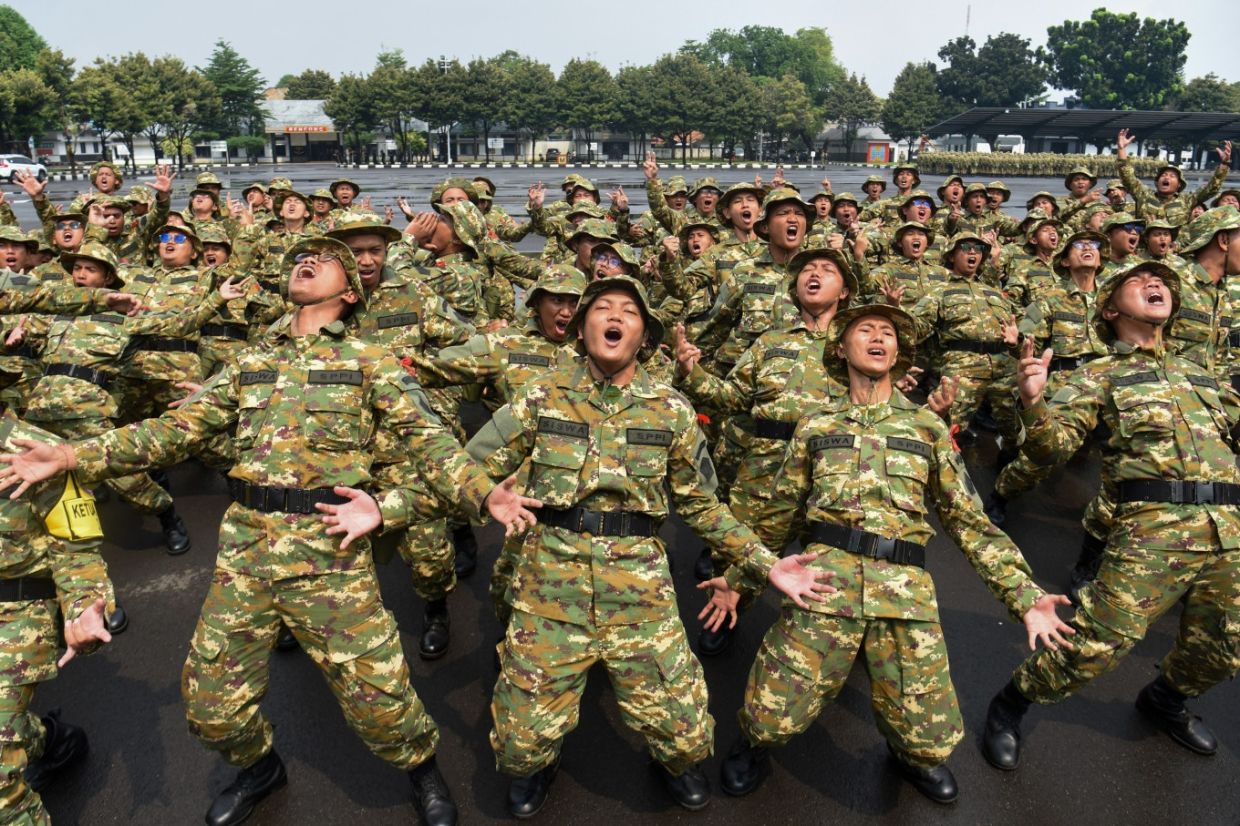
President Prabowo Subianto's ambitious initiative to establish rural cooperatives and fishing villages has taken a troubling turn, with four deaths already reported among more than 35,000 participants enrolled in a mandatory 30-day military training programme. The fatalities—occurring just days into the Defence Ministry's reserve component training—have ignited intense scrutiny from lawmakers, civil society organisations, and international human rights groups who question whether the militarised approach to civilian cooperative management is justified or even compatible with Indonesia's democratic aspirations.
The most recent death, confirmed on Friday 26 June, involved Muhammad Rifqi Renaldi Gunawan, who experienced respiratory distress while undergoing training at an Air Force facility in Jakarta. He was hospitalised for intensive care but succumbed early that morning. This fatality came shortly after two other deaths mid-week: Anisa Muyassaroh collapsed from heat stroke during training in Balikpapan, East Kalimantan, while Yonanda Muhammad Taufiq suffered cardiac arrest following introductory exercises at a facility in Baturaja, South Sumatra. An earlier death involved Novia Rahmadhani Sihotang in Jakarta, whose collapse the Defence Ministry attributed to pre-existing health complications related to tuberculosis. The clustering of deaths within such a compressed timeframe has transformed what the government promoted as a leadership-building exercise into a potential public health crisis.
The Defence Ministry has responded to mounting pressure by pledging a "comprehensive review" of training protocols. Brigadier General Rico Ricardo Sirait, the ministry's spokesperson, outlined intentions to strengthen health screening procedures, implement early detection mechanisms for medical conditions, enhance participant monitoring systems, and overhaul emergency response protocols. However, these commitments—coming only after multiple deaths have already occurred—strike critics as reactive rather than preventive, raising fundamental questions about the adequacy of safeguards prior to the programme's rollout.
Amnesty International Indonesia has taken an uncompromising stance, calling the military training "a fatal mistake that must be stopped immediately." Executive director Usman Hamid argued that the government should abandon the militarised framework entirely and replace it with conventional cooperative management and business education. Hamid's statement reflects a broader concern: that embedding military-style discipline and hierarchy within a civilian cooperative framework contradicts the foundational principles of cooperatives themselves, which are supposed to emphasise democratic decision-making, collective participation, and voluntary membership rather than command-and-control structures. This philosophical critique adds weight to safety concerns, suggesting the programme's problems run deeper than mere implementation failures.
Usman Hamid further contextualised the training within what he characterised as a troubling pattern of militarisation under Prabowo's administration. He drew deliberate parallels to Indonesia's New Order era, when the military's "dual function" doctrine allowed armed forces to exercise broad influence over civilian institutions and governance. For observers concerned about institutional drift, the cooperative training programme represents a concerning symptom of recentralising military authority over spheres traditionally reserved for civilian management. This interpretation has resonated among civil society networks already monitoring broader governance trajectories.
Indonesia's House of Representatives has not remained silent. Commission I, which oversees defence affairs, has initiated scrutiny of the programme's implementation. Deputy chair Dave Laksono of the Golkar Party acknowledged that while the training aims to instill discipline, leadership qualities, and nationalist sentiment—goals he characterised as worthy—the methods and emergency protocols require substantial refinement to ensure participant safety. His measured tone suggests legislative willingness to allow the programme to continue with significant modifications rather than immediate termination, though this position differs markedly from civil society demands for outright suspension.
Other parliamentary voices have emphasised the urgency of enhanced health protections. Commission I member Imas Aan Ubudiyah of the National Awakening Party stressed that pre-training health screenings must become far more rigorous, given the physical demands inherent in military-style exercise. Ubudiyah advocated integrating comprehensive risk mitigation standards, continuous medical supervision, and assessments of individual physical capabilities throughout the training process. Her recommendations suggest that previous screening procedures were insufficient to identify participants with underlying conditions—such as cardiac vulnerabilities or metabolic disorders—that could be exacerbated by intensive physical activity.
The Presidential Chief of Staff, Dudung Abdurachman, has struck a defensive posture, insisting that preliminary investigations have uncovered no evidence of direct negligence by training staff or organisers. Abdurachman suggested the training itself is not exceptionally demanding and that deaths may have resulted from undetected pre-existing health conditions or other individual factors still under investigation. This characterisation has proven controversial, as critics counter that if the training is truly safe, the concentration of deaths suggests the screening mechanisms are dangerously inadequate and that a less physically demanding approach should be adopted until safety protocols are demonstrably upgraded.
The broader context amplifies the controversy's significance. The government has committed to establishing 80,000 cooperative units and 5,000 fishing villages by 2029, representing a vast rural development agenda requiring trained managerial personnel. After the 30-day military training, participants will progress to 15 days of dedicated managerial instruction before deployment to these cooperatives. The scale of the programme means that thousands more individuals will pass through the training pipeline, multiplying the statistical likelihood of additional fatalities unless fundamental changes occur. For Malaysian observers, this serves as a cautionary case study: large-scale development initiatives involving physical training must implement robust health screening and safety monitoring before launch, not after fatalities compel reactive adjustments.
The episode also illuminates tensions within Indonesia's current political moment. Prabowo's administration has emphasised nationalist revitalisation and disciplined institution-building, reflected partly in this military-inflected approach to cooperative development. However, the deaths have exposed potential incompatibilities between militaristic methodology and civilian effectiveness—a lesson with resonance across Southeast Asia, where several nations grapple with balancing security concerns against civilian welfare and democratic norms. The coming weeks will reveal whether Indonesia's government opts for meaningful programme redesign or merely cosmetic adjustments to health protocols while maintaining the fundamental military structure that critics argue is both unnecessary and dangerous.

