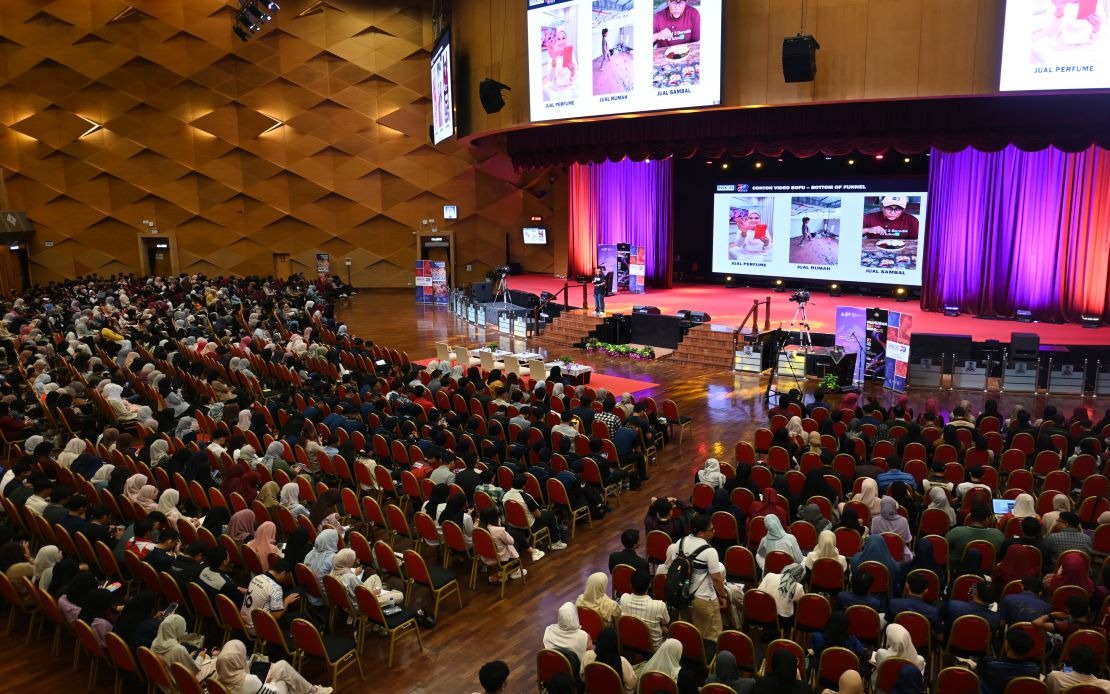
Nearly 7,000 university students gathered at Universiti Teknologi MARA's Shah Alam campus in June for an entrepreneurship seminar that has now earned recognition as the nation's largest of its kind by student participation. Usahawan MADANI Mega (SUM MEGA) 2026, jointly organised by the National Entrepreneurship Institute (INSKEN), the Malaysian Academy of SME and Entrepreneurship Development (MASMED), and UiTM itself, brought together 6,877 participants in both physical and virtual formats. The achievement reflects a significant shift in how Malaysian universities are engaging younger generations with business creation, positioning entrepreneurship as a serious pathway rather than a niche pursuit.
The turnout underscores the Malaysian government's intensifying focus on cultivating entrepreneurial talent at grassroots level. Through knowledge-sharing sessions, capacity-building workshops, and structured networking opportunities, the seminar exposed participants to the realities of venture creation while connecting them with mentors, investors, and fellow aspiring business founders. This multi-channel approach—combining in-person engagement with online access—proved crucial in reaching students across the country's dispersed university network, democratising exposure to entrepreneurial education beyond major urban centres.
Deputy Minister of Entrepreneur and Cooperatives Development Datuk Mohamad Alamin used the occasion to reframe entrepreneurship within Malaysia's broader economic strategy. Rather than treating business formation as an individual pursuit, he positioned it as a cornerstone of national competitiveness and job creation in a region where established economies are tightening labour markets. The framing matters: as manufacturing migrates and services shift, policymakers increasingly view homegrown entrepreneurs as essential to maintaining economic dynamism and reducing youth unemployment.
The Malaysian government, through the Ministry of Entrepreneur and Cooperatives Development (KUSKOP), has committed substantial resources to this agenda, spanning capacity building, financing schemes, market access facilitation, digitalisation support, and broader business development assistance. This institutional backing signals that entrepreneurship support is no longer rhetorical—it now commands dedicated funding and inter-ministerial coordination. For Malaysian students, this translates to tangible support ecosystems: access to capital, regulatory guidance, and market intelligence that were largely absent a decade ago.
INSKEN Board of Trustees chairman Datuk Mustaffa Kamil Ayub articulated a cultural aspiration underlying these initiatives: positioning entrepreneurship as a mindset and movement rather than merely a career option. This distinction carries weight. In many Southeast Asian economies, salaried employment—particularly in government or multinational corporations—remains the prestige career track. By framing business creation as a cultural identity, organisers hope to shift social capital and legitimacy toward venture creation, making it the ambition of choice for talented graduates rather than a fallback option.
The seminar deployed the MOFA framework—a practical toolkit emphasising marketing, operations, finance, and business administration—to equip participants with tangible competencies. This structured approach moves beyond inspirational talks toward actionable knowledge, addressing a common complaint among student entrepreneurs that university exposure to business often lacks operational specificity. By grounding the seminar in these four pillars, INSKEN positioned itself as a practical institution rather than merely a convener of networking events.
SUM MEGA 2026 sits within a constellation of INSKEN initiatives including the INSKEN Masterclass and the PROTÉGÉ programme, suggesting an intentional architecture of support that guides entrepreneurs from initial exposure through later-stage development. This pipeline approach acknowledges that entrepreneurial capability is built incrementally; a single seminar, however large, cannot substitute for sustained mentorship and progression-based learning. For Malaysian students, this represents a more sophisticated institutional ecosystem than many regional peers have access to.
The seminar also served as a platform for deepening collaboration among government agencies, higher education institutions, financial institutions, and the private sector. This multi-stakeholder alignment matters practically: when universities identify promising entrepreneurs, pathways now exist to connect them with both capital and industry expertise. The fragmentation that typically characterises support systems in developing economies—where government, academia, and business operate in silos—appears to be eroding, at least in Malaysia's entrepreneurship space.
Placing SUM MEGA 2026 within the framework of the National Entrepreneurship Policy 2030 contextualises this seminar as part of a longer-term strategic commitment rather than a one-off initiative. The policy document itself signals government intent to build entrepreneurial capacity across a decade-long horizon, with measurable targets and resource allocation to match. For Malaysian students considering entrepreneurship, this policy anchor suggests that government support is not subject to election cycles or ministerial whims—it reflects sustained institutional commitment.
The Malaysia Book of Records recognition, while symbolically satisfying, serves a secondary function: it legitimises student entrepreneurship as a worthy pursuit. Award recognition carries cultural weight, signalling to parents, educators, and peers that business formation merits the same respect traditionally reserved for professional qualifications. In societies where credentials and recognition heavily influence career choices, such institutional validation can meaningfully shift how entrepreneurship is perceived.
For the broader Southeast Asian region, Malaysia's approach offers a model worth studying. While Singapore has long championed entrepreneurship through structured programmes and venture capital infrastructure, Malaysia's focus on mass participation—nearly 7,000 students—reflects a different strategic priority: building entrepreneurial consciousness across the entire university population, not just among the already-convinced. This democratisation of entrepreneurial education could, if sustained, build a deeper bench of potential founders and, equally important, workers sympathetic to startup environments.

