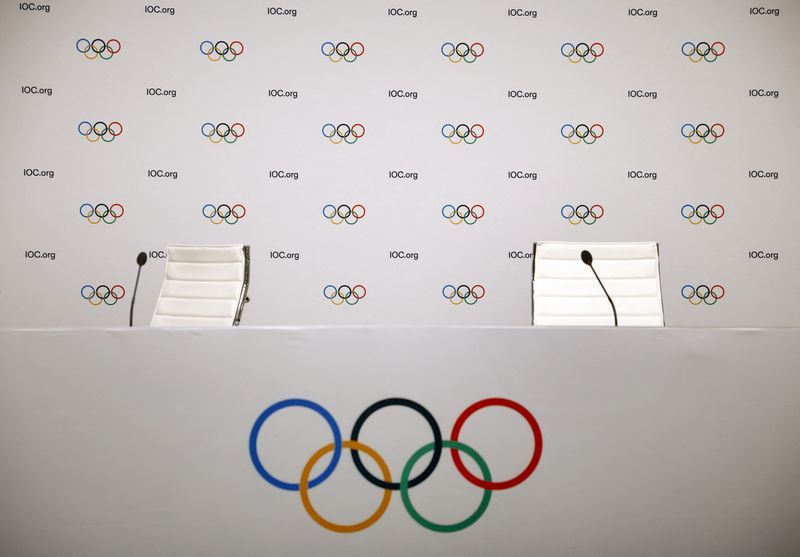
The International Olympic Committee will vote on Wednesday to consider significant amendments to the Olympic Charter designed to strengthen protections for sport from political interference. The proposed changes emphasise that the IOC should maintain neutrality "at all times, free from governmental, cultural, societal or economic pressure", reflecting what the sporting body describes as essential safeguards for athletes and competitions. However, the timing and substance of these reforms have sparked considerable debate among observers and advocacy groups who question whether the measures might inadvertently create pathways for Russia's full reinstatement to international competition.
At their core, the IOC's proposed amendments seek to shield the Olympic movement from external pressure and prevent host nations or governments from instrumentalising the Games for political advantage. The organisation frames these changes as protective mechanisms that defend the integrity of competition and the athletes who participate. Yet the context surrounding their introduction—occurring amid ongoing discussions about Russian participation—has invited scrutiny about whether neutrality language could be deployed to circumvent existing sanctions architecture.
Global Athlete, an influential advocacy organisation representing athletes' interests, has emerged as a vocal critic of the proposal. Rob Koehler, the group's director general, contends that loosening restrictions through emphasised neutrality could effectively erase consequences for serious violations. His statement that "war, systematic doping and repeated violations of the Olympic Charter are no longer barriers to full participation" encapsulates a widespread concern that the IOC may be signalling a reset of enforcement standards rather than a clarification of existing principles.
Russia's path to Olympic sanctions has been complex and multifaceted. The country faced initial restrictions following revelations of state-sponsored doping connected to the 2014 Sochi Winter Games, a scandal that fundamentally challenged assumptions about governance in international sport. When Russia invaded Ukraine in 2022, the IOC recommended excluding Russian and Belarusian athletes from competitions, treating the geopolitical crisis as incompatible with Olympic participation. Subsequently, the Russian Olympic Committee itself was suspended in October 2023 after it recognised regional Olympic councils in Russian-occupied Ukrainian territories—a move the IOC deemed a violation of both the Olympic Charter and Ukraine's territorial integrity.
Yet the trajectory of IOC decisions since these suspensions suggests a gradual recalibration. In December, the committee announced that Russian and Belarusian youth athletes could return to international competitions without restrictions, marking a notable softening of its stance. Last month, the IOC extended this further by lifting all restrictions on Belarusian athletes, effectively clearing their path to participate in qualifying competitions for the 2028 Los Angeles Olympics. Notably, the IOC specified that this relief would not extend to Russian athletes, yet observers note that this distinction may be temporary given the pattern of incremental easing.
The speculative environment surrounding Russia's potential return has intensified considerably. Many analysts believe that the charter amendments, combined with the IOC's earlier decisions regarding Belarusian athletes, suggest that Russian athletes could receive comparable treatment within months. This possibility reflects not only diplomatic shifts but also practical considerations: the Olympic movement has historically faced pressures to appear inclusive and universally representative, and prolonged exclusion of a major sporting nation creates complications for host cities and international federations planning competition calendars.
The IOC's stated rationale for reconsidering Russia's status involves ongoing technical and legal reviews. In May, the committee indicated that its legal affairs commission was examining documentation from the Russian Olympic Committee while simultaneously assessing the country's anti-doping infrastructure. The World Anti-Doping Agency maintains active investigations into Russian compliance, creating ostensible procedural justifications for any decisions the IOC might announce. However, critics note that such reviews can be shaped to reach predetermined conclusions, particularly when political will favours reinstatement.
Russia's own efforts to engineer its return have become increasingly visible. Mikhail Degtyarev, who serves as both Russia's sports minister and chairman of the Russian Olympic Committee, stated in April that his administration and the ROC were mobilising all available resources to restore the Russian national team's participation under the national flag. More symbolically, President Vladimir Putin expressed hope in April that the IOC's newly installed leadership would adopt a "fresh approach" toward Russia—a diplomatic signal that Moscow perceives openness to negotiation at the highest institutional levels.
Beyond the Russia question, the proposed amendments would also modify how sports are selected for Olympic programmes. The IOC would gain greater discretion to add or remove international federations from the Olympic Charter by applying flexible criteria including cost-effectiveness, logistical feasibility, and global audience appeal. This change grants the committee enhanced leverage over which sports appear in future Games, potentially reshaping the Olympic portfolio based on contemporary entertainment and commercial considerations rather than established tradition.
For Southeast Asian stakeholders, including Malaysian sports administrators and athletes, these charter amendments carry indirect implications. Any reconstruction of Olympic eligibility standards could affect regional qualification pathways, the composition of teams competing in future Games, and the broader geopolitical dynamics that influence host city selection and resource allocation. The precedent of using amended neutrality language to reconcile diplomatic tensions with sporting sanctions could establish templates applicable to other nations or disputes.
The IOC's decision on Wednesday will likely reflect broader institutional tensions between universalist Olympic ideals and the political realities that IOC leadership navigates. Whether the committee votes to strengthen neutrality language without simultaneously weakening enforcement mechanisms, or whether it adopts formulations that inadvertently create escape routes for suspended parties, will signal the organisation's priorities as it approaches the 2028 Los Angeles Games and beyond. The amendments thus represent more than technical clarifications; they constitute a substantive statement about how the Olympic movement intends to balance inclusivity against accountability in an increasingly polarised international environment.

