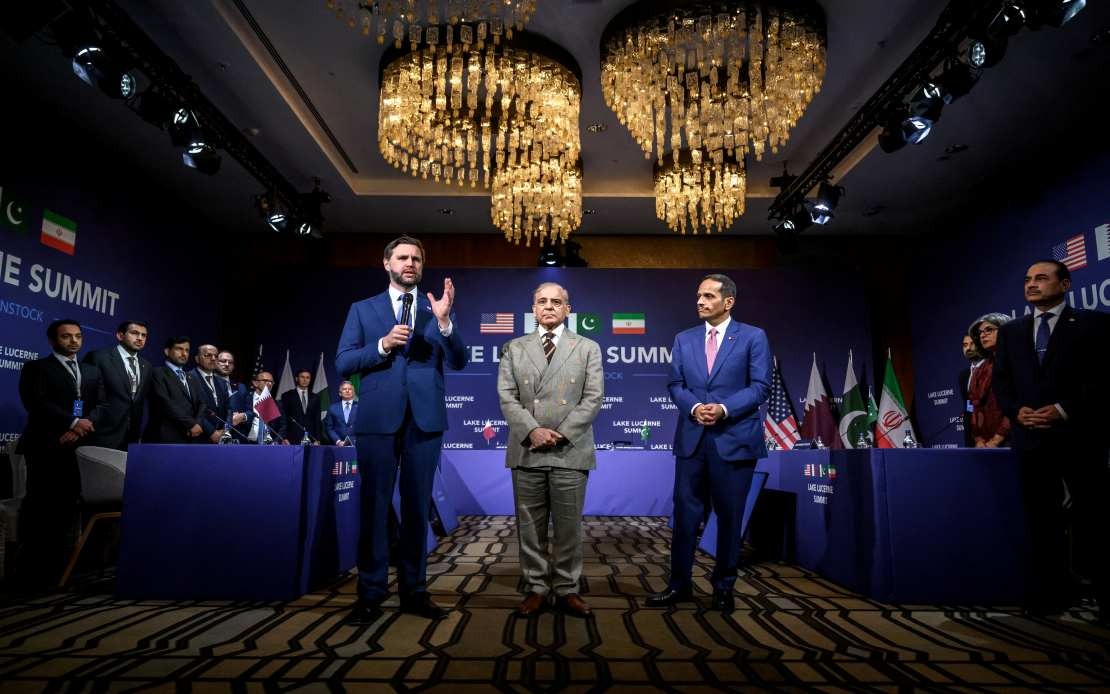
Diplomatic efforts to ease tensions between Iran and the United States have entered an active phase as delegations from both nations concluded their first negotiating session in Switzerland on Sunday. The meeting, held in Bürgenstock and mediated by Qatar and Pakistan, represented a significant step in translating a recently signed memorandum of understanding into concrete action. The session lasted approximately 80 minutes before delegations suspended proceedings to conduct internal consultations, according to sources familiar with the Iranian negotiating team.
The rapid advancement to face-to-face talks underscores the momentum building behind efforts to resolve what has been months of escalating tensions in West Asia. Both nations mobilised senior-level delegations, signalling the gravity with which they approach these negotiations. Leading the American contingent was Vice President JD Vance, while Iran dispatched Parliament Speaker Mohammad Bagher Qalibaf and Foreign Minister Abbas Araghchi to represent its interests at the table.
What distinguishes this diplomatic initiative is the crucial role played by regional mediators. Qatar and Pakistan have positioned themselves as neutral facilitators, lending credibility to a process that carries significant geopolitical implications for the Middle East and beyond. Their involvement reflects a broader acknowledgement among regional players that de-escalation serves mutual interests far better than continued confrontation. The choice of Switzerland as the neutral venue further reinforces the seriousness of the undertaking, as the country has long served as a sanctuary for sensitive international negotiations.
The immediate trigger for these talks was a memorandum of understanding signed just days earlier on Wednesday. This agreement, which both sides have committed to implement through the current negotiation process, addresses core issues including the restoration of navigation through the Strait of Hormuz—a waterway of immense global economic significance. Disruption to shipping in these waters carries implications extending well beyond Iran and America, affecting energy supplies and trade routes that Southeast Asian nations depend upon for their own prosperity.
For Malaysia and other regional economies, the stakes of these negotiations are tangible. The Strait of Hormuz remains one of the world's most critical chokepoints for oil and liquefied natural gas shipments. Any escalation of tensions in the region threatens to disrupt supplies and inflate energy costs, directly impacting inflation, transportation expenses, and manufacturing competitiveness across Southeast Asia. Conversely, a successful de-escalation could stabilise energy markets and reduce uncertainty affecting investment decisions throughout the region.
The suspension of talks after 80 minutes, while potentially concerning to outside observers, actually follows standard diplomatic protocol for high-stakes negotiations. Such internal consultations allow each delegation to reassess positions, consult with their respective capitals, and plan strategy for subsequent sessions. The fact that negotiators chose to pause rather than break off contact suggests both sides view the process as worthwhile and potentially productive.
What remains unclear is the timeline for resumption of talks. No announcement has been made regarding when delegations will reconvene, though the swift initiation of this first round suggests the parties maintain sufficient urgency to schedule follow-up sessions in the near term. The absence of detailed public statements about the substance of discussions reflects conventional wisdom in sensitive diplomacy—premature disclosure of negotiating positions or proposals can undermine flexibility and create unnecessary domestic political complications for both governments.
The composition of Iran's delegation carries symbolic weight. Including Parliament Speaker Qalibaf alongside Foreign Minister Araghchi ensures both legislative and executive branches of Iran's government are represented, lending the Iranian position weight and authority. Similarly, the appointment of Vice President Vance to lead American efforts demonstrates the Biden administration's commitment to this negotiating track at the highest levels of decision-making.
Major powers and neighbouring states will be watching these developments closely. The success or failure of this negotiation round could reshape regional alliances, influence defence spending decisions, and determine whether the Middle East enters a period of relative stability or continued volatility. For Southeast Asian nations navigating geopolitical complexities and dependent on stable global energy markets, the outcome carries consequences for their own strategic planning and economic forecasting.
The technical aspects under discussion extend beyond mere ceasefire agreements. Implementation of the interim accord likely involves detailed discussions about verification mechanisms, phased sanctions relief or reimposition procedures, and confidence-building measures that both sides can monitor. These granular operational details often prove more challenging than agreeing to broad principles, explaining why negotiations of this magnitude typically unfold across multiple sessions.
The mediation structure involving both Qatar and Pakistan is particularly noteworthy given their distinct relationships with both Iran and America. Qatar maintains strong economic and strategic ties with the United States while simultaneously engaging with Iran as a neighbour and trading partner. Pakistan similarly occupies a delicate position balancing relationships across the region. Their joint mediation role suggests these two nations have found sufficient common ground on the desirability of de-escalation to coordinate their efforts.
Moving forward, the success of these negotiations will likely depend on incremental progress rather than dramatic breakthroughs. Early rounds typically focus on establishing procedures, confirming mutual understandings of agreed principles, and identifying areas of dispute requiring further work. The next session will be crucial in determining whether momentum continues or whether fundamental obstacles emerge that prove difficult to overcome. For regional observers, particularly those in Southeast Asia dependent on stable energy supplies and predictable geopolitical environments, the coming weeks will warrant careful attention.

