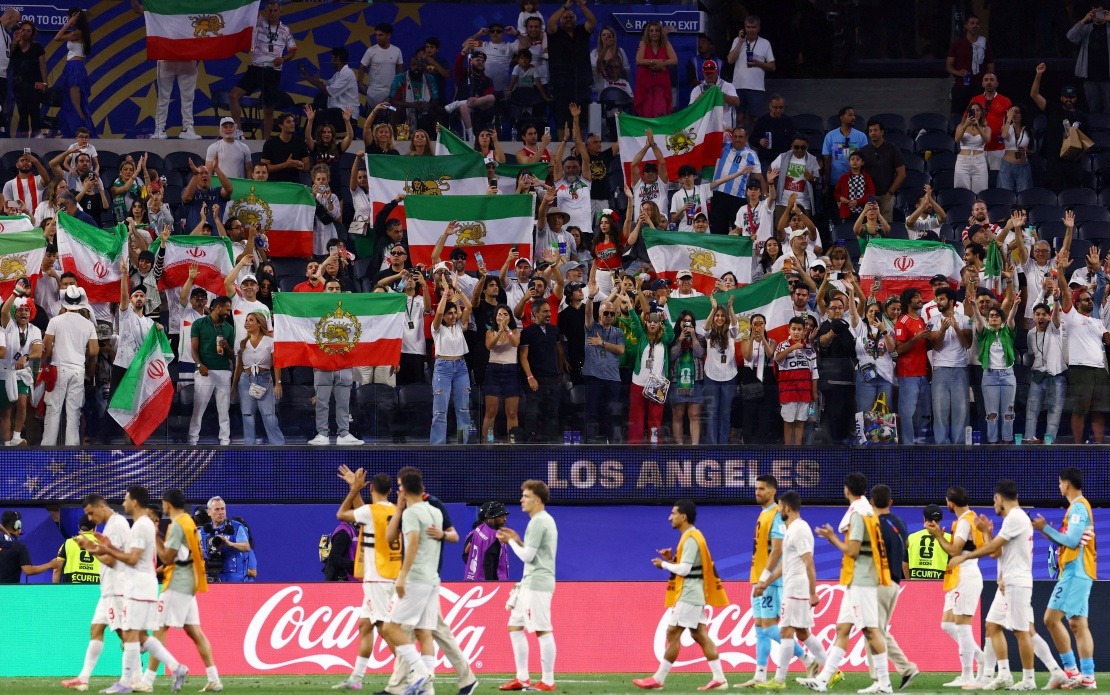
Iran's football federation announced Friday that it will submit an official complaint to FIFA concerning travel restrictions that have hampered the national team's participation in the 2026 World Cup, contending that the measures create unequal competitive conditions compared to other participating nations. The decision reflects mounting frustration over logistical obstacles that have dogged Iran's involvement in the tournament being jointly hosted by the United States, Canada, and Mexico.
The immediate catalyst for the grievance centres on visa stipulations that permit Iranian players and officials to enter the United States only a single day before each match and require their departure on the same day as competition ends. This constraint proved particularly problematic ahead of Iran's Group G encounter with Belgium, when the federation requested a two-day advance arrival window to permit adequate preparation time, but was permitted entry only 24 hours before kick-off. The Football Federation of the Islamic Republic of Iran expressed its position that such conditions breach fundamental principles of fairness that should govern world football competition.
In a formal statement, the Iranian federation characterised the restrictions as fundamentally misaligned with equitable treatment standards. Officials argued that the limitations impose meaningful disadvantages on preparation protocols and undermine the ability of the squad to perform optimally. The federation declared its intention to pursue the matter through FIFA's formal channels, escalating what has become a persistent tension surrounding Iran's tournament participation.
These grievances do not emerge in isolation. Iran has navigated numerous obstacles in the weeks preceding and during the competition. The federation was compelled to relocate its team training base from Arizona to Tijuana in Mexico after visa complications affected multiple federation personnel and technical staff members. Beyond player visa issues, Iranian officials have voiced concerns regarding restrictions placed on delegation members accompanying the squad, reduced access for media representatives, and impediments facing supporters attempting to attend matches within the United States.
The situation gained prominence following Iran's opening Group G match against New Zealand in Los Angeles, a contest that concluded in a two-two draw. Rather than being granted opportunity to remain in Los Angeles for recovery activities and tactical preparation, the Iranian squad was required to return immediately to its Tijuana base. This arrangement forced the team to undertake extended travel back to Mexico directly after the match, curtailing crucial recuperation time before subsequent preparations.
The strain of these circumstances prompted forceful commentary from team leadership. Head coach Amir Ghalenoei characterised Iran as the "most oppressed" team competing in the tournament, while team captain Mehdi Taremi described the accumulated logistical challenges as constituting a "disaster" for his squad's preparation period. Both assessments reflected the genuine operational difficulties that have characterised Iran's experience thus far.
Yet despite these complications and formal grievances, Iran's federation reiterated its commitment to maintaining focus on upcoming Group G fixtures. The squad emphasised its determination to persevere and prepare thoroughly for its encounter with Belgium on Sunday, signalling that the team intends to channel frustration into competitive performance rather than allowing external obstacles to diminish focus.
FIFA's institutional response offered some acknowledgment of Iran's predicament. President Gianni Infantino visited the Iranian dressing room following the New Zealand match and delivered remarks recognising the adversity confronting the squad. Infantino told assembled players: "I know what you go through. I understand, but you are stronger than everything. You send a strong message to the entire world." The intervention suggested that football's governing body acknowledged the exceptional circumstances surrounding Iran's participation, though Infantino stopped short of committing to material changes addressing the structural constraints.
For Malaysian and Southeast Asian football observers, Iran's experience carries several implications. The case highlights how geopolitical tensions and political relationships between nations can create operational friction within international sporting competition, even when FIFA operates as the nominal governing authority. It also underscores how visa and immigration frameworks, whether wielded intentionally or through bureaucratic inertia, can produce competitive disadvantage that extends beyond purely sporting considerations.
The complaint mechanism itself represents an important but potentially limited recourse. While FIFA can investigate and theoretically impose remedial measures, the underlying constraints derive from United States immigration and security protocols rather than FIFA regulations per se. This distinction suggests that even if FIFA finds merit in Iran's formal complaint, practical remedies may prove elusive without coordination between American authorities and the tournament's organising bodies.
For nations within the Southeast Asian Football Federation and other regional bodies, Iran's case serves as a cautionary example regarding tournament hosting obligations. Equitable treatment of all participating nations, regardless of political relationships, remains essential to the legitimacy of international competition. The incident also demonstrates how logistical disadvantages, if left unaddressed, can accumulate into serious grievances that taint a tournament's fundamental fairness.
Looking forward, the Iranian federation's formal FIFA complaint will force examination of whether World Cup hosting agreements contain adequate protections ensuring equivalent treatment across competing delegations. The resolution of this matter may establish important precedent regarding the balance between host-nation security requirements and the sporting principle that all teams deserve fair and equal preparation conditions.

