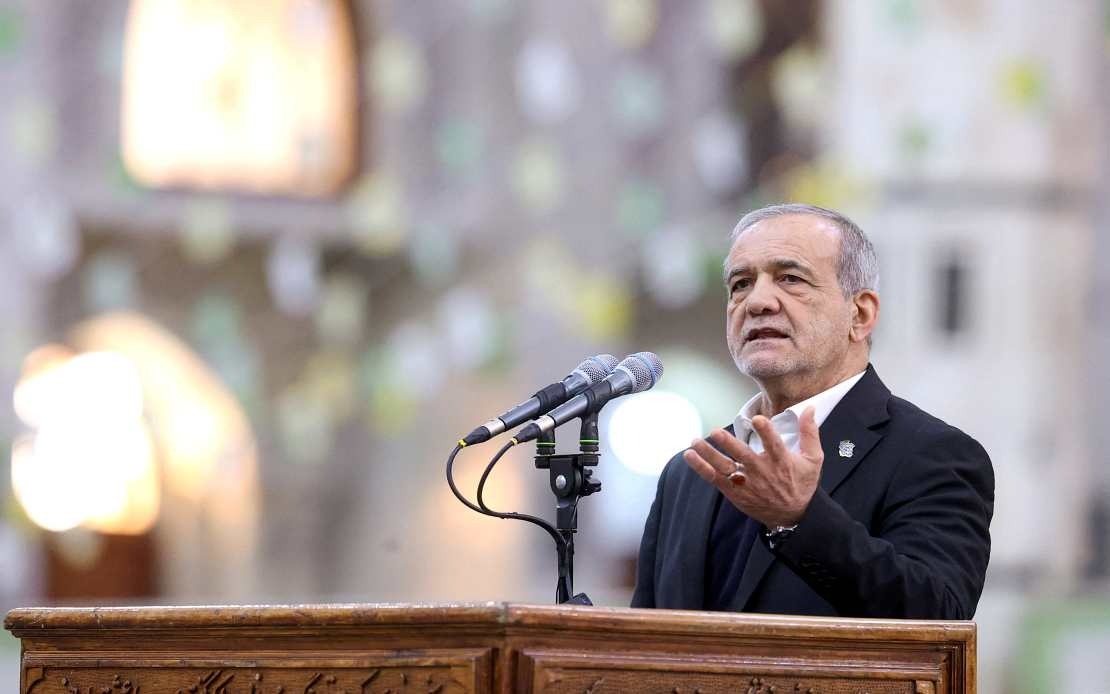
Iranian President Masoud Pezeshkian disclosed on Sunday that his country stands to recover US$6 billion in frozen assets currently held in Qatar, marking a significant development in preliminary negotiations between Tehran and Washington aimed at de-escalating tensions across the Middle East. The announcement came as delegations from both nations prepared for formal technical discussions in Switzerland, signalling a potential thaw in decades-long animosity between the two countries.
The recovery of these frozen assets represents the opening gambit in what appears to be a structured diplomatic engagement. According to statements carried by Iran's state broadcaster IRIB, the release of the Qatar-held funds is contingent upon the commencement of substantive talks between the two parties. This linkage suggests a carefully calibrated approach where financial concessions are tied directly to progress in broader negotiations, establishing mutual commitment mechanisms from the outset.
Pezeshkian's remarks underscored Iran's unwillingness to compromise on its nuclear programme, a persistent flashpoint in regional and international relations. The Iranian leader explicitly stated that Tehran would never surrender its uranium enrichment rights, framing this as a non-negotiable sovereignty matter. His assertion that the other side will be compelled to accept this position reveals Tehran's confidence in its negotiating stance, though it also suggests potential obstacles remain in the path toward comprehensive settlement.
The preliminary agreement between the two nations was formally established through a memorandum of understanding signed on Wednesday. This document provides the framework within which both delegations are operating, establishing parameters for discussions centred on resolving the months-long Middle East conflict and reopening the strategically vital Strait of Hormuz. The latter objective carries enormous implications for global energy markets and regional stability, given that millions of barrels of oil transit through these waters daily.
The talks taking place in the Swiss resort town of Burgenstock represent a significant diplomatic undertaking, with each side dispatching high-ranking officials to lead their delegations. The American contingent is being headed by US Vice President JD Vance, signalling the gravity with which Washington regards these discussions. Iran's delegation features Parliament Speaker Mohammad Bagher Qalibaf and Foreign Minister Abbas Araghchi, reflecting Tehran's commitment of its most senior diplomatic and legislative figures to the negotiating process.
Pakistan's role as mediator adds another layer of complexity and interest to these negotiations. As a regional power with its own stakes in Middle Eastern stability and close historical relationships with both Iran and the United States, Pakistan's participation suggests a multilateral framework broader than simple bilateral engagement. This mediation role could prove crucial in bridging the substantial gaps between the two parties' positions and helping both sides navigate toward compromise.
For Malaysian observers and regional stakeholders, these developments carry substantial implications. Southeast Asian nations, including Malaysia, depend heavily on stable energy supplies and unimpeded maritime commerce through Middle Eastern chokepoints. Any sustained escalation in Iran-US relations threatens these interests through potential disruptions to shipping lanes and volatile energy prices. Conversely, successful negotiations could restore predictability to regional dynamics and moderate oil market volatility that directly impacts Southeast Asian economies.
The unfreezing of Iran's assets also touches upon broader international financial architecture and sanctions regimes. The existence of US$6 billion in Qatar suggests previous sanctions or legal complications that prevented direct access to these funds. Their potential release would constitute a partial reversal of financial isolation measures, though it remains modest compared to the broader scope of Iranian assets frozen internationally. This recovery would provide Tehran with resources to address domestic economic pressures and strengthen its negotiating position in subsequent phases of talks.
The emphasis on reopening the Strait of Hormuz reflects recognition by both parties that current tensions are economically unsustainable for all involved. Disruption to this critical waterway carries consequences extending far beyond Iran and the United States, affecting global energy supplies and international trade patterns. Japan, South Korea, and other Asian economies heavily dependent on Middle Eastern oil have long advocated for stable transit through these straits, making regional de-escalation a matter of acute interest to Asia-Pacific nations.
The preliminary nature of this agreement warrants caution, however. Historical precedent demonstrates that early agreements between Iran and the US have frequently encountered obstacles during implementation phases. The technical negotiations scheduled in Switzerland represent the next crucial hurdle, where detailed arrangements concerning asset transfers, sanctions modifications, and compliance mechanisms must be hammered out. Disagreements over verification procedures or sequencing of reciprocal measures could derail progress even at this relatively early stage.
Iran's explicit mention of uranium enrichment rights suggests that nuclear matters remain central to the broader negotiating agenda, even if not explicitly stated in public announcements. Any comprehensive settlement will likely need to address historical Iranian nuclear activities, current enrichment levels, and international monitoring arrangements. These technical and political dimensions create scope for serious disagreement between parties with fundamentally divergent security concerns and strategic objectives.
The coming weeks will prove decisive in determining whether these preliminary discussions can evolve into sustained diplomatic progress. Success would reshape Middle Eastern geopolitics and provide relief to global energy markets. Failure could trigger renewed escalation and further entrench the current cycle of tension. For Malaysia and the broader Southeast Asian region, the outcome will materially affect economic stability and resource security for years to come.

