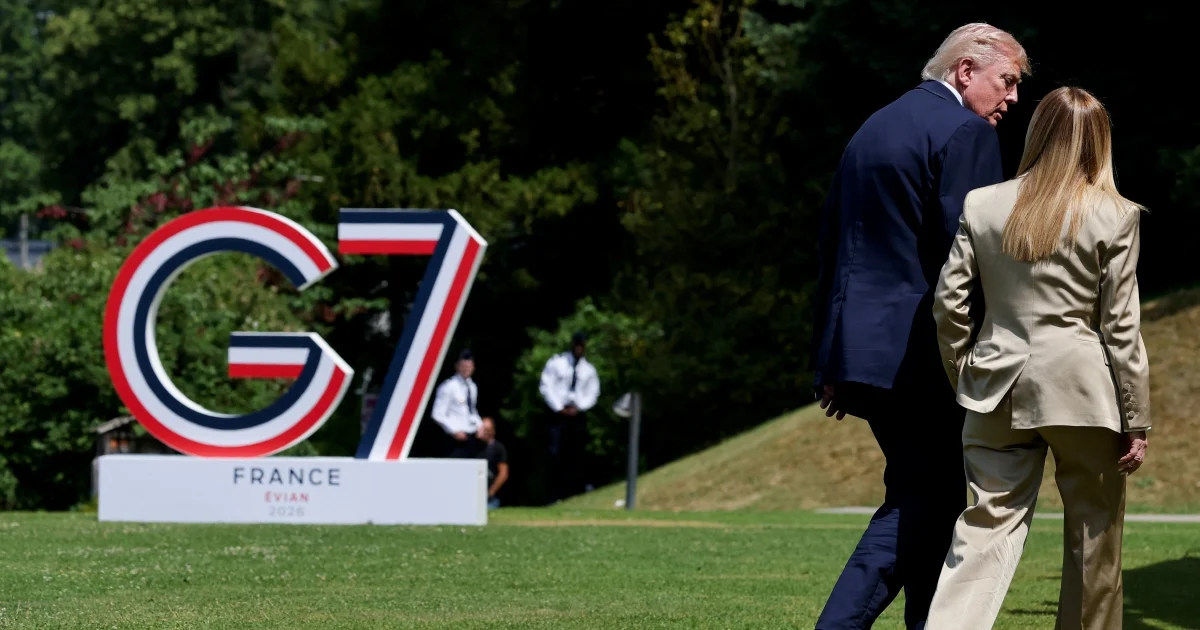
Italy's government lashed out at Washington on Friday following comments attributed to US President Donald Trump that mocked Prime Minister Giorgia Meloni in unflattering personal terms. The remarks, which reportedly characterised the Italian leader as overeager to secure a photo opportunity with the American president, provoked enough consternation within Rome's corridors of power that Foreign Minister Antonio Tajani cancelled his scheduled trip to the United States in an unmistakable show of diplomatic displeasure.
The reported remarks appear to have been made at Mar-a-Lago, Trump's Florida residence, where the president has been holding court with various political figures and media personalities. According to accounts circulating through Italian media outlets on Friday, Trump suggested that Meloni had been particularly keen to arrange a photograph alongside him, framing her eagerness in dismissive language that suggested a hierarchical power dynamic rather than the cordial relationship typically maintained between allied leaders.
For Italy, which prides itself on being a founding member of the Western alliance and a significant European power in its own right, such characterisations from the leader of the United States strike at questions of national dignity and respect on the global stage. The Italian reaction underscores how sensitive governments—regardless of political orientation—remain about how their leaders are portrayed by their counterparts, particularly when those portrayals are designed to diminish stature or suggest desperation.
Tajani's decision to scrap his American visit carries symbolic weight in diplomatic circles. Foreign ministerial visits represent important opportunities for substantive engagement between governments, and cancelling such a trip sends a clear signal that Italy considers the episode serious enough to warrant formal protest. The move demonstrates that despite ideological affinities between the Italian government and elements within the Trump administration, Rome will not tolerate what it perceives as disrespectful conduct.
The timing of this incident reflects ongoing volatility in the transatlantic relationship since Trump's return to political prominence. While some governments have sought to accommodate Trump's unpredictable communication style, Italy's response suggests there are limits to how far traditional allies will extend patience when they feel their dignity is compromised. The episode touches on broader questions about how international relationships function when one party adopts a more combative and dismissive posture toward diplomatic niceties.
Meloni's government, which has sought to position Italy as a bridge between traditional European values and new conservative movements, now finds itself navigating a test of its relationship with Washington. The prime minister has cultivated an image as a strong nationalist leader, and allowing perceived slights from the American president to pass unchallenged could undermine that positioning with her domestic audience. Italy's response thus serves multiple purposes simultaneously: registering official displeasure, affirming national dignity, and reinforcing domestic political narratives.
The incident also carries implications for European unity and how the continent's leaders coordinate responses to American actions and statements. A pattern of dismissive rhetoric from Washington toward individual European leaders could gradually erode the goodwill necessary for sustained transatlantic cooperation on critical issues ranging from defence to trade. Italy's willingness to push back suggests that European governments retain enough agency and self-respect to impose costs for behaviour they deem unacceptable.
Within Italy itself, the controversy reflects deeper tensions about the country's role in international affairs. As a G7 member and NATO contributor, Italy occupies a significant position in global affairs. When that position appears to be minimised or disrespected by the American president, it resonates domestically as a question of national honour. Political opponents will undoubtedly use the episode to criticise Meloni's government, regardless of how Rome has responded, creating additional domestic political pressure on the prime minister.
The broader context here involves Trump's well-documented tendency to employ personalised, sometimes derisive commentary about world leaders. Whether this represents a deliberate negotiating tactic, a reflection of his conversational style, or something else remains subject to interpretation. For countries like Italy that maintain formal, hierarchical approaches to international relations, such behaviour registers as novel and destabilising, creating friction even among nominally aligned governments.
Looking forward, this episode will likely influence how Meloni and her government calibrate their relationship with the Trump administration. The cancelled visit sends a message, but sustained engagement will presumably continue through other channels. The question for Italy and other European allies becomes how to maintain necessary transatlantic connections while establishing boundaries around acceptable discourse between national leaders.
The Mar-a-Lago remarks, whether captured accurately or not, have exposed a fundamental disconnect in communication styles and expectations between Washington and traditional European capitals. Italy's reaction demonstrates that even in an era of shifting geopolitical alignments, questions of respect and dignity between allied leaders remain non-negotiable elements of statecraft.

